
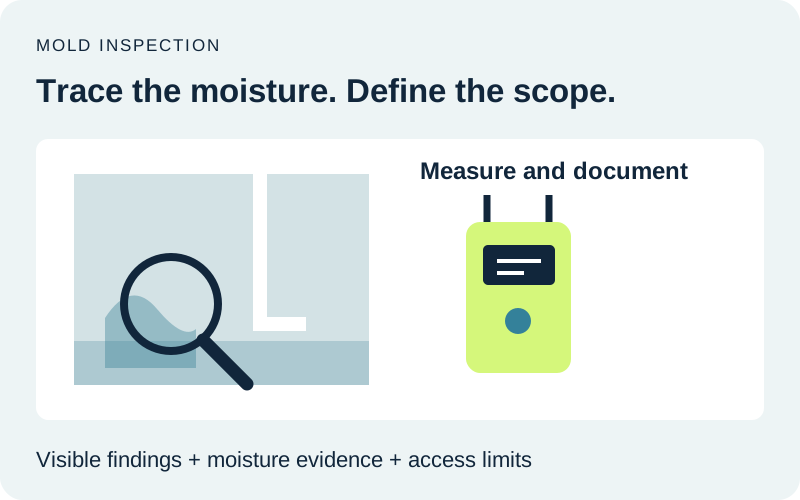
When should you arrange a mold inspection?
Arrange an inspection when you find recurring growth, an unexplained musty smell, or signs of moisture that you cannot trace. It is also useful when a past leak may have affected concealed materials.
- Growth returns after cleaning: the moisture source or affected area may remain unresolved.
- A room smells musty: investigate damp materials and hidden spaces rather than assuming the odor identifies a mold species.
- Walls or floors show water damage: staining, swelling or peeling finishes warrant a moisture assessment.
- A property transaction raises concerns: assess the specific dampness or growth before agreeing on repair responsibilities.
The Centers for Disease Control and Prevention’s National Institute for Occupational Safety and Health (CDC/NIOSH) emphasizes visual inspection and musty odors over routine air sampling when assessing damp buildings. If a leak is active, arrange water removal and drying without waiting for a mold test.
What does a mold inspection include?
A mold inspection examines accessible areas for suspected growth, water damage and the moisture conditions that support mold. It can include moisture measurements and targeted sampling when the question being investigated calls for it.
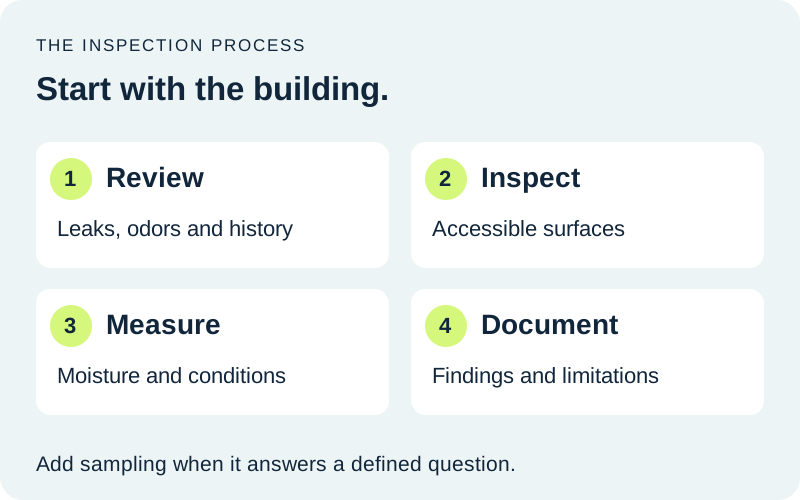
- Review the problem. Establish where odors or growth occur, previous leaks and whether the concern changes with weather or HVAC use.
- Inspect accessible surfaces. Examine the reported area and nearby materials for staining, visible growth and water-entry clues.
- Investigate moisture. Use suitable measurements to check damp materials and conditions, recording where readings were taken.
- Decide whether samples add value. Identify the question a sample would answer before adding laboratory work.
- Document findings and limits. Explain affected locations, likely moisture sources, inaccessible areas and the proposed next step.
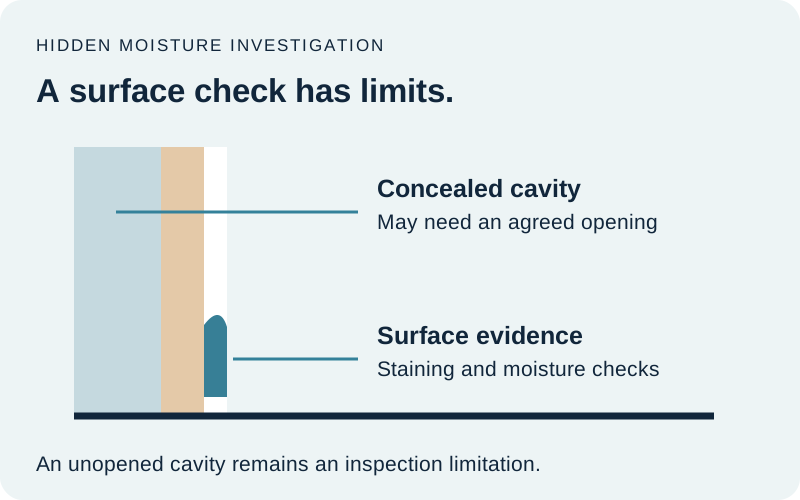
A visual visit does not automatically include cutting open walls, inspecting every concealed cavity or taking samples in every room. Our inspection quote defines the accessible areas, investigation and any agreed testing.
What is the difference between mold inspection and mold testing?
Inspection investigates the building and its moisture problem; testing analyzes a collected sample. A laboratory result describes that sample and cannot replace an assessment of the property.
| Method | What it can tell you | What it cannot establish alone |
|---|---|---|
| Visual inspection | Where accessible growth, damage or dampness appears | The condition of every concealed surface |
| Moisture measurement | Whether a checked material or area needs further moisture investigation | Mold species or a health diagnosis |
| Air sampling | What was captured in the sampled air during collection | That the whole property is mold-free or safe for every occupant |
| Surface sampling | What is present on the sampled surface | The extent behind walls or in other rooms |
The Environmental Protection Agency (EPA) says sampling is usually unnecessary when visible mold is present. There is no federal airborne mold limit that turns a sample count into a universal pass or fail. When sampling is appropriate, the collection plan and interpretation matter.
How much does a mold inspection cost?
$303 to $1,045 per inspection is the typical US range reported by Angi, with an average of $671. These July 2026 figures are national benchmarks, not a measured Gettysburg average or a quote for your home.
| Measure | Cost per inspection | Scope note |
|---|---|---|
| Typical range | $303 to $1,045 | National project data; scope varies |
| Average | $671 | National average, not a local fixed fee |
| Your property | Quoted after scope review | Access, investigation and any laboratory work affect price |
Source: Angi’s July 9, 2026 inspection cost report. Larger buildings, difficult access and additional testing can increase the total. Establish whether sampling, lab analysis and a written report are included in the inspection price.
The inspection fee covers investigation. Correcting leaks, removing contaminated materials and rebuilding are separate services; see mold remediation costs for the cleanup stage.
How long does a mold inspection take?
Allow about 2 to 6 hours for the on-site investigation as a broad planning range. Accessible areas can take less time than a large property with difficult-to-reach spaces. Laboratory analysis and report delivery are separate from the visit.
Angi’s inspection guide describes roughly two hours for accessible areas and up to six for more extensive investigation. Confirm the expected visit length for your property, along with report and laboratory turnaround if samples are collected.
A short visit focused on one stain is a different scope from investigating several rooms, an attic and a crawl space. Access restrictions can also leave questions that need a later visit.
Which parts of the home need inspection?
The inspection should follow the reported problem and possible moisture routes, including nearby spaces that may be connected. A basement concern, for example, can involve wall bases, stored contents and the underside of the floor above.
| Location | Moisture clues | Inspection focus |
|---|---|---|
| Basement or crawl space | Ground moisture, seepage, plumbing leaks or condensation | Wall bases, accessible framing, insulation and stored materials |
| Attic | Roof leaks, condensation or exhaust moisture | Accessible roof sheathing, penetrations and nearby insulation |
| Bathroom or kitchen | Leaks, wet finishes and persistent condensation | Sink cabinets, adjacent walls and accessible floor edges |
| HVAC and air ducts | Condensation, drainage issues or growth near equipment | Accessible components; specialist HVAC assessment where needed |
For Gettysburg properties, including older homes with finished basements or additions, access can differ between sections of the building. Building age alone does not establish that mold is present. Commercial inspections need a scope that reflects the building’s use, size and access arrangements.
When is professional mold testing useful?
Testing is useful when a defined question cannot be answered adequately by the building inspection alone. Examples include identifying material on a particular surface or meeting an agreed verification protocol.
- Air samples: collection conditions, location and comparison samples affect interpretation.
- Surface samples: results apply to the sampled patch, not every similar-looking stain.
- After cleanup: any requested testing should follow the agreed completion criteria.
CDC/NIOSH cautions that short-term samples can miss exposure and that indoor mold has no health-based air standard. A negative sample does not establish that no hidden problem exists. A useful report explains why each sample was taken and what its result can reasonably support.
What should a mold inspection report tell you?
A useful report connects observations, measurements and any laboratory results to specific locations, limitations and recommended work. It should separate evidence from an unconfirmed explanation.
| Finding type | Example wording | Meaning |
|---|---|---|
| Observed condition | Staining at the basement wall base | A visible finding in a stated location |
| Measured condition | Moisture readings recorded at marked wall locations | Evidence tied to the instrument, material and measurement points |
| Possible source | Exterior water entry suspected | An explanation that may need further investigation |
| Inspection limit | Finished wall cavity not opened | A concealed area whose condition remains unconfirmed |
These are explanatory examples, not results from a customer property. Photos and a location record make later cleanup or repair work easier to relate to the original findings. If a transaction or dispute requires an independent assessment, agree who will provide that assessment before work begins.
Does a home inspection include mold testing?
Do not assume that a general home inspection includes mold testing or a dedicated mold investigation. Read the inspection agreement and add a separate assessment when dampness, growth or a musty odor raises a specific concern.
InterNACHI explains that mold testing is outside its standard home inspection requirements. If mold is reported during a purchase, establish the affected area and moisture problem, then define cleanup and verification responsibilities before closing the issue. A painted-over stain or a single air sample is not a substitute for resolving the underlying condition.
Who should you call for a mold inspection?
Contact a professional who can investigate building moisture and explain the limits of any proposed testing. Ask for a defined inspection scope and relevant experience with the type of property involved.
Is there an EPA-certified mold inspector?
No. EPA does not operate a mold inspector certification program. A different organization may issue a credential, so check its issuer, scope and current status rather than assuming all certifications mean the same thing. EPA confirms this distinction.
Can I get a free mold inspection?
A free quote visit may be available from some providers, but it is not automatically a full inspection, lab analysis or independent report. We confirm any inspection and testing fees before you book; this page does not promise a free diagnostic service.
Can a home mold test diagnose health symptoms?
No. A building sample cannot diagnose the cause of a person’s symptoms. A do-it-yourself kit also cannot establish the extent of hidden damage. Discuss persistent symptoms with a healthcare professional; CDC’s guidance on Stachybotrys explains the limits of connecting a specific mold to symptoms.
Does black mold need a different inspection?
Dark growth still requires assessment of its location, extent and moisture source. Color alone does not identify a species or establish its hazard. Our black mold guide explains identification limits, while black mold removal addresses the cleanup stage.
What happens after the mold inspection?
The next step is to address the moisture source and agree on any cleaning, removal or further investigation supported by the findings. Inspection identifies the problem; the remediation agreement defines the corrective work.
Our mold removal in Gettysburg, PA service covers the remediation stage. Where a project needs a documented completion review, post-remediation verification is a separate step after cleanup.
To request an inspection quote, tell us the property location, affected rooms and whether there is visible growth, a musty odor or a recent leak. Call (844) 578-3055 or use the form. We confirm scope, price and availability before a booking is agreed.
Request a mold inspection quote
Understanding mold damage and affected materials helps connect the inspection findings with the cleanup and repair stages.