
What is black mold?
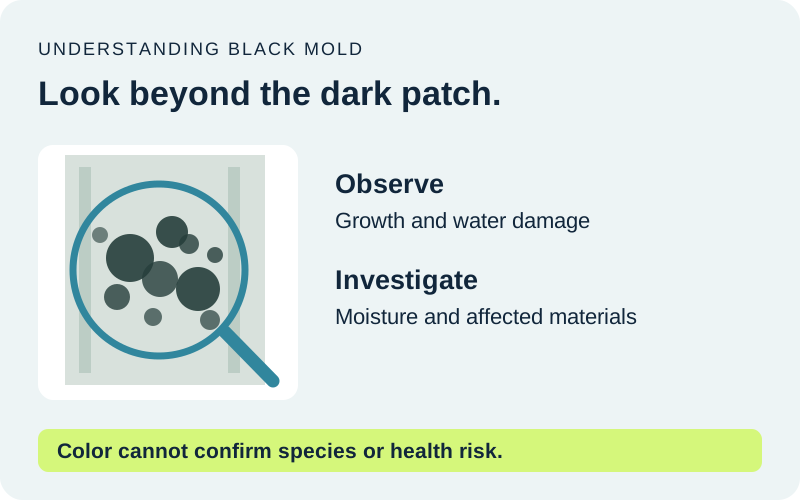
Black mold is a common description for dark-colored mold growth. It often refers to Stachybotrys chartarum, but several molds can appear dark, so the name alone does not identify a species.
Stachybotrys grows on persistently wet, cellulose-rich materials such as paper and gypsum board. A dark mark on tile or timber does not establish that this particular mold is present. CDC guidance on Stachybotrys recommends addressing indoor mold without waiting to establish its species.
What does black mold look like?
Suspected black mold may appear as dark patches or clustered spots on damp materials. Appearance can flag a problem, but a photo cannot establish the species or the health risk.
| Observation | Useful clue | Not proof of |
|---|---|---|
| Dark spots on a wall or ceiling | A surface worth checking for dampness and growth | Stachybotrys or toxin production |
| Staining after a leak | A history of moisture exposure | The full extent behind the finish |
| Growth returning after cleaning | A reason to investigate unresolved conditions | A particular mold species |
CDC/NIOSH emphasizes that mold color is not a reliable measure of danger. Do not rub, scrape or open a wall simply to identify what is on it.
What does black mold smell like?
A musty or earthy odor can suggest a dampness or mold problem, but it cannot identify black mold. The absence of an odor does not certify that a room is mold-free.
A persistent smell with no visible source warrants investigation of water damage and concealed areas. NIOSH favors careful visual and dampness investigation over treating a short air sample as a complete answer. Record where the odor is strongest without disturbing suspect materials.
Black mold vs. mildew: what is the difference?
Mildew is a term for certain mold growth, often with a flat growth pattern. It is not a separate category that automatically means harmless.
The EPA explains that mildew is commonly used to describe fungal growth on damp surfaces. Household labels such as “mildew,” “regular mold” and “toxic black mold” cannot tell you the depth of damage. Base the response on moisture, affected material and extent rather than a white-versus-black color chart.
What causes black mold in a house?
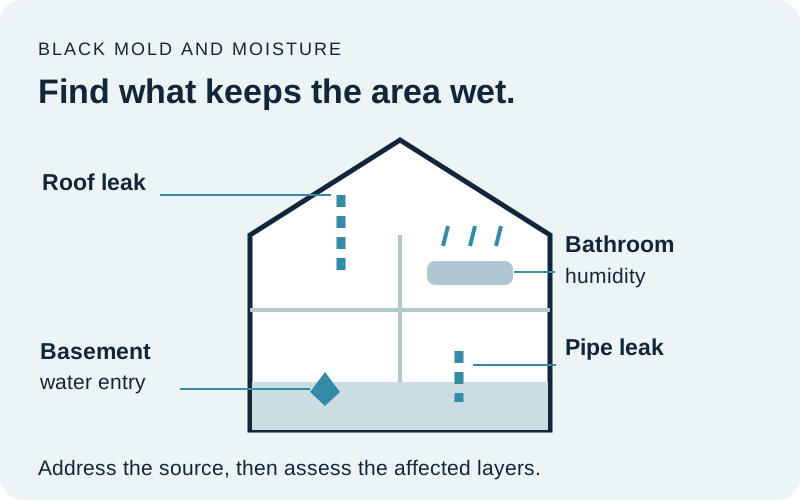
Excess moisture allows mold to grow on suitable materials. Leaks, condensation, flooding and damp building cavities matter more than the room name.
| Location | Moisture conditions to investigate | Materials to assess |
|---|---|---|
| Shower, bathroom or toilet area | Persistent dampness, plumbing leaks and condensation | Surfaces, joints and adjacent finishes |
| Walls, ceilings and attic | Plumbing or roof leaks and condensation | Drywall, insulation and roof materials |
| Basement or crawl space | Water entry, plumbing leaks and damp enclosed spaces | Timber, stored belongings and floor layers |
| Air vents and HVAC areas | Moisture near equipment or ductwork | Accessible surfaces and concealed system components |
These are investigation starting points, not diagnoses based on location. EPA guidance on hidden mold describes concealed growth behind finishes and around moisture sources. A mark around a vent alone does not show that the whole duct system is contaminated.
How long does black mold take to grow?
There is no fixed growth time for every mold species and material. The practical prevention target is to dry wet building materials within 24 to 48 hours.
That window comes from EPA moisture-control guidance; it does not mean every patch becomes visible at 24 hours or becomes “toxic” at 48 hours. Do not wait for spots to appear before responding to a leak.
What are the symptoms of black mold exposure?
A stuffy nose, cough or wheeze, irritated eyes and a skin rash are possible effects of mold exposure. Some people have no symptoms. These symptoms do not identify black mold or prove that mold caused an illness.
- Nose and throat: congestion or irritation.
- Eyes and skin: burning or itchy eyes and a possible rash.
- Breathing: coughing or wheezing, particularly in susceptible people.
CDC health guidance describes different responses depending on the individual. Contact a healthcare professional about persistent symptoms or an asthma flare. Seek urgent care for severe breathing difficulty rather than waiting for a property inspection.
Can black mold cause headaches or fatigue?
Headaches and fatigue alone do not establish mold illness. Mold allergy usually causes nasal, eye or breathing symptoms; chronic headache and fatigue are not its usual presentation. AAAAI recommends clinical assessment because other conditions can produce similar complaints.
Is black mold dangerous?
Indoor mold can affect health, but dark color does not establish a higher danger level. People with asthma, mold allergy, weakened immunity or chronic lung disease need particular care around mold exposure.
CDC/NIOSH links damp buildings with respiratory problems, including worsening asthma and, in susceptible people, hypersensitivity pneumonitis. A cleanup contractor can assess the building; a clinician assesses symptoms and medical risk.
Is all black mold toxic?
No. Color does not show whether a mold produces mycotoxins, whether toxins are present or what a person has been exposed to. Treat indoor growth as a moisture and cleanup problem without assuming a toxin diagnosis.
How long does it take for black mold to make you sick?
There is no universal symptom countdown or safe exposure period. Responses vary, and some people have no symptoms. A website cannot turn the size or color of a patch into a prediction of when an individual will become ill.
Can black mold kill you?
A black patch is not evidence of an imminent fatal exposure. Serious respiratory illness can occur in vulnerable people, so address growth promptly and get medical help for symptoms. CDC states that a proposed link between Stachybotrys and a particular infant lung-bleeding condition has not been proven.
How do you test for black mold?
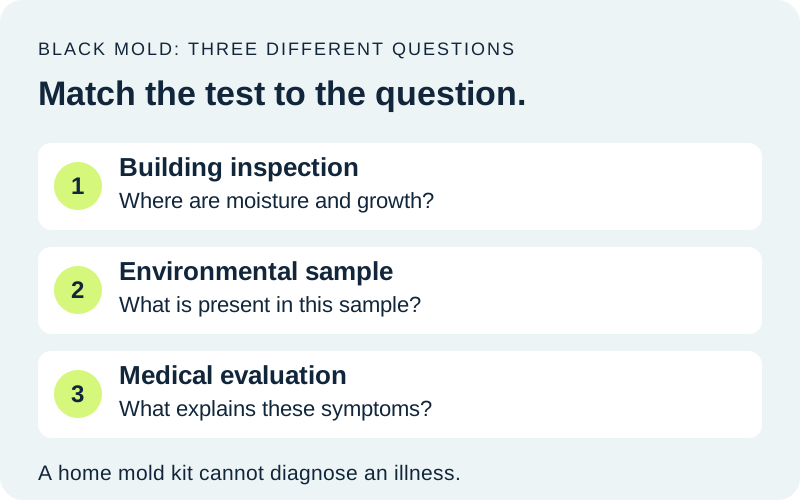
Visible mold usually does not require sampling before cleanup. Investigating moisture and affected materials is generally more useful than buying a test to confirm that a visible patch needs attention.
| Question | Appropriate investigation | Key limitation |
|---|---|---|
| Is this building damp or mold-affected? | Inspection of moisture, materials and accessible growth | Hidden areas may need professional investigation |
| Which mold is in a sample? | A properly planned environmental sample and laboratory analysis | It does not diagnose an occupant |
| Are my symptoms an allergy? | A clinician or allergist evaluates symptoms and suitable tests | A home test kit cannot answer this |
The EPA has no federal airborne mold limit that a home kit can use to certify a “safe” result. A petri dish with growth also does not locate the source of a building problem. If sampling has a specific purpose, use someone qualified to design and interpret it.
Does a mold toxicity test prove that black mold is making you ill?
No. A commercial urine mycotoxin test does not establish that a household mold patch caused your symptoms.
AAAAI explains that these non-FDA-approved tests lack standardized interpretation and harmful-exposure thresholds. Evidence does not support using nonspecific symptoms alone to diagnose the broad syndrome promoted as “toxic mold syndrome.” This does not dismiss established mold-related allergy, asthma or other respiratory illness.
Discuss symptoms with a qualified clinician instead of starting a commercial detox program based on a home mold test. Medical evaluation and fixing a damp building can proceed separately.
How do you get rid of black mold?
Remove the growth, dry affected materials and correct the moisture source. The method depends on the material, affected area and whether contamination extends into concealed spaces.
For a small, accessible hard-surface area, EPA guidance uses detergent and water followed by complete drying. Moldy porous materials may need removal. EPA says an area under about 10 square feet can often be handled by a homeowner, but sewage, substantial water damage, suspected HVAC contamination or health concerns change that decision. See EPA cleanup guidance.
For recurring growth, affected wall cavities or a larger cleanup, our black mold removal page explains professional methods, material decisions, typical costs and cleanup time. We also provide mold remediation in Gettysburg, PA for assessed household problems.
Do bleach, vinegar or peroxide replace mold removal?
No. Killing mold is not the same as removing it. A cleaning product is not a substitute for removing affected material and resolving water entry. EPA guidance does not recommend bleach as a routine mold-remediation method and notes that dead mold can still provoke allergic reactions. Never mix cleaning chemicals.
For suitable small cleanup tasks, CDC recommends protective gloves, eye protection and at least a NIOSH Approved N95 respirator. People with allergies, immune suppression or chronic respiratory disease should not undertake mold cleanup.
How do you prevent black mold from coming back?
Correct persistent dampness and keep materials dry. Aim for indoor relative humidity of 30% to 50% where possible and below 60%, following EPA guidance.
- Repair roof and plumbing leaks.
- Vent moisture-producing appliances and bathroom exhaust outdoors.
- Use dehumidification where needed and address condensation.
- Dry wet materials promptly after a leak or spill.
- Recheck the affected area for renewed dampness after cleanup.
EPA humidity guidance and its prevention summary focus on the water source. An air purifier may capture some airborne particles, but it cannot repair a leak or remove growth within a wall. If damage remains after cleanup, review the need for mold damage repairs.