
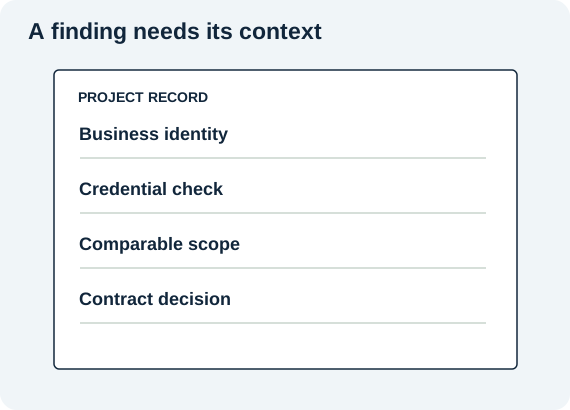
What experience should you ask about?
Ask about cleanup involving similar materials, access conditions, and moisture-related complications.
A basement with finished walls, an attic, and a crawl space pose different assessment and access questions. Ask the company to explain comparable work and provide references you can check. EPA specifically recommends checking experience and references in its advice on hiring cleanup help.
When discussing mold remediation with our Gettysburg team, confirm who will inspect and perform the work, including subcontractors. Ask who is responsible for your questions during the project. A service-area page alone does not establish availability or expertise for your particular property.
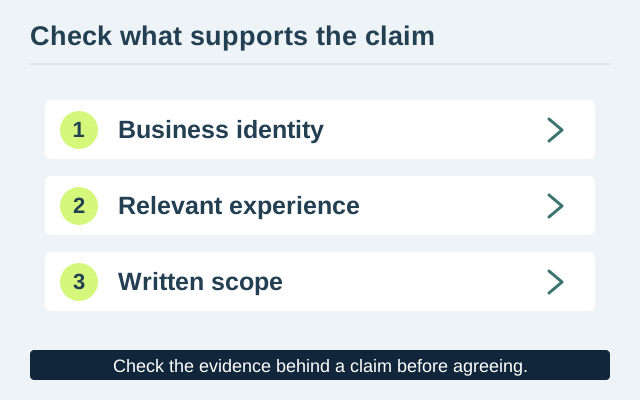
How can you check a certification claim?
Verify the exact credential and the person or firm holding it with the organization that issued it.
The Institute of Inspection, Cleaning and Restoration Certification locator distinguishes certified firms and technicians. A technician’s qualification and a company listing are not the same claim. Match the name on the estimate to the name in the relevant record and record when you checked.
A badge image, generic “certified” statement or membership logo is not a description of the proposed method. Ask who supervises the job and what experience they have with the affected materials. New York licensing language on a competitor’s website does not establish a Pennsylvania requirement.
How should you check credentials and business claims?
Get the exact claim and verify it with the issuing organization or relevant official record.
Ask for the business name on the contract and invoice, the exact credential, its holder, and the verification route. Ask the company about insurance appropriate to the work and how you can verify the documentation. Do not treat a badge image as the entire check.
Testimonials can describe an individual experience but do not establish the scope proposed for your home. Ask concrete questions about communication, changes, cleanup boundaries, and handover when speaking with a reference.
Which contract details matter before you sign?
Resolve the work area, included tasks, exclusions, access, changes, payment terms, and completion review.
Ask how new findings are documented and approved. Identify any allowance and when it may change. A broad promise such as complete mold removal is less useful than a description of affected materials, work controls, handling, and the condition left behind.
The verification guide explains completion reviews and their limits. Keep every agreed change with the original contract.
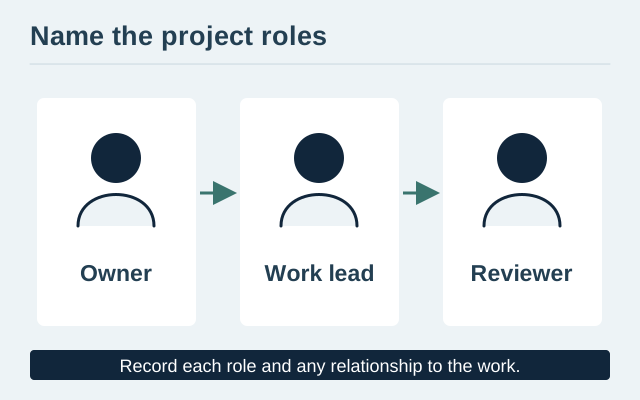
How should you handle conflicting recommendations?
Compare the evidence and scope behind the recommendations before treating the disagreement as a price contest.
One provider may have inspected more accessible areas or included repairs that another excludes. Request the locations, material findings, proposed methods and limits of each assessment. Distinguish observed damage from an optional prevention upgrade.
If the disagreement concerns concealed areas, structural condition or whether testing would change the plan, a suitably qualified independent assessment may help clarify it. Record a missing claim as “not verified,” rather than assuming it is either false or true. Use the cost comparison guide once the proposals describe comparable work.
Which answers help distinguish providers?
Use the same questions with each company you contact.
| Topic | Ask | Evidence to keep |
|---|---|---|
| Experience | Have you handled comparable materials and access? | Checkable references |
| Scope | What is included and excluded? | Property-specific proposal |
| Responsibility | Who handles moisture repair and rebuilding? | Named contacts and boundaries |
| Completion | How is the result reviewed? | Criteria and report scope |
A practical decision example
What if a provider recommends testing before quoting?
Ask what uncertainty the test addresses and how the result changes the proposed work. EPA says visible mold usually does not require sampling, but that does not mean every assessment question is identical. A hypothetical provider should be able to explain the purpose, cost, interpretation, and next decision without relying only on a package name.
Frequently asked questions
What should I ask before accepting your quote?
Ask us to explain the assessed area, methods, exclusions, scheduling assumptions and completion terms. We identify the agreed work in writing so you can make an informed decision.
Should I automatically reject the cheapest estimate?
No. First determine whether the estimates cover the same work and use comparable assumptions. A lower figure may reflect a different scope, exclusions, or pricing. Ask providers to resolve those differences before making a judgment based on the total.
Should I choose the company that promises no mold will ever return?
Evaluate the written scope, moisture correction and actual warranty terms instead of an absolute promise. Indoor spores cannot be eliminated entirely, and future water conditions can change. Ask what the provider will do if the same observation returns, what is excluded and which records you should keep.
Which sources support this guide?
Government and professional resources support the general guidance below. Examples explain general situations and are not reports of customer projects.