
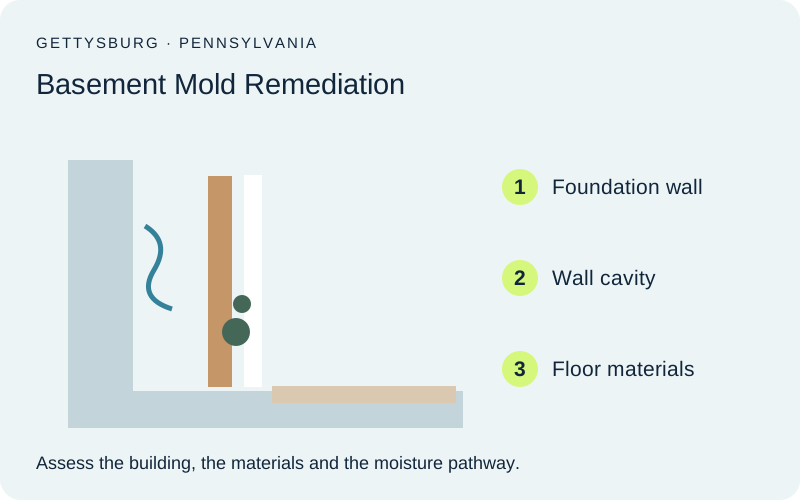
Why does mold keep returning in a basement?
Mold can return when materials stay damp, even after visible surfaces have been cleaned.
| When or where it appears | Possible source | What changes the response |
|---|---|---|
| After heavy rain | Water entering through the building perimeter | Drainage and foundation investigation |
| Beneath a pipe or fixture | Plumbing leak | Repair the leak and assess adjoining layers |
| On cool surfaces during humid weather | Condensation | Measure humidity and investigate surface conditions |
| Behind finishes after past flooding | Unresolved wet or contaminated materials | Inspect the cavity and define selective removal |
A dehumidifier is useful for air moisture but does not repair a pipe or stop bulk water. A working sump pump also does not prove that drywall behind a finished wall is dry. Where active water is present, water extraction and structural drying may be the first stage.
What does basement mold remediation include?
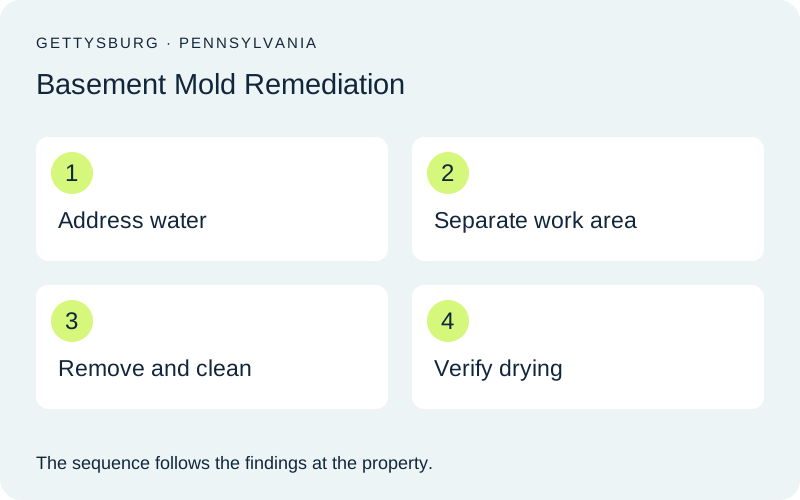
It includes assessment, suitable work-area controls, removal of agreed unsalvageable materials, cleaning and review of moisture conditions.
- Identify affected layers. Consider the visible finish and accessible surfaces behind or below it.
- Protect adjacent rooms. Plan the stairway, access route and any HVAC openings before disturbing material.
- Remove and clean. Separate salvageable surfaces from porous material that cannot be adequately cleaned.
- Dry and review. Document the conditions needed before insulation, flooring or drywall is replaced.
HEPA vacuuming and controlled cleaning address particles left on suitable surfaces. Blowing a fan across visible growth is not a substitute for containment and can spread debris.
Which basement materials can be cleaned and which need removal?
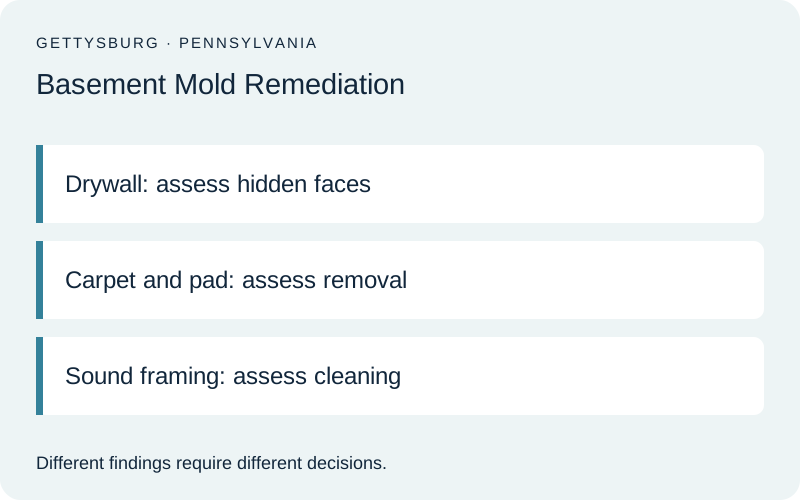
The decision depends on porosity, condition, contamination and access to the whole affected material, not just its visible face.
| Material | Possible decision | Reason to investigate further |
|---|---|---|
| Paper-faced drywall | Remove affected sections where necessary | Mold can be present on the concealed paper face |
| Carpet and padding | Assess removal when moldy | Contamination may extend below the visible pile |
| Sound wood framing | Evaluate physical cleaning and drying | Soft or weakened wood needs repair assessment |
| Concrete or masonry | Assess deposits, dirt and cleanable surfaces | A white deposit is not enough to identify mold |
| Boxes, fabrics and furniture | Separate contents evaluation | Building cleanup does not resolve every affected item |
See contents cleaning for belongings and mold damage in building materials for repair decisions.
Do you need basement waterproofing as well as remediation?
You may need waterproofing or drainage repairs when ongoing water entry feeds the damage; mold cleanup alone does not stop that water.
A one-time appliance leak and recurrent foundation seepage require different corrections. Identify the pathway before choosing a system. Waterproof paint on a finished wall cannot establish that its hidden cavity is dry.
In a finished basement, insulation and vapor-control choices also affect how a wall dries. Department of Energy guidance on basement vapor retarders explains how unsuitable layers can trap moisture.
Example, not a customer case: recurring damage at a wall base after rain warrants a water-entry investigation before new drywall is installed. If a nearby pipe is leaking instead, the correction follows the plumbing. The same stain location does not establish the same cause in every home.
How much does basement mold remediation cost?
$1,500 to $6,000 for a partial basement and $6,000 to $15,000 for a full basement are published national removal ranges.
The figures come from HomeGuide’s February 2026 mold removal cost report, checked September 25, 2026. They are US benchmarks, not a measured Gettysburg average. Finished walls, affected belongings, restricted access and the amount of removal influence the actual project.
Waterproofing, leak repairs and reconstruction are separate costs unless expressly included. Replacing drywall, insulation and finishes begins after the cleanup and moisture requirements are met.
What humidity helps reduce basement mold risk?
EPA recommends keeping indoor relative humidity below 60%, ideally between 30% and 50%, while also correcting leaks and wet surfaces.
Measure conditions instead of relying on how the room feels. A room-level humidity reading does not prove that the back of a wall or a damp carpet pad has dried. The Environmental Protection Agency’s home guide also recommends prompt drying after leaks and attention to condensation.
- Keep stored items away from persistently damp surfaces.
- Maintain drainage and investigate recurring water near the foundation.
- Check dehumidifier drainage and operation.
- Revisit previously affected locations after the moisture correction.
What else should you know about basement mold removal?
Testing, occupancy and insurance depend on the actual conditions and project scope rather than the word “basement.”
Should mold be tested before removal?
Visible mold usually does not need sampling to establish that cleanup is necessary, according to EPA testing guidance. Samples can answer a defined question, but the investigation still needs to address materials and moisture. Do not postpone an active leak repair while waiting for species identification.
Can I stay upstairs during basement remediation?
Sometimes, but the stairway, air pathways and work boundary need assessment first. The project plan should define restricted areas and account for the people living there. Do not assume a closed basement door alone provides the controls required for the proposed work.
Does insurance cover basement mold?
Coverage depends on the policy, exclusions and the cause of the moisture. A sudden covered leak and gradual seepage may be treated differently. Our insurance guide explains the distinction; the insurer determines coverage for the specific claim.
For cleanup that extends beyond this service, our Gettysburg mold remediation services connect the affected areas with a property-specific plan.
How do you arrange basement mold remediation in Gettysburg?
Call (844) 578-3055 or use the quote form to request an assessment for your property. We confirm the service scope, fees and availability before work is agreed.
Include the affected location and any visible growth, moisture or odor. For an older home in historic Gettysburg, mention access restrictions and original materials that need consideration. Service availability is confirmed for the property address in Gettysburg or Adams County.