
What is the difference between efflorescence and mold?
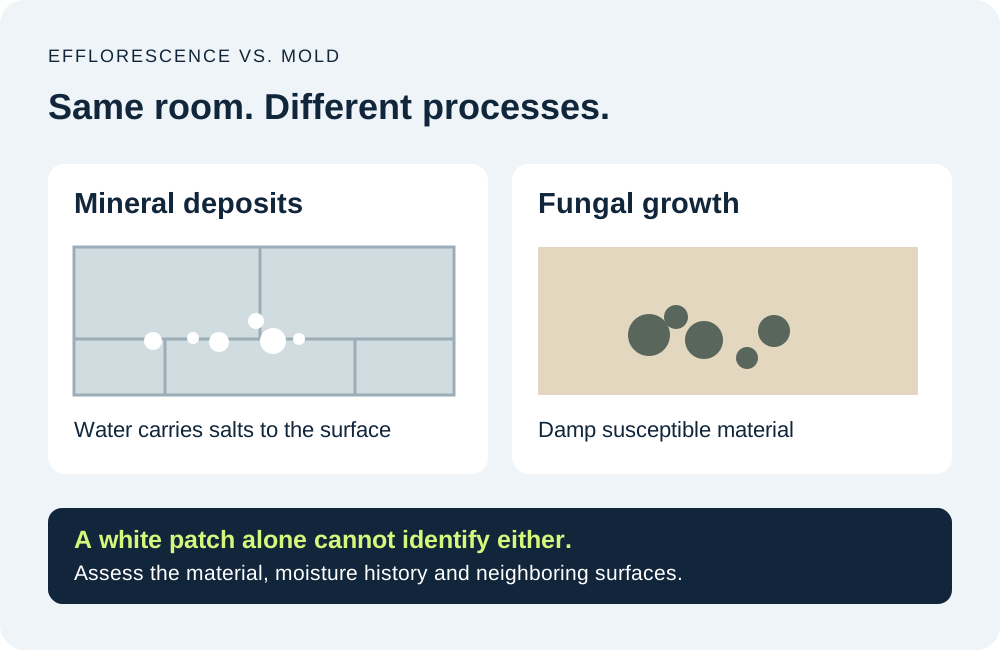
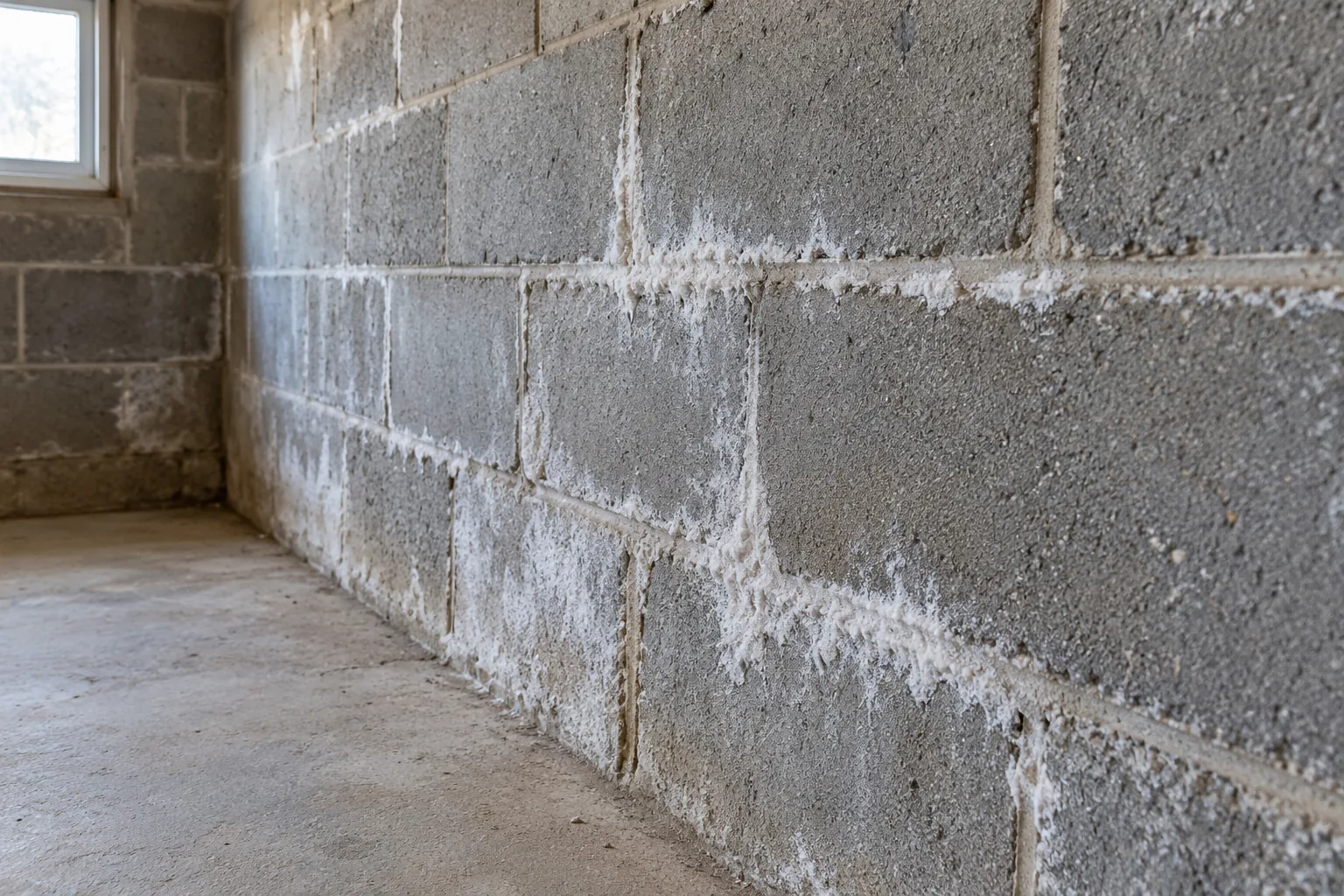
Efflorescence is a mineral deposit; mold is fungal growth. Water can carry dissolved salts through masonry and leave them at the surface as it evaporates. Mold develops on suitable damp materials. A white patch is not enough to tell which process is present, and both can occur in one basement.
The Brick Industry Association explains that salts, water and a route to the surface are needed for efflorescence. The deposit may be evidence of earlier wetting rather than a wall that is still wet today.
| Feature | Efflorescence | Mold |
|---|---|---|
| What it is | Minerals left on a surface | Fungal growth on a suitable material |
| Common setting | Brick, block, mortar and concrete | Damp wood, paper facing, dust and other susceptible surfaces |
| Appearance | Often pale, powdery or crystalline; can look fluffy | Variable patches or spots; color is not a species test |
| What needs attention | Water movement and the condition of the masonry | Moisture, affected materials and appropriate cleanup |
| What the finding cannot prove | That the room is mold-free | Where all moisture originated or whether someone is ill |
Can you identify white mold by color or texture?
Color and texture provide clues, but they cannot confirm white mold. A commonly repeated rule says that salts are powdery while mold is fluffy. That distinction is unreliable: the Concrete Society describes salt efflorescence as a white fluffy deposit.
Observe the material underneath, the deposit's location and any surrounding damage without rubbing or smelling it closely. White residue on bare block raises a different question from discoloration on the paper face of drywall. Neither observation establishes a species. Our mold versus mildew guide explains another pair of terms that cannot be resolved by color alone.
Does the water test distinguish efflorescence from mold?
A water test is not a reliable stand-alone identification method. Some deposits dissolve readily, but mineral chemistry varies. The Concrete Masonry & Hardscapes Association notes that calcium compounds can form calcium carbonate, which is only slightly soluble in water.
Therefore, a patch that remains after wetting is not automatically mold. A patch that disappears does not establish that adjacent paint, wood or wall cavities are unaffected. Wetting also changes the condition you are trying to assess. Do not spray an unidentified patch simply to classify it. If identification would change the repair scope, arrange an inspection rather than repeatedly disturbing the surface.
Can efflorescence and mold occur together?
Efflorescence and mold can occur together: salts on masonry and mold on nearby susceptible materials can be separate consequences of damp conditions. Finding a mineral deposit does not clear the rest of the wall assembly. The CDC lists wood, paper, drywall, paint and dust among materials where mold can grow.
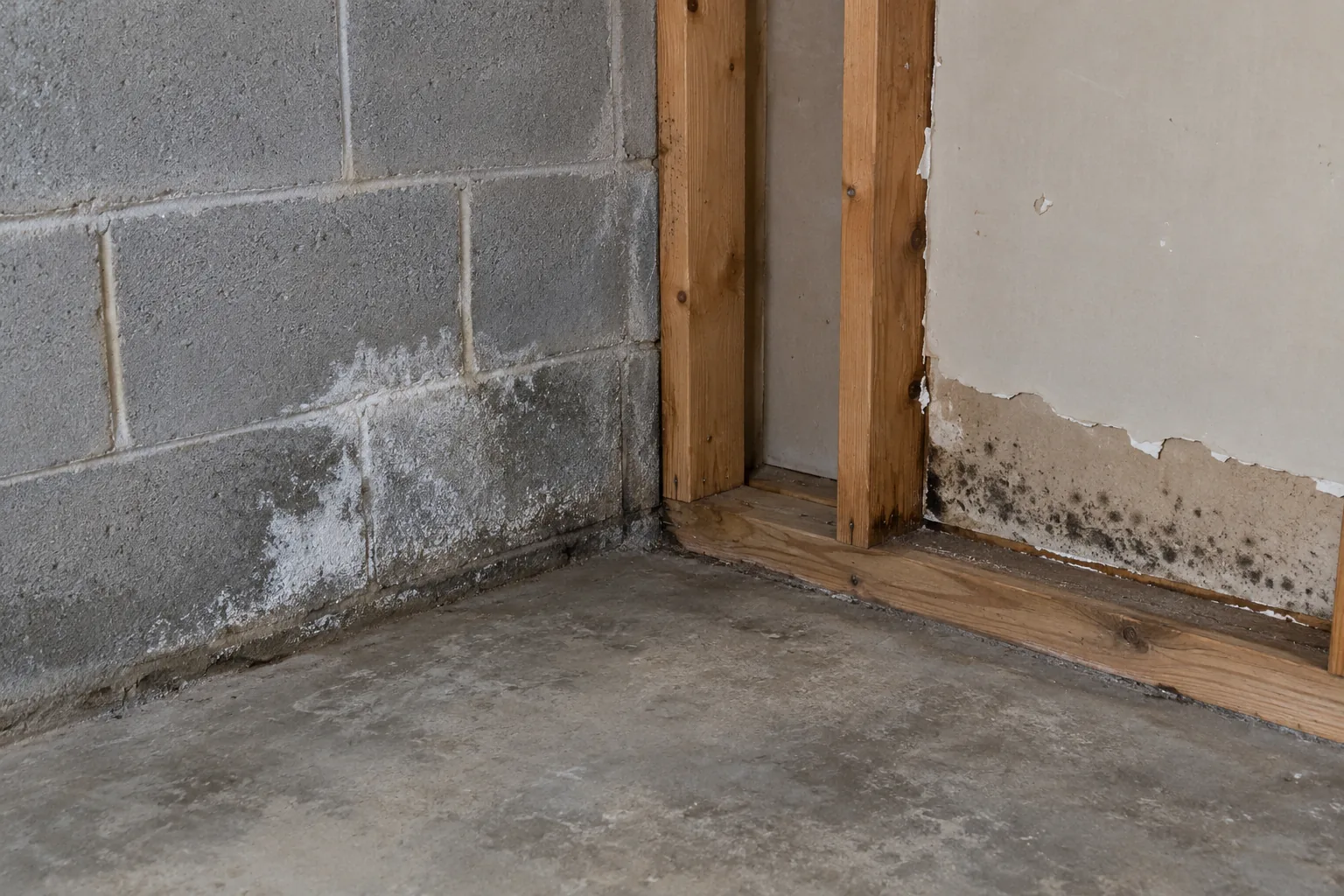
For example, consider a hypothetical basement with white residue on block and a damp cardboard box against it. The block deposit and the box need separate assessments. In a second hypothetical situation, clean-looking paint covers a wall beside softened baseboard. The absence of a visible white patch does not explain the damaged trim. These are examples of reasoning about materials, not reports of completed jobs.
What do deposits reveal about basement moisture?
Efflorescence deposits show that mineral-bearing moisture reached the surface, but the deposits do not identify the entire water path. New masonry can develop temporary deposits as construction moisture dries. Recurring localized deposits deserve investigation for continuing wetting. Rain entry, ground moisture and condensation are possibilities, not diagnoses made from a photograph.
| Observation | Useful investigation | Avoid concluding |
|---|---|---|
| A patch returns after rain | Examine exterior drainage, openings and the corresponding wall area | That one specific crack must be the source |
| Widespread deposits on new masonry | Review construction history and whether wetting continues | That the foundation has failed |
| Peeling paint beside damaged trim | Assess the coating, masonry and adjoining material separately | That all damage is merely salt residue |
| A dry wall with old residue | Compare present condition with the history of leakage or repairs | That the visible residue proves an active leak today |
The table above is an investigation framework, not a substitute for access to the building. A mold inspection can connect surface observations with moisture measurements and material condition when the answer remains unclear.
Is efflorescence dangerous?
Efflorescence is not mold, but its presence does not certify a healthy room or sound wall. The deposit and the underlying wetting problem are different findings. Deteriorated masonry, persistent wetting or damaged adjacent materials need their own assessment.
Mold exposure can affect people differently, according to the CDC, and a photograph cannot measure an individual's risk. Seek medical advice for health concerns rather than using deposit color or a home test as a diagnosis. Do not handle unidentified residue unnecessarily.
Should you clean, seal or paint the wall?
Identify the material and correct the moisture source before choosing a cleaning or coating method. Masonry salts and mold are different problems, so a product advertised for one should not automatically be used for the other.
- Confirmed mineral deposits: use a method compatible with the masonry and its finish. The Brick Industry Association cautions against relying on coatings alone to control efflorescence.
- Confirmed mold: the EPA recommends fixing the water problem, cleaning suitable hard surfaces and drying them. Affected porous materials may need removal.
- Painted or deteriorated walls: assess the finish and substrate before scraping or applying chemicals. Do not paint over mold or use new paint to hide an unresolved damp area.
A persistent wetting problem may require drainage or building repairs as well as cleanup. Confirmed mold on basement materials moves to basement mold remediation with its own scope and quote. Gettysburg Mold Remediation Help connects homeowners with independent companies for mold removal in Gettysburg, PA when a basement wall shows suspected growth.