
What is the difference between mold and mildew?
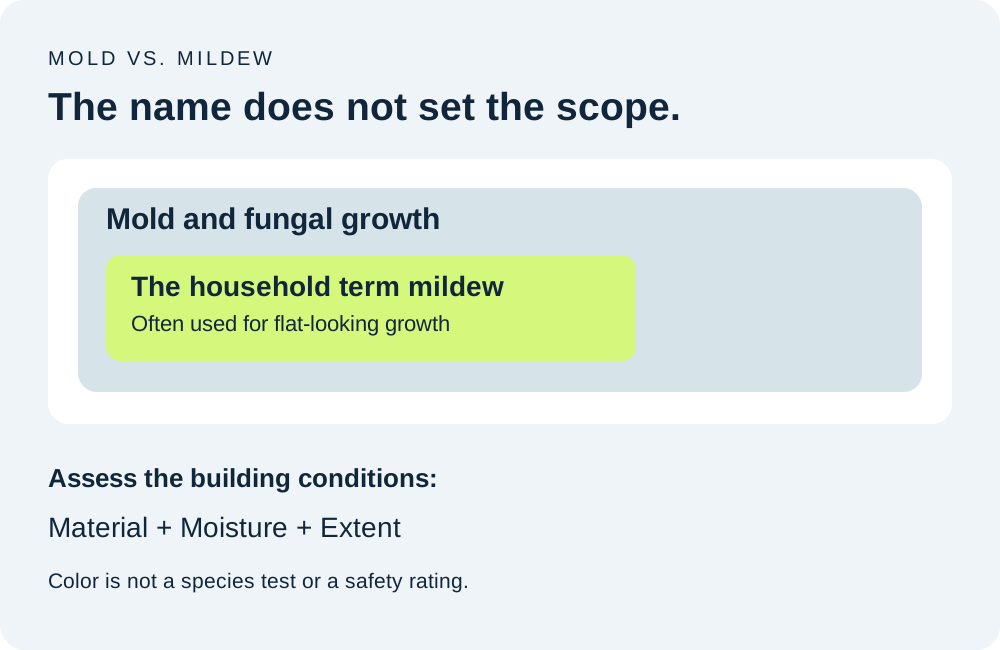
Mildew is a common name for certain mold or fungal growth, often with a flat appearance. It is not a separate household category that automatically means harmless or easy to remove.
The EPA's definition of mold and mildew explains why the words overlap. Mold grows as microscopic filaments, called hyphae. The everyday word mildew describes some growth people encounter on damp surfaces, including shower walls and windowsills.
| Question | Mold | Mildew |
|---|---|---|
| What does the term mean? | A broad description of filamentous fungal growth. | A common term applied to certain molds or fungi. |
| Does appearance define it? | Growth can vary in color and texture. | Often describes flat growth, but the label is not a laboratory identification. |
| What supports growth? | Moisture and a suitable surface. | The same household moisture problems need attention. |
| What determines the response? | Affected material, extent, moisture source and access. | The name alone does not settle those decisions. |
For named genera rather than everyday labels, see our guide to types of mold found in homes.
Can color, texture or smell tell you which one you have?
No. These observations can help document a problem, but they cannot reliably identify a species, establish exposure risk or show what is behind a surface.
Flat or powdery growth is often called mildew. Fuzzy or dark growth is often called mold. Those familiar descriptions are not dependable rules for deciding whether a wall is affected only on its face. NIOSH explicitly states that mold color does not establish whether it is more or less dangerous.
- Color: a black patch does not confirm a particular species. Our black mold guide explains that identification limit.
- Texture: a thin visible patch does not prove that the backing or wall cavity is unaffected.
- Odor: a persistent musty smell is a reason to investigate moisture, not a way to name a fungus.
- A photograph: it records visible conditions, but cannot establish the moisture content of a concealed layer.
A spot becoming lighter after a cleaner is applied is not proof of a species or of completed remediation. Base that decision on removal and moisture correction rather than a change in color.
Does calling it mildew change how the material should be cleaned?
No. The material and its condition determine whether cleaning is appropriate or whether affected material may need removal.
EPA's basic cleanup guidance distinguishes hard surfaces that can be scrubbed and dried from absorbent materials that can be difficult to clean completely. This is a more useful distinction than assigning a different cleaning product to each household name.
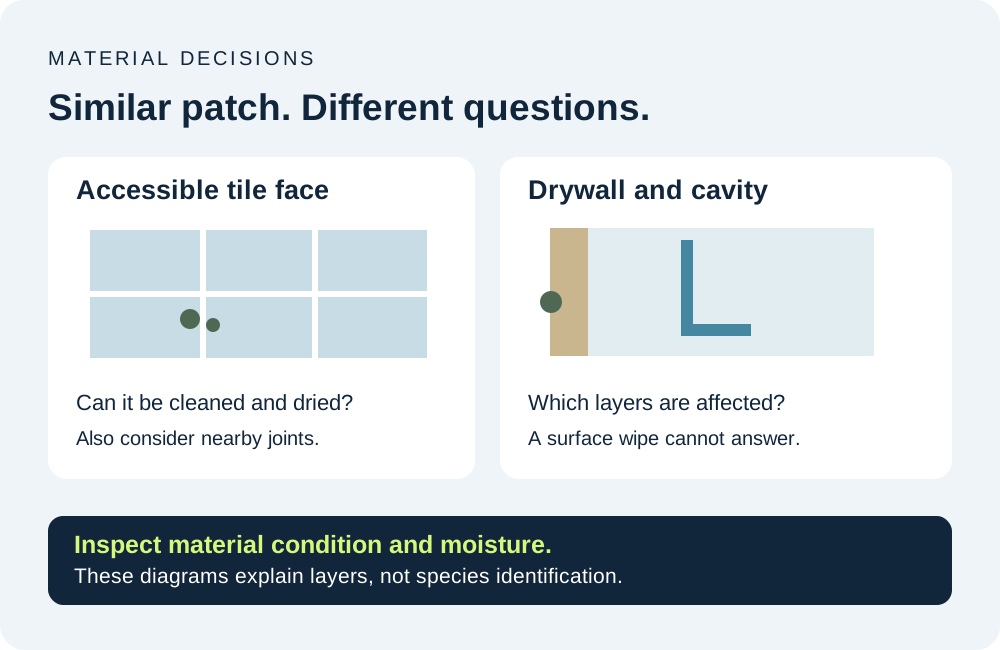
| Location | Decision | What a surface wipe cannot establish |
|---|---|---|
| Accessible hard tile face | Whether physical cleaning and complete drying can address the affected surface. | The condition of adjoining joints or the backing behind the tile. |
| Moldy carpet or ceiling tile | Whether porous material needs disposal because growth cannot be removed effectively. | That growth within the material has been removed. |
| Swollen wall below a leak | The extent of wet or damaged material and whether the cavity needs investigation. | That the assembly is dry or undamaged. |
| Recurring growth around a seal | Whether moisture entry or an affected adjacent layer remains unresolved. | That replacing the visible seal alone will solve the problem. |
For a bathroom problem involving the surrounding assembly, bathroom mold removal considers the affected surfaces and moisture conditions together.
Is mildew less harmful than mold?
The word mildew does not establish a lower health risk. Reactions to damp or moldy environments vary by person, so an appearance-based label cannot tell you whether an exposure is safe.
CDC's mold overview describes possible nasal, eye, skin and respiratory effects and notes that people with asthma, mold allergies, weakened immune systems or chronic lung disease may face particular concerns. A home mold sample cannot diagnose the cause of someone's symptoms.
If someone has health concerns, obtain medical advice about their circumstances. Do not deliberately smell, touch or disturb a patch to decide how dangerous it is.
When can you clean a small patch yourself?
A homeowner can often handle a moldy area smaller than about 10 square feet, provided the situation does not involve significant water damage, contaminated water, suspected HVAC contamination or other complicating factors.
This is the qualified rule of thumb in EPA's home cleanup guidance, not a universal safety boundary. Follow its protective-equipment guidance and seek health advice when relevant before attempting cleanup.
- Correct the moisture source rather than only treating the visible patch.
- Choose a method appropriate to the affected material. Hard surfaces and absorbent materials require different decisions.
- Physically remove the growth and dry the area. Do not paint or caulk over mold.
- Revisit the area and investigate renewed growth or dampness.
Do not run an HVAC system that you suspect is contaminated with mold. Seek appropriate help for sewage-related damage, extensive growth or concealed damage instead of using a small visible patch as the only measure of the problem.
Why does the patch keep coming back after cleaning?
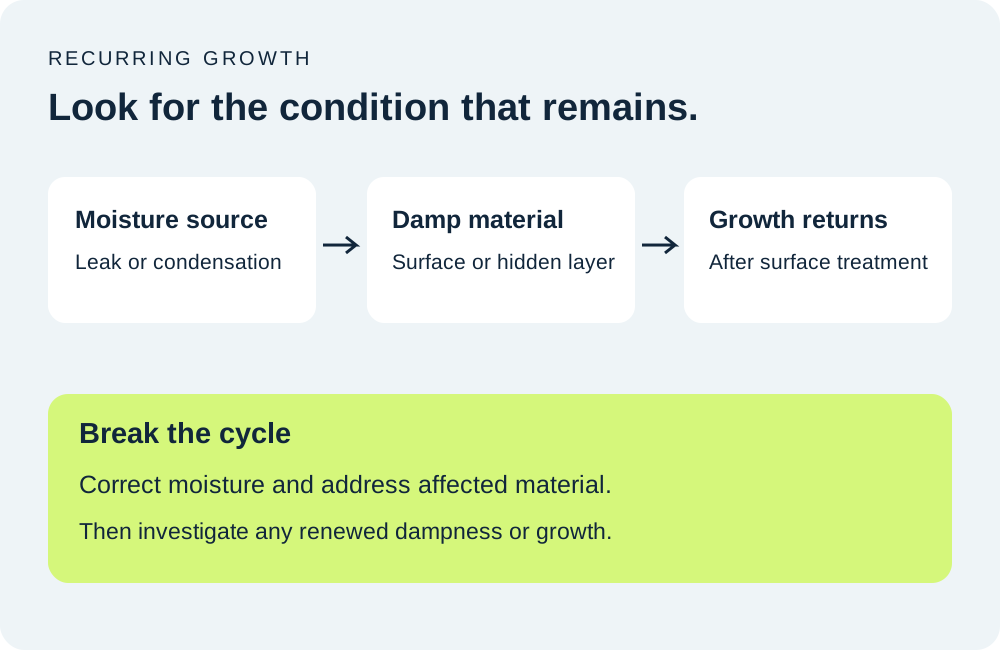
Recurring growth means the moisture source, affected material or both need another look. Changing the name from mildew to mold does not explain the recurrence.
Compare these hypothetical situations. They illustrate decisions rather than diagnose a particular home.
- Tile that stays damp after showers: the useful investigation concerns drying and ventilation. Calling the patch mildew adds little to that investigation.
- A painted wall below a leaking pipe: surface cleaning leaves the leak and potentially affected wall layers unresolved.
- A musty room with no visible growth: the immediate task is locating moisture and a possible concealed source, not choosing between two visual labels.
EPA's building investigation guidance covers concealed locations such as wall cavities and the backs of building materials. An inspection of moisture and affected materials can help define what needs investigation. Avoid opening a suspected contaminated cavity casually, because disturbance can spread contamination.
Do you need a test to distinguish mold from mildew?
Usually not. Visible growth generally does not need a laboratory name before the growth and moisture problem are addressed.
According to EPA's sampling guidance, sampling is usually unnecessary where mold is visible. There are no federal mold concentration limits that turn a household sample into a universal safe-or-unsafe result. If a specific investigation requires sampling, an experienced professional should design and interpret it.
For recurring growth or suspected hidden damage, our mold remediation in Gettysburg, PA focuses on the building conditions that determine the work. You do not need to settle the mildew-versus-mold label before requesting an assessment.
How do you prevent mold and mildew from returning?
Repair leaks, dry wet materials promptly and control indoor humidity. Prevention addresses moisture rather than one particular color or household name.
EPA recommends drying wet materials within 24 to 48 hours and keeping relative humidity below 60%, ideally 30% to 50%. These are prevention targets, not proof that an already affected wall is clean or dry.
- Vent bathroom and kitchen moisture outdoors where practical.
- Address condensation and plumbing or roof leaks when they appear.
- Use a humidity measurement to guide moisture control instead of relying on how the room feels.
- Investigate a recurring stain or smell instead of repeatedly covering it.