
What is black mold remediation?
Black mold remediation removes indoor mold growth, cleans affected materials and addresses the moisture that lets it grow.
Removal is one part of remediation. A complete project also defines work-area protection, drying and completion checks. The terms mold abatement and mold mitigation are often used for related work, but the written scope determines what is included.
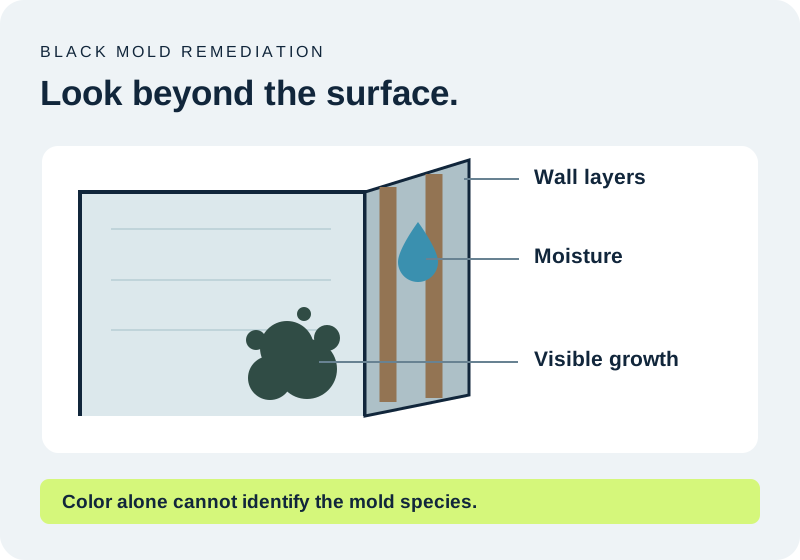
Black mold is a description of appearance, not a diagnosis. Stachybotrys chartarum is one greenish-black mold associated with persistently damp materials such as paper-faced gypsum board. Other molds can look dark too. The Centers for Disease Control and Prevention (CDC) says identifying the species is not necessary before addressing household mold.
Our mold removal in Gettysburg, PA services cover the assessment and cleanup scope. This page focuses on dark growth, removal decisions and the questions homeowners commonly ask about black mold.
For identification, exposure symptoms and testing questions, read our black mold information guide.
What are the signs of black mold in a house?
Dark speckled growth, a persistent musty smell and water-damaged materials are reasons to investigate moisture and possible mold.
Look for conditions you can observe without disturbing the area: staining after a leak, damp wall finishes, condensation or growth returning after cleaning. A photo helps document the location but cannot establish species, depth or health risk. Do not cut open a suspect wall just to obtain a better picture.
The Environmental Protection Agency (EPA) explains that growth may be concealed behind wallpaper and drywall, beneath carpeting or around leaking pipes. Roof streaks alone do not establish an indoor black mold problem; attic materials and the water source need assessment.
How much does black mold remediation cost?
$2,000 to $10,000 per project is the black mold removal range published in HomeGuide's 2026 national cost guide. It is a planning benchmark, not a Gettysburg average or a quote for your home.
The same source gives $15 to $30 per affected square foot for general mold remediation. That rate is not specific to black mold and should not be multiplied by your entire home's floor area.
| Scope | Published range | Use of the figure |
|---|---|---|
| Black mold removal | $2,000 to $10,000 per project | Broad national benchmark |
| Small general mold project, 10 to 100 sq. ft. | $500 to $1,500 per project | Different scope from widespread contamination |
| General remediation | $15 to $30 per affected sq. ft. | Area-based planning only |
Source: HomeGuide: Mold removal costs, February 5, 2026. Access, affected layers, containment and rebuilding change the total. Color alone does not establish the work required.
Can a black mold cost calculator give an exact price?
No. A calculator cannot see wet insulation behind drywall or determine whether framing can be retained. Our quote identifies the assessed work and separates any replacement materials and finished repairs. See the full remediation cost guide for other national benchmarks.
What is the black mold remediation process?
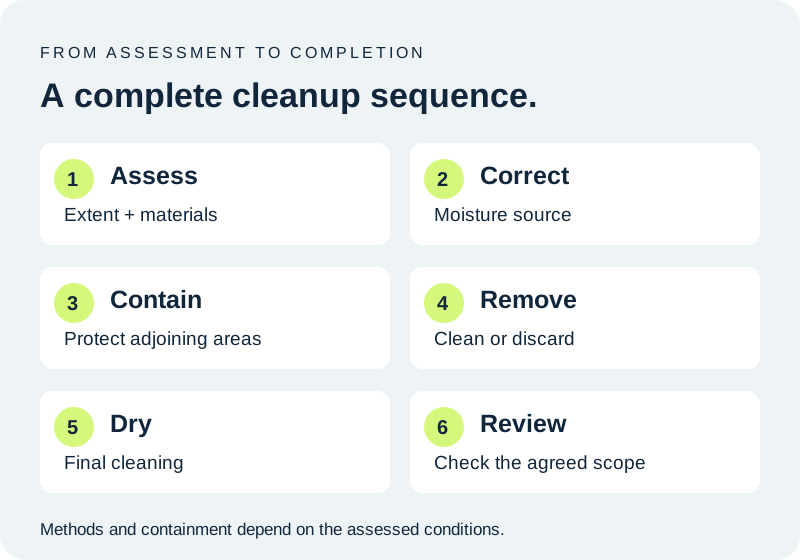
The process is assessment, moisture correction, work-area protection, removal or cleaning, drying and completion review.
- Assess the extent. Identify affected rooms, accessible materials and areas that need further investigation.
- Address the water source. Define leak, condensation or water-entry work and who will complete it.
- Protect adjoining areas. Set containment and access controls appropriate to the project; specify HEPA air filtration where needed.
- Remove or clean affected materials. Separate materials that can be retained from those requiring disposal. Seal removed material before carrying it out of containment.
- Dry and perform final cleaning. Use material-appropriate methods, including HEPA vacuuming where specified.
- Review the result. Check the agreed area, remaining moisture issues and readiness for repairs.
These stages follow EPA remediation guidance. HEPA equipment supports the work; running an air scrubber alone does not remove mold growing inside a wall.
How is black mold removed from walls, wood and floors?
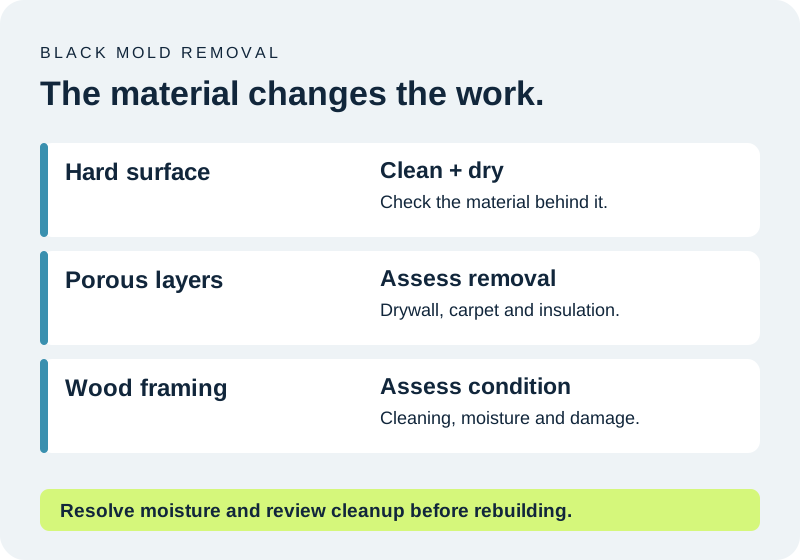
The material and depth of damage determine whether it can be cleaned or must be removed. A wipeable surface and a wet wall cavity need different work.
| Material | Likely decision to assess | What surface cleaning can miss |
|---|---|---|
| Tile, glass and other hard surfaces | Clean and dry if intact and accessible | Damp backing or damaged joints |
| Drywall and insulation | Remove affected porous material when it cannot be cleaned | Growth on the back of the board or within insulation |
| Wood framing | Assess cleaning, drying and structural condition | Decay or moisture at concealed connections |
| Carpet and underlay | Assess disposal of moldy porous layers | The condition of the floor underneath |
| Flooring and subfloor | Assess each layer, including any water damage | Moisture trapped beneath the finished surface |
EPA cleanup guidance distinguishes cleanable hard surfaces from porous materials that may need disposal. Do not paint or caulk over active growth. Our contents cleaning service separately assesses affected belongings.
Does remediation include replacing drywall?
Only when replacement is included in the agreed repair scope. Removing affected board does not automatically include new insulation, drywall finishing or paint.
How does cleanup differ in a basement, bathroom, attic or crawl space?
Each location changes access, moisture investigation and the materials that may need treatment.
- Basement: assess water entry, plumbing and damp materials behind finished walls. Waterproofing is a separate water-control scope.
- Bathroom: distinguish growth on an accessible surface from water damage behind a shower or vanity. Recurrence calls for moisture investigation.
- Attic or roof space: identify roof leaks or condensation and assess sheathing, framing and insulation. Cleanup does not repair the roof.
- Crawl space: account for restricted access, soil moisture, plumbing and affected underfloor materials.
- HVAC or air ducts: arrange assessment of the system itself. Do not operate an HVAC system known or suspected to be mold-contaminated.
EPA guidance on home cleanup addresses the HVAC precaution. For a Gettysburg home, the assessment should follow its actual construction, including additions or finished spaces that hide older materials. We do not infer contamination from the property's age.
Can you assess a commercial mold problem?
Contact us with the building use, location and affected areas so we can confirm whether the project fits our service scope. Commercial work also needs an occupancy and access plan; a residential price example is not a commercial quote.
Is it safe to clean black mold yourself?
DIY cleanup may be reasonable for a small, accessible area under about 10 square feet when there is no significant water damage, contaminated water or suspected HVAC involvement, and you have no health concerns.
EPA uses this size as a general homeowner guideline, not a guarantee of safety. More extensive, concealed or recurring growth needs professional assessment. A dark spot on sound tile is a different task from removing a water-damaged wall.
CDC advises people with allergies, immune suppression or chronic lung conditions to avoid mold cleanup. An N95 does not make an unsuitable DIY project suitable.
| Observed situation | Appropriate next step |
|---|---|
| Small patch on an accessible hard surface; moisture source resolved | Consider limited cleaning with suitable protection |
| More than about 10 sq. ft., hidden damage or repeated growth | Arrange an assessment before disturbing materials |
| Sewage, contaminated water or suspected HVAC contamination | Use a professional with the relevant experience |
| Allergies, immune suppression, asthma or other lung disease | Avoid participating in cleanup and seek individual health advice |
How do you clean a small area of black mold?
For a suitable small DIY area, clean an intact hard surface with detergent and water, then dry it completely and correct the moisture source.
Wear a properly fitting NIOSH Approved N95 respirator, protective gloves and goggles that keep out particles. Follow the cleaner's label and avoid skin, eye and inhalation exposure. Do not dry-brush growth or begin demolition as an extension of a small surface-cleaning task.
Use the CDC protection guidance and EPA cleaning method. If cleaning reveals softened board, deeper damage or a larger affected area, stop and arrange an assessment.
What kills black mold, and does vinegar or bleach work?
Killing mold is not enough: the growth must be physically removed and the moisture problem corrected. No spray is a complete substitute for remediation.
Should you use bleach?
EPA does not recommend bleach as a routine mold-cleanup treatment. Dead mold can still cause allergic reactions. EPA explains the limits of biocides; CDC also describes bleach use in some cleanup situations. Neither approach makes damaged porous material cleanable simply by soaking it. Never mix bleach with vinegar, ammonia or another cleaner.
Does vinegar kill black mold?
Do not rely on vinegar to remediate a mold-damaged wall or guarantee complete removal. Its use does not resolve wet insulation, inaccessible growth or a leak. The EPA hard-surface method described above is detergent, water and complete drying.
What kills black mold instantly?
No instant-kill claim proves that a building has been remediated. A product's contact time and permitted surfaces come from its label, and the project still needs removal, drying and moisture correction. Homemade mixtures, paint and deodorizing do not replace those steps.
How long does black mold remediation take?
About 1 to 3 days for small to medium projects, and up to 7 days for larger work, is HomeGuide's published general mold-removal benchmark. Repairs can take longer.
Source: HomeGuide's removal timeline. This is not a species-specific timetable. Scheduling, hidden damage, drying, outside review and rebuilding can extend the total time. See our remediation timeline guide.
The 24 to 48 hour advice for drying newly wet materials is a prevention target, not a promise to finish established mold remediation in two days.
Is black mold dangerous, including mold behind walls?
Indoor mold can affect health, but its color or position behind a wall cannot determine a person's risk.
CDC describes possible effects including nasal irritation, coughing, wheezing and worsening asthma; some people have no symptoms. CDC/NIOSH says color does not establish how dangerous a mold is. Do not disturb a wall cavity to check its appearance. People with persistent symptoms should seek medical advice; a remediation assessment is not a medical diagnosis.
Can you stay in the house during remediation?
Sometimes, if the work can be separated from occupied rooms and the project plan allows it. Whole-home involvement, essential access routes or health concerns can require temporary relocation.
CDC advises people with asthma, COPD or immune suppression not to remain in a moldy home during cleanup. Agree on access before work begins, and keep children and pets out of the work area.
Do you need a black mold test before removal?
Usually not when visible mold is already present. Cleanup and moisture correction generally do not require a species name first.
EPA says visible growth usually makes sampling unnecessary. A professional may recommend sampling for a defined investigation or review question. There is no federal airborne mold limit that turns a single result into proof a home is healthy.
A DIY dish growing mold does not establish the source or scope of a building problem. If testing is proposed, its purpose and interpretation should be clear. Our completion review service distinguishes cleanup records from any separate independent assessment.
Does black mold remediation work, and can the mold come back?
Remediation can remove the affected growth, but mold can return if materials stay damp or another moisture problem develops.
EPA emphasizes cleaning up the growth and fixing the water problem together. No provider can remove every airborne mold spore from a home. Completion should focus on the defined work area and its condition, not a promise of permanent sterilization.
- Repair leaks and investigate recurring condensation or water entry.
- Dry newly wet materials within 24 to 48 hours where possible.
- Keep indoor relative humidity below 60%, ideally 30% to 50% where practical.
- Vent moisture-producing appliances and bathrooms appropriately.
- Recheck previously affected areas for water damage, odor or new growth.
These prevention measures come from EPA's household moisture guidance. A dehumidifier can help manage humidity; it does not fix a leaking pipe or remove established growth.
Does homeowners insurance cover black mold remediation?
Coverage may apply when mold results from a covered event, but exclusions, limits and the cause of the moisture determine the claim.
This insurer's mold coverage explanation distinguishes sudden covered water events from maintenance-related mold. Do not assume that finding black growth establishes coverage. Keep photographs, the water-event history and cleanup records, and obtain your insurer's written decision. Our Pennsylvania insurance guide explains the policy questions.
Where can you buy black mold remediation supplies?
Hardware stores, home-improvement stores and safety-equipment suppliers sell basic cleanup protection and materials; restoration suppliers carry specialist equipment.
For an appropriate small DIY cleanup, the useful items are a NIOSH Approved N95, suitable gloves, protective goggles, detergent and cleaning materials. Choose protection and cleaners for the actual task and follow their instructions. Buying a respirator, fogger or HEPA machine does not qualify a homeowner to remove contaminated walls.
For professional work, the required equipment follows the assessed containment, cleaning and drying plan. We do not recommend a universal black mold removal kit or a specific chemical for every material.
How can you request black mold remediation in Gettysburg?
Call (844) 578-3055 or use our quote form to request an assessment and a property-specific black mold cleanup quote.
We handle inquiries for Gettysburg homes in Adams County. Include the property ZIP code, affected rooms and known leaks so we can confirm the appropriate service and scheduling. For urgent water damage, mention any active leak first; do not enter an electrically unsafe or structurally damaged area.
Our service scope can cover containment, removal, cleaning and agreed repairs. Testing, specialist HVAC work and source repairs are identified separately when needed. We explain the proposed work before you approve it.
Request a black mold quote