
What should you do immediately after water damage?
Keep people away from electrical and structural hazards, stop the water only if it is safe, and arrange prompt assessment. Do not enter standing water to reach a breaker or appliance.
- Check immediate danger. Leave an unsafe building. Call 911 for a life-threatening emergency; a restoration quote line is not an emergency service.
- Control the source safely. If a shutoff is reachable from a dry, safe location, stop the supply. Otherwise contact the appropriate utility or qualified trade.
- Document accessible damage. Photograph affected rooms and belongings without entering hazardous areas, then notify your insurer.
- Arrange water removal and drying. Describe the source, affected rooms and whether water is still entering.
The Centers for Disease Control and Prevention (CDC) advises having electrical safety established before using powered cleanup equipment. Stay out from beneath a damaged or sagging ceiling.
What is water damage restoration?
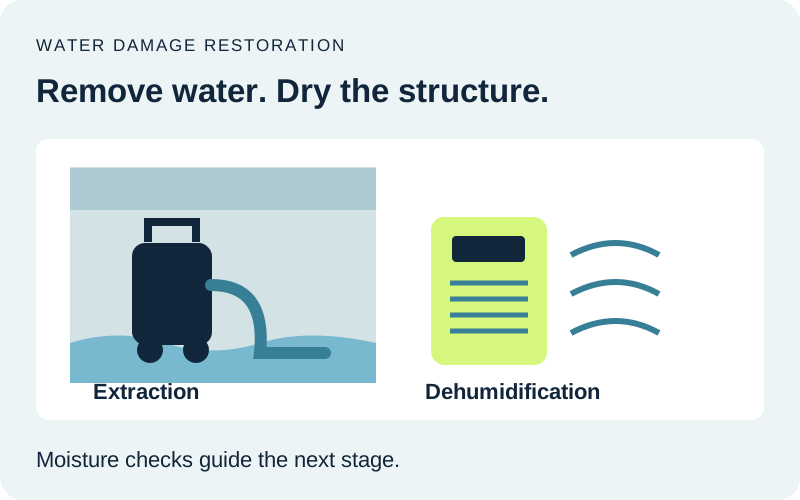
Water damage restoration is the assessment, water removal, drying, cleaning and repair of a property after unwanted water enters it. The work may include affected belongings as well as the building.
We provide water damage restoration assessment and quotes for Gettysburg homes, including damage after a burst pipe, appliance leak or basement water event. The agreed scope identifies extraction, material treatment, drying and repair work. Plumbing, roofing or other work that stops the original leak needs its own clear responsibility.
| Work | Main purpose | Typical focus |
|---|---|---|
| Water mitigation | Limit further damage | Source control, extraction and initial drying |
| Water damage restoration | Recover affected spaces | Cleaning, structural drying and necessary repairs |
| Mold remediation | Address established mold growth | Work-area protection, removal or cleaning, moisture correction |
These services can overlap. If growth is already present, our mold removal in Gettysburg, PA services address the mold-related work alongside the water-damage assessment.
How does the water damage restoration process work?
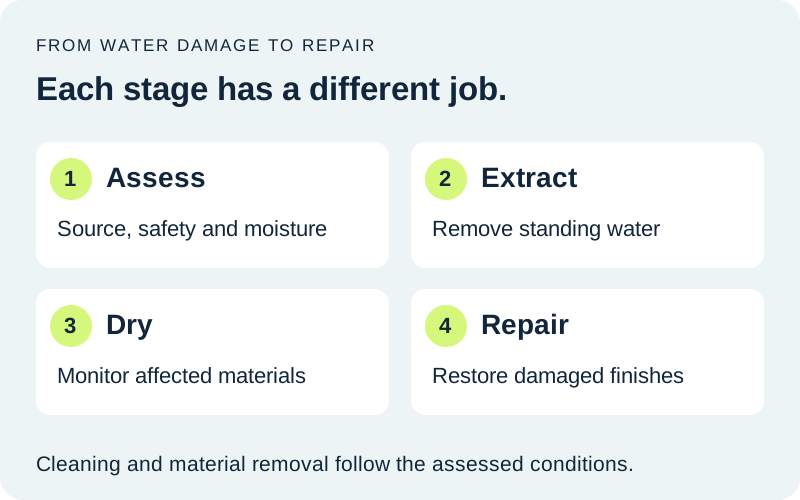
The process moves from safety and moisture assessment to extraction, controlled drying, cleaning and repairs. Each stage depends on the condition of the affected materials.
- Inspect and map moisture. Identify the water source, affected rooms and potentially wet layers.
- Extract standing water. Remove accessible water with equipment suited to the situation.
- Assess materials. Separate what can be cleaned and dried from what needs removal.
- Dry and monitor. Use appropriate air movement and dehumidification, checking progress with moisture measurements.
- Clean and repair. Complete required cleaning, then replace damaged finishes after drying criteria are met.
The Institute of Inspection, Cleaning and Restoration Certification (IICRC) S500 standard addresses inspection, drying technology, materials and project documentation. The standard does not mean that every restoration job includes fixing the original pipe or roof leak.
If a past leak has left unexplained odors or recurring growth, a mold and moisture inspection can investigate the affected area and whether targeted testing would be useful.
How much does water damage restoration cost?
$1,383 to $6,369 per project is the typical national range reported by Angi in September 2026, with an average of $3,868. This is a US benchmark, not a measured Gettysburg average.
| Scope | Published cost | How to use it |
|---|---|---|
| Water damage restoration project | $1,383 to $6,369 | Typical national range; assessed work varies |
| Water-damaged ceiling repair | $450 to $1,600 | Repair component, not a complete restoration price |
| Water-damaged drywall repair | $300 to $850 | Repair component; affected size changes the job |
| Water-damaged flooring repair | $200 to $3,000 | Material and extent affect the result |
Source: Angi’s September 11, 2026 cost report. Its project figures draw on 1,500 reported projects. Do not add these component ranges to the project range automatically; the scopes may overlap.
Our property-specific quote follows the affected rooms, contamination, access, drying requirements and repairs. A small ceiling stain and water behind several finished walls can require very different work. A square-foot calculator cannot measure concealed moisture.
How long does water damage restoration take?
Allow roughly 2 to 7 days for drying as a general planning range, with repairs adding time. Extensive structural damage can make the full restoration a weeks-to-months project.
Angi’s July 2026 timeline guide publishes the 2-to-7-day drying range. It is not a guaranteed schedule for your home. Water removal may finish before the wall cavity or subfloor is ready for repairs.
- Extraction: removing visible water is the initial stage.
- Drying: material readings and progress determine when equipment can be removed.
- Rebuilding: finishes, specialist trades and material availability affect completion.
Turning off a dehumidifier because a surface feels dry can leave moisture in deeper layers. The completion decision should follow the assessed materials rather than a fixed number of fan-running hours.
Does the water source change the cleanup?
Yes. A recent supply-line leak and a sewage or outdoor flood event require different contamination assessments. Clear-looking water is not proof that it is sanitary.
| Situation | What needs assessment | Immediate boundary |
|---|---|---|
| Recent supply-line leak | Affected materials, duration and contact with contaminants | Use electrical equipment only after safety is established |
| Appliance or wastewater overflow | What the water carried and which layers it entered | Do not assume ordinary household cleaning is sufficient |
| Sewage backup or outdoor floodwater | Biological or chemical contamination and material disposal | Keep occupants away from affected water and materials |
The Environmental Protection Agency (EPA) notes that floodwater may bring sewage or chemicals indoors. The terms clean, gray and black water describe contamination concerns; they are not a visual color test. A water category is also different from the extent of saturation.
Do not direct household fans across contaminated water or visible mold. Suspected contamination needs a suitable cleanup plan before air movement is used.
Can water-damaged drywall, ceilings and floors be saved?
Some clean-water-damaged materials can be dried in place; swollen, contaminated or unsalvageable layers may need replacement. Inspect both the visible finish and the material behind or beneath it.
| Material | Possible recovery route | Important limit |
|---|---|---|
| Drywall | Dry in place if not swollen and seams remain intact | Wet cavities and damaged board need further assessment |
| Ceiling tiles and insulation | Remove and replace affected material as appropriate | Do not treat a dry-looking face as a dry assembly |
| Tile, vinyl and other flooring | Clean the surface and assess underlying layers | Water can remain beneath the finish |
| Wood and hardwood | Prompt controlled drying and condition checks | Aggressive heat can damage wood; salvage is not guaranteed |
EPA’s clean-water material guidance supports these distinctions. Its clean-water advice should not be applied unchanged to sewage, flood contamination or established mold.
Replacing damaged drywall or floor finishes is a repair stage. If mold is involved, see our mold damage repair service for the handover between cleanup and rebuilding.
What is different about basement water damage?
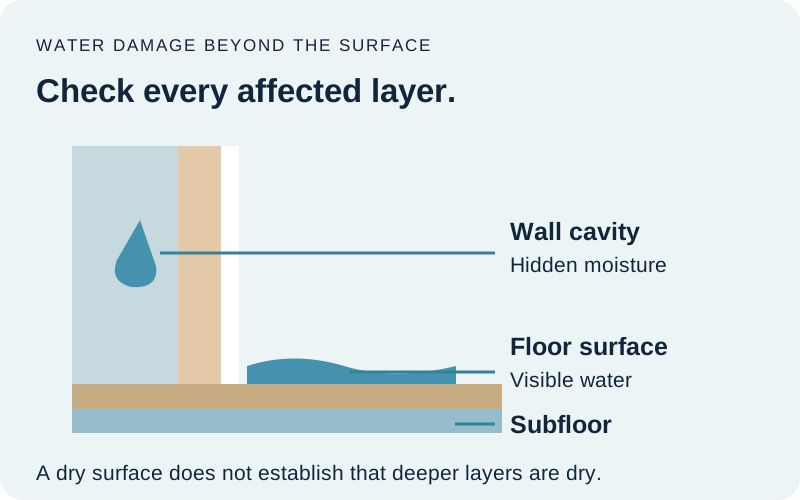
A basement assessment must address both the incoming water and any moisture trapped in finished walls, flooring or stored contents. Extracting water alone does not fix the cause of repeated flooding.
Tell us whether the event followed plumbing failure, rainfall, a sump problem or an unknown source. In Gettysburg and Adams County homes, the relevant issue is the actual construction and water path at the property, not the age or neighborhood alone.
For example, a hypothetical leak beside a finished basement wall can wet the floor, the back of the drywall and the wall base. A dry top surface would not establish that all three are ready to enclose. Source repair, drying and replacement are separate decisions.
Basement waterproofing, drainage changes and sump repairs may be needed to prevent recurrence, but they are not automatically part of a water-extraction job.
Does water damage always cause mold?
No, but wet materials left unresolved create conditions for mold growth. EPA recommends drying wet areas and belongings within 24 to 48 hours where possible to help prevent it.
That is a prevention target, not a promise that every species appears at an exact hour. EPA mold and moisture guidance also emphasizes fixing the water problem. Existing growth needs cleanup, even after the original leak stops.
Dark growth does not identify a species or prove a particular health risk. Read our guide to black mold signs and causes, or see black mold remediation when affected materials require removal or treatment.
For signs in walls and floors, material salvage and insurance questions, read our mold damage guide.
Does homeowners insurance cover water damage restoration?
Sudden, accidental water damage may be covered; outdoor flooding usually requires separate flood insurance. The cause, policy exclusions and endorsements determine the outcome.
| Cause or loss | General coverage consideration |
|---|---|
| Sudden burst pipe or appliance leak | Resulting damage may be covered, subject to the policy |
| Known, long-standing leak or maintenance problem | Coverage may be excluded |
| Outdoor flooding | Standard homeowners and renters policies do not provide flood cover |
| Sewer backup or sump overflow | Check the specific policy and any backup endorsement |
Travelers distinguishes sudden damage from a neglected leak and notes that repairing the failed appliance itself may remain the owner’s responsibility. The Pennsylvania Insurance Department explains the separate need for flood coverage.
Report the facts of the event accurately. Save photos, dates, invoices and any drying records. A restoration estimate does not confirm claim approval. If you rent, notify the landlord promptly and check personal-property coverage with your insurer; the building and your belongings involve different interests.
Can you clean up water damage yourself?
A small, accessible clean-water spill may be manageable, but contaminated water, wet building cavities or safety hazards call for professional assessment.
EPA guidance says not to use fans until the water is known to be clean or sanitary. A rental dehumidifier removes airborne moisture but does not establish whether insulation, floor layers or wall cavities can be retained. Valuable wet belongings may need specialist attention.
Our contents cleaning service assesses affected belongings separately from the building. Where an electrical system or appliance has been wet, have a qualified professional establish safety before use.
How do you request water damage restoration in Gettysburg?
Call (844) 578-3055 or use the quote form to request a property assessment. Include the address, water source if known, affected rooms and whether water is still entering.
We discuss the work required for water extraction, drying, cleanup and repairs at your Gettysburg property. Availability and scheduling are confirmed when your request is reviewed. Mention a basement, ceiling, wall or floor problem so the assessment can focus on the affected areas.
For a commercial property, include its use, affected rooms and access restrictions so the required scope and suitability can be assessed. A request is not a confirmed booking or an insurer’s authorization.