
Does a musty smell always mean mold?
No. A musty smell can indicate dampness or hidden microbial growth, but odor alone does not identify its source or species.
Wet furnishings, stored materials, drains and other building conditions can contribute to an odor complaint. Record where the smell is strongest and when it appears, then investigate that pattern. Do not label an odor “toxic black mold” from smell alone.
The CDC’s National Institute for Occupational Safety and Health considers musty odors and visual inspection useful evidence when assessing damp buildings. A mold inspection follows the moisture clues instead of relying on a deodorizer or a single air sample.
How do you find the source of a mold smell?
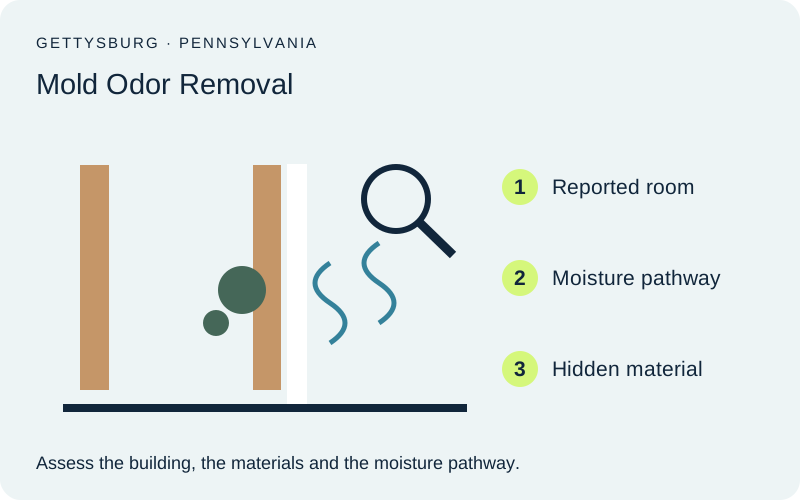
Compare the odor pattern with moisture history, accessible materials and connected spaces, then investigate the most plausible pathways.
| Reported pattern | What to inspect | What the pattern cannot prove |
|---|---|---|
| Stronger after rain | Foundation edges, roof leaks and previously wet materials | That the source is necessarily the basement |
| Stronger when HVAC runs | Accessible equipment, drainage and nearby damp materials | That all ducts contain mold |
| Concentrated near a wall or cabinet | Plumbing, wall base and accessible cavities | The full extent behind the finish |
| Smell persists on belongings | Upholstery, stored boxes and porous contents | That room cleaning has treated those items |
If mold contamination of HVAC equipment is known or suspected, EPA advises against operating that system until it is assessed. Do not open several walls or disturb duct insulation merely to search for a smell.
How is a persistent mold odor removed?
Remove or clean the identified affected materials, correct the moisture source and verify that the area has been adequately cleaned and dried.
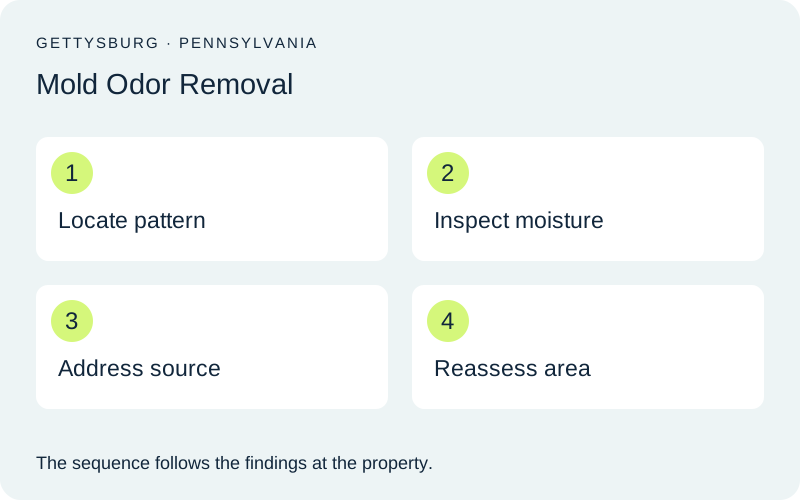
- Locate the source. Investigate the reported rooms and relevant adjoining spaces.
- Control the work. Define the boundary and handling of affected material before disturbance.
- Address contamination. Clean salvageable surfaces and remove agreed material that cannot be restored.
- Reassess the original complaint. Check the area after cleanup and revisit unresolved odor patterns.
Odor reduction during treatment is useful feedback, but it is not proof that a hidden cavity is clean. An odor that returns after rain or HVAC use gives the investigation a specific condition to revisit.
Will an air purifier, ozone or fogging remove the problem?
Air treatment cannot replace finding and removing a damp or contaminated source.
| Method | Potential role | Important limit |
|---|---|---|
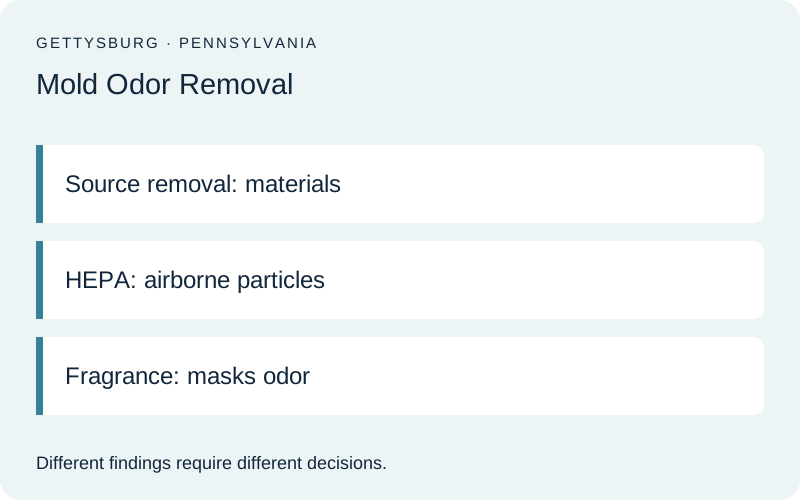
| Source removal and moisture correction | Address identified affected materials and conditions | Requires access to the actual source |
| HEPA filtration | Capture airborne particles as part of an appropriate plan | Does not remove mold growing inside a wall |
| Activated-carbon filtration | Reduce some gaseous pollutants or odors | Performance varies; it does not repair moisture damage |
| Fragrance or deodorizer | Change the perceived smell | Can mask an unresolved source |
| Ozone generator | Not a substitute for remediation | Ozone is a lung irritant; do not use it to make an occupied room safe |
EPA’s air-cleaner guidance distinguishes particle and gas removal. Its ozone guidance explains why ozone generators are not a reliable solution for indoor contamination at concentrations compatible with public-health limits.
Can a musty smell remain in furniture or carpets?
Yes. An item may need its own assessment even after the room around it has been cleaned.
Identify whether the odor follows the item when it is moved to an appropriate clean assessment area, and examine its moisture history and material layers. Avoid moving moldy items through occupied spaces without a handling plan. Some porous items cannot be adequately restored.
Our mold contents cleaning service considers item-specific cleaning and disposal decisions. A blanket promise to deodorize every fabric or upholstered item would ignore differences in filling, backing and hidden contamination.
Example, not a customer case: removing affected basement drywall does not address a damp carpet pad or boxes stored against the same wall. If the smell persists, revisit remaining materials before repeating air treatment.
What determines the scope of mold odor removal?
The odor source, affected materials, access and required moisture correction determine the work, rather than the intensity of the smell alone.
An odor investigation may find a small accessible source, a concealed cavity or a problem unrelated to mold. We define the assessment and any cleanup before work is agreed. There is no single odor-only price that reliably represents these different outcomes.
When remediation is needed, published mold remediation costs can help with budgeting. A room deodorizing charge should not be treated as a price for concealed material removal.
What should you expect after odor treatment?
The identified source should be addressed and the original odor complaint reassessed without relying on a fragrance to cover it.
How long until the musty smell disappears?
There is no dependable countdown until the source and drying needs are known. Material removal, drying and contents treatment can finish at different times. If the smell persists after the agreed work, investigate remaining moisture or affected material instead of assuming another application of deodorizer is the answer.
Can a negative air test rule out hidden mold?
No. A short air sample can miss a concealed or intermittent condition. CDC/NIOSH guidance explains the limitations of short-term samples. A result should be interpreted alongside inspection findings and the history of the smell, not used to dismiss continuing evidence of dampness.
Can vinegar or bleach solve a hidden odor?
Cleaning an accessible suitable surface does not treat material hidden behind it. Avoid spraying liquids into walls or mixing cleaning chemicals. Find the moisture route first; a recurring odor behind finishes warrants an assessment rather than repeated surface treatment.
Is musty odor removal the same as black mold remediation?
No. Odor investigation begins with a symptom whose source is not yet established. Black mold remediation addresses identified growth. Either situation may lead to cleanup, but smell alone cannot establish the type or extent of mold.
For cleanup that extends beyond this service, our Gettysburg mold remediation services connect the affected areas with a property-specific plan.
How do you arrange mold odor removal in Gettysburg?
Call (844) 578-3055 or use the quote form to request an assessment for your property. We confirm the service scope, fees and availability before work is agreed.
Include the affected location and any visible growth, moisture or odor. For an older home in historic Gettysburg, mention access restrictions and original materials that need consideration. Service availability is confirmed for the property address in Gettysburg or Adams County.