
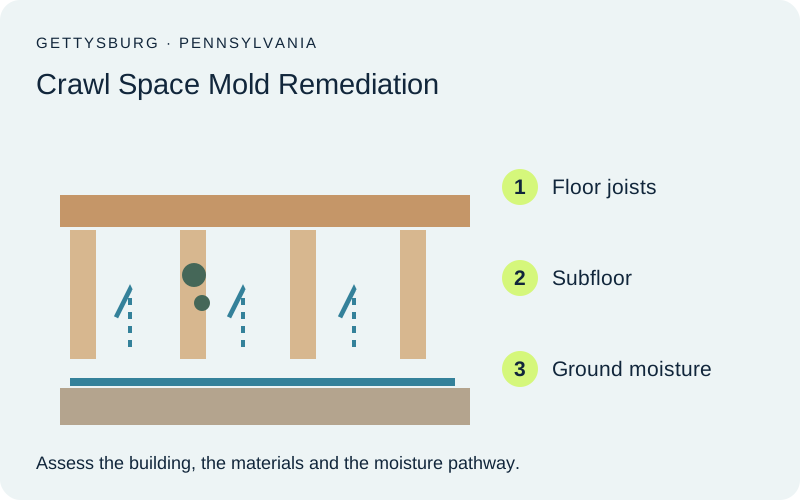
When does a crawl space need mold remediation?
Visible growth on joists or subfloor, moldy insulation and recurring musty odors warrant an assessment of the crawl space and its moisture source.
A smell in the room above can be a clue, but it does not prove where mold is growing. The investigation should connect the reported room with accessible areas below it, including plumbing penetrations and insulation that may hide the wood.
- Growth on wood beneath a bathroom: check supply and drain plumbing above it.
- Damp insulation near perimeter walls: investigate water entry and condensation.
- Recurring odor after rain: inspect drainage and wet materials, not just the odor in the living area.
An unexplained problem can start with a mold and moisture inspection. Do not enter standing water near electrical equipment or crawl beneath visibly unstable flooring.
Why does mold grow under a house?
Crawl spaces become mold-prone when leaks, ground vapor or humid air keep building materials damp.
| Observed condition | Possible pathway | What to investigate |
|---|---|---|
| Standing water after rain | Surface or foundation water entry | Grading, drainage, downspouts and water movement |
| Dampness over exposed earth | Soil vapor entering the space | Ground-cover gaps, seams and perimeter details |
| Wet patch below plumbing | Supply or drain leak | The fixture and pipe above the affected framing |
| Condensation without a visible leak | Humid air meeting cool surfaces | Humidity, surface temperature and the ventilation design |
The U.S. Department of Energy explains how soil moisture reaches crawl space framing. A dehumidifier reduces moisture in air; it cannot stop water flowing through a foundation.
How is crawl space mold removed?
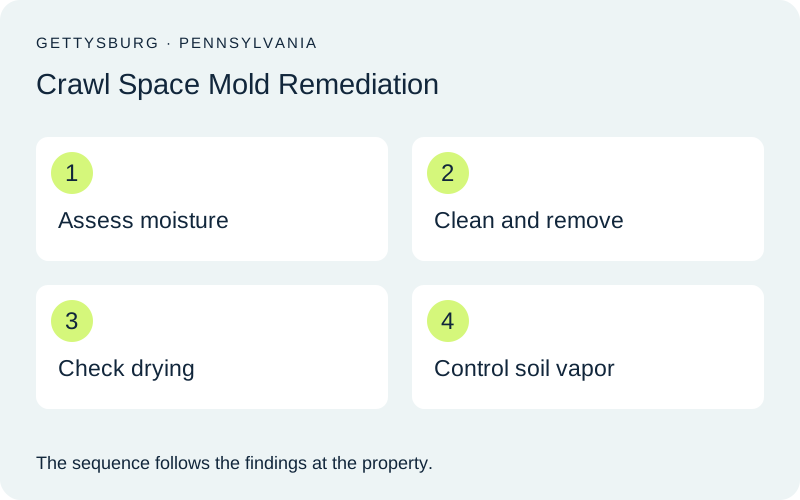
The work combines access planning, suitable containment, removal of unsalvageable materials, detailed cleaning and drying checks.
- Map the affected area. Identify growth, damp materials, obstructions and the connection to occupied rooms.
- Control disturbance. Define the access route and work controls before insulation or debris is moved.
- Remove and clean. Remove agreed contaminated porous materials and physically clean salvageable surfaces using methods suited to the material.
- Check conditions. Document accessible surfaces and moisture findings before replacing insulation or covering the ground.
High-efficiency particulate air (HEPA) filtration can form part of dust control and detailed cleaning. Spraying a coating over affected wood does not replace removal of the growth.
Can moldy floor joists and insulation be saved?
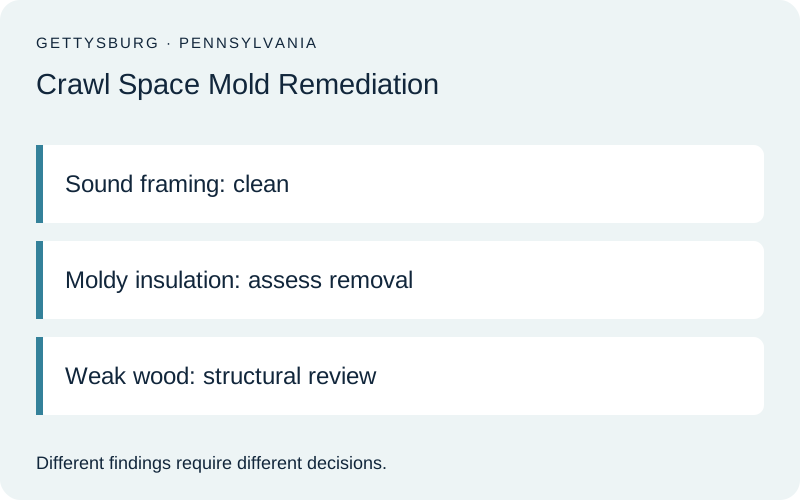
Sound wood may be cleanable, while moldy porous insulation may require removal; weakened framing needs a separate structural assessment.
| Material or condition | Possible treatment | Boundary of the decision |
|---|---|---|
| Sound joists and subfloor surfaces | Physical cleaning and drying | Access to concealed faces may be limited |
| Moldy or wet porous insulation | Removal where it cannot be adequately cleaned | Replacement follows moisture correction |
| Soft, crumbling or weakened wood | Structural evaluation and repair planning | Cleaning does not restore load-bearing capacity |
| Old ground liner and debris | Assess contamination and ground-cover continuity | A new liner must not conceal unresolved damage |
Visible mold and wood decay are different findings. Do not infer structural failure from color alone, or assume a clean-looking beam is structurally sound. Our mold damage repair service addresses rebuilding after the removal scope is defined.
Is crawl space encapsulation the same as mold remediation?
No. Remediation addresses existing contamination; encapsulation changes how the crawl space manages ground moisture and outside air.
A liner does not clean joists above it, and a cleaned joist can become damp again if the moisture pathway remains. Design the long-term solution around the whole space, including drainage, combustion equipment, insulation and a drying strategy. Do not simply close vents without reviewing those conditions.
Department of Energy research on conditioned crawl spaces explains why humid outdoor air can make some vented crawl spaces wetter. The appropriate design depends on the building.
Example, not a customer case: a torn ground liner and leaking bathroom drain need different corrections. Repairing the drain addresses liquid water; restoring the ground barrier addresses soil vapor. Neither task by itself removes growth from the subfloor.
How much does crawl space mold remediation cost?
$1,500 to $4,000 per project is HomeGuide’s published national crawl space removal range, checked September 25, 2026.
This is a US planning benchmark from its February 2026 mold removal cost report, not a Gettysburg average or our fixed price. Access, affected surface area and material removal change the actual scope. Encapsulation, drainage work and structural rebuilding can add separate costs.
A crawl space floor area is not the same as the amount of wood surface requiring treatment. Two spaces with equal footprints can involve very different joist, beam and subfloor work. See the factors behind remediation costs for the broader project budget.
What else matters before crawl space cleanup?
Safe access, moisture correction and the condition of the wood matter more than choosing a spray by mold color.
Can I clean crawl space mold myself?
Limited access, insulation removal and unknown water conditions can make a crawl space unsuitable for DIY work. EPA’s household cleanup guidance discusses small areas under about 10 square feet, but size alone does not make entry or disturbance safe. Extensive growth or contaminated water calls for professional help.
How long will the work take?
The schedule depends on access, removal and verified drying. Cleaning may finish before moisture correction or repairs do. We define the sequence after assessing the property; a fixed one-day completion promise would not account for wet wood, concealed damage or additional plumbing work.
Can I stay upstairs during the work?
Occupancy depends on the work boundary, access route, HVAC connections and occupants’ needs. The project plan should state which areas are restricted. Tell us about vulnerable occupants before scheduling; a crawl space location alone does not establish that the living area can remain occupied.
For cleanup that extends beyond this service, our Gettysburg mold remediation services connect the affected areas with a property-specific plan.
How do you arrange crawl space mold remediation in Gettysburg?
Call (844) 578-3055 or use the quote form to request an assessment for your property. We confirm the service scope, fees and availability before work is agreed.
Include the affected location and any visible growth, moisture or odor. For an older home in historic Gettysburg, mention access restrictions and original materials that need consideration. Service availability is confirmed for the property address in Gettysburg or Adams County.