
What causes mold in an attic?
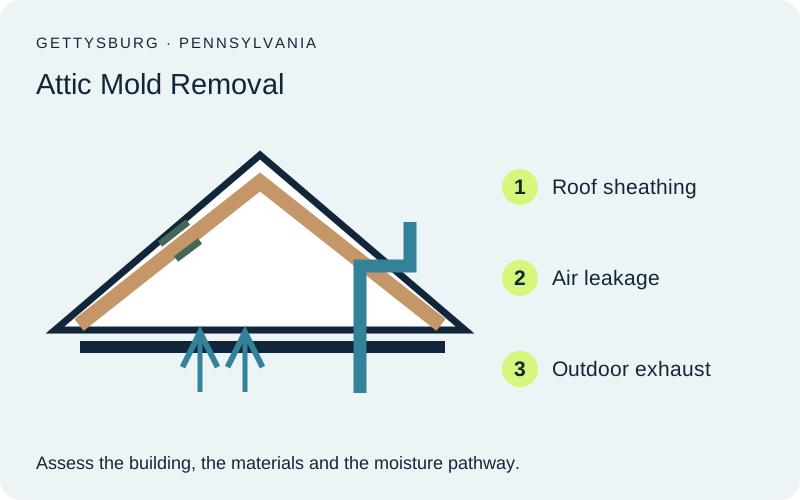
Roof leaks, warm moist air leaking from rooms below and poorly routed exhaust can wet attic wood and support mold growth.
The useful question is how moisture reaches the affected surface. Adding a roof vent does not repair flashing, and repairing flashing does not seal a ceiling air leak. A vented attic and an intentionally unvented roof assembly require different assessments.
| Pattern | Possible explanation | Useful follow-up |
|---|---|---|
| Localized stain near a roof penetration | A roof or flashing leak | Compare its location with roof details and rain history |
| Widespread dampness on cold sheathing | Condensation from moisture reaching the roof deck | Inspect ceiling air leaks and the intended ventilation path |
| Growth near a bathroom duct | Disconnected or incorrectly terminated exhaust | Trace the duct to an exterior termination |
| Wet insulation below one location | Water from above or moisture within the assembly | Investigate adjacent materials before adding insulation |
Pacific Northwest National Laboratory guidance explains the interaction between attic condensation, air leakage and roof design. These clues guide investigation; they are not a diagnosis from a photograph.
How do you remove mold from attic sheathing and rafters?
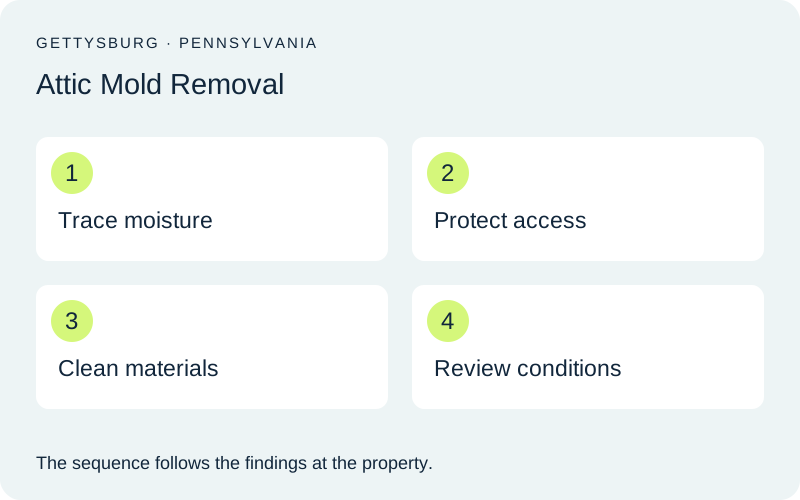
We define the affected surfaces, protect the access route, remove unsalvageable materials and clean salvageable wood before reviewing moisture conditions.
- Assess access and condition. Identify the hatch, walkable areas, roof assembly and affected materials.
- Set work controls. Plan containment and debris movement so the attic hatch is not an uncontrolled route into the home.
- Clean or remove. Select surface-cleaning methods for the wood and remove agreed contaminated porous materials.
- Check the result. Review the work area, moisture findings and the status of leak or exhaust corrections.
A coating may have a specific role after preparation, but it is not proof that contamination was removed. Our broader mold removal in Gettysburg, PA service connects cleanup with the rest of the property scope.
Does attic mold mean the roof needs replacing?
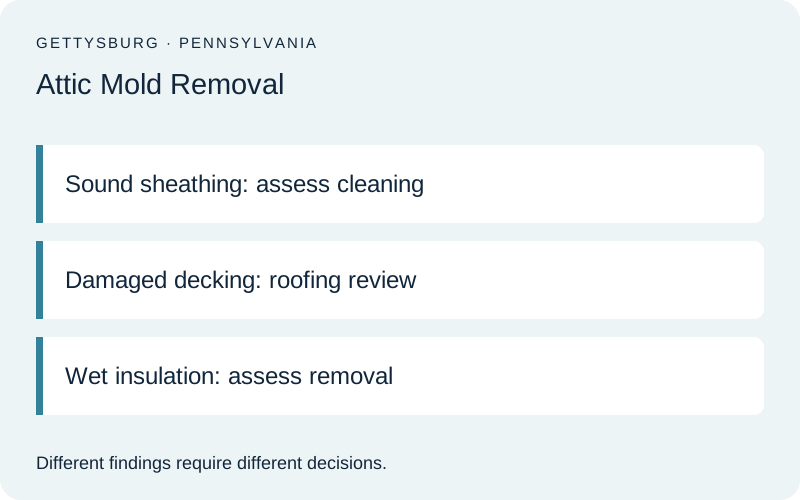
No. Mold on sound sheathing does not automatically require a new roof, but damaged decking or an active roof leak may require roofing work.
| Finding | Remediation role | Additional assessment |
|---|---|---|
| Growth on otherwise sound accessible wood | Evaluate cleaning and drying | Find the moisture pathway |
| Soft, delaminated or damaged sheathing | Control contamination during agreed removal | Roofer or structural specialist assesses replacement |
| Moldy insulation | Assess removal and affected surfaces beneath it | Replacement and insulation design after correction |
| Residual staining after cleaning | Review cleaning and moisture evidence | Color alone cannot establish completion or failure |
Plywood and oriented strand board (OSB) need a condition assessment before cleaning or replacement. In a vented roof, inspect the intended soffit ventilation path without assuming that every roof assembly needs new vents. This distinction can prevent both unnecessary roof replacement and cosmetic treatment of damaged wood. EPA guidance notes that staining can remain after cleanup. A finish change should not be used as the only acceptance criterion.
Can a bathroom fan cause attic mold?
Yes. A fan discharging into the attic introduces moisture instead of carrying it outdoors.
Trace the whole duct, not just the fan grille. A duct ending near a roof opening is different from a sealed connection to an exterior terminal. Check disconnections and leaks along the run. PNNL’s bathroom exhaust guidance calls for outdoor discharge, not discharge into an attic or another concealed space.
If the room below also has recurring growth, bathroom mold removal and the attic assessment should share the same moisture investigation.
Example, not a customer case: cleaning the roof deck above a shower without reconnecting a failed exhaust duct leaves the original moisture route in place. Repair the exhaust defect and assess the wood; more insulation over the ceiling does not repair the duct.
How much does attic mold removal cost?
$1,500 to $6,000 for a partial attic and $6,000 to $15,000 for a full attic are published US removal benchmarks.
These are HomeGuide’s February 2026 attic mold removal ranges, checked September 25, 2026, not local fixed fees. Access, affected wood surfaces and insulation removal influence the work. Roofing replacement, exhaust repairs and rebuilding require their own scope.
A low roof pitch or difficult hatch can increase labor even in a small attic. For a whole-project budget, use the remediation cost guide alongside the property assessment.
How do you know attic cleanup is complete?
Completion should be based on the agreed cleaned surfaces, moisture findings and correction of the identified moisture source.
- Record which roof slopes, framing and insulation areas were accessible and treated.
- Document remaining access limitations rather than implying every cavity was inspected.
- Review whether roofing, air-sealing or exhaust work remains outstanding.
- Agree on any independent review before closing access or replacing finishes.
Post-remediation verification can support that review. A laboratory air result alone cannot establish the condition of every roof surface.
What should homeowners know about attic mold?
Attic mold needs a building-specific assessment; color, a home test kit or a new roof vent cannot answer every question.
Is black mold on attic wood a different service?
Dark color does not identify a species or determine the cleanup method. The affected area, moisture source and material condition remain the practical starting points. Our black mold remediation page explains why removal decisions should not be based on color alone.
Can I remove attic mold myself?
A cramped attic introduces access and fall hazards as well as the risk of disturbing insulation. Do not walk on ceiling drywall or disturb unfamiliar insulation. For extensive growth or uncertain materials, arrange an assessment rather than treating the roof deck from a ladder with a spray.
Will I need to leave the house?
That depends on the work boundary, access route and household circumstances. We review those conditions when planning the project. Attic location alone does not make the work isolated, especially when removal must pass through occupied rooms or the hatch connects directly to a hallway.
How do you arrange attic mold removal in Gettysburg?
Call (844) 578-3055 or use the quote form to request an assessment for your property. We confirm the service scope, fees and availability before work is agreed.
Include the affected location and any visible growth, moisture or odor. For an older home in historic Gettysburg, mention access restrictions and original materials that need consideration. Service availability is confirmed for the property address in Gettysburg or Adams County.