
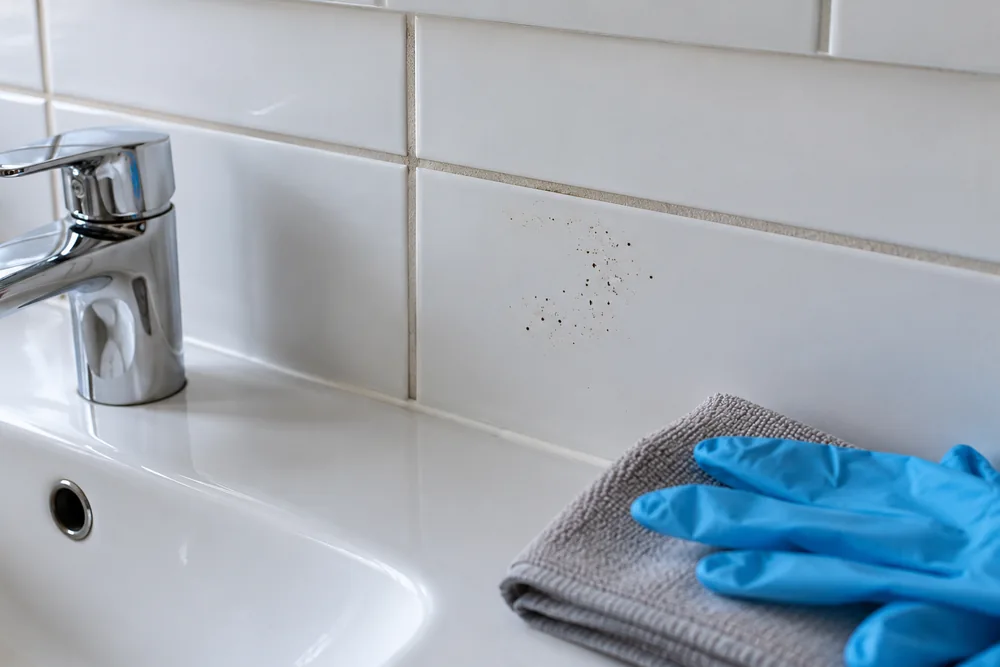
When is DIY mold cleanup reasonable?
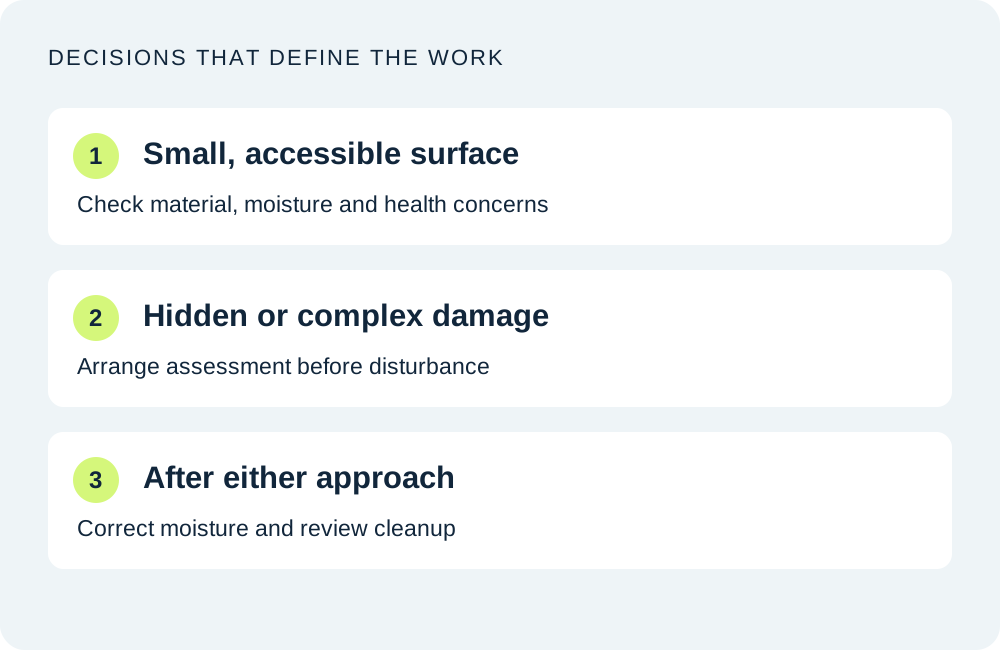
DIY mold cleanup is a reasonable option for some small, accessible problems on cleanable surfaces after the moisture source is controlled. EPA says homeowners can handle many areas smaller than about 10 square feet. EPA identifies exceptions involving extensive water damage, contaminated water, HVAC systems and health concerns.
The affected surface area is different from the room's floor area. A small room can contain a large affected wall. Multiple patches and suspected hidden growth require a broader assessment than measuring the easiest patch.
EPA's home mold cleanup guidance provides the starting point for the decision. A square-foot figure does not certify that a cleanup task is safe for a particular person.
Which conditions favor a professional assessment?
Hidden growth, extensive water damage, suspected HVAC contamination and contaminated-water exposure favor a professional assessment before disturbance. Recurring growth also calls for renewed investigation of moisture and affected materials.
| Condition | Practical decision | Reason |
|---|---|---|
| Small patch on accessible hard tile | Consider homeowner cleanup after reviewing EPA precautions | A cleanable surface and known source simplify the task |
| Damaged drywall, carpet or ceiling tile | Assess removal and disposal needs | Porous material may not be fully cleanable |
| Growth behind a wall or under flooring | Arrange assessment before opening the assembly | Disturbance can release hidden contamination |
| Suspected mold inside HVAC equipment | Stop operating suspect equipment and arrange assessment | EPA advises against running contaminated HVAC |
| Sewage or other contaminated water | Use a professional experienced with that contamination | The water adds hazards beyond visible mold |
| Relevant health concerns | Avoid personal cleanup and seek medical advice | Personal suitability is not a size calculation |
Does every moldy material need replacement?
Every moldy material does not need replacement. EPA describes cleaning hard surfaces with detergent and water, followed by thorough drying. EPA states that moldy porous materials such as carpet and ceiling tile may need disposal.
Wood framing requires a condition assessment rather than automatic disposal based on a photograph. Material deterioration, access and the cleanup method affect the salvage decision. Soft or damaged construction also raises a separate repair question.
Drywall demolition is not equivalent to wiping tile. The mold cleanup and rebuilding comparison separates surface cleaning from material removal and restoration.
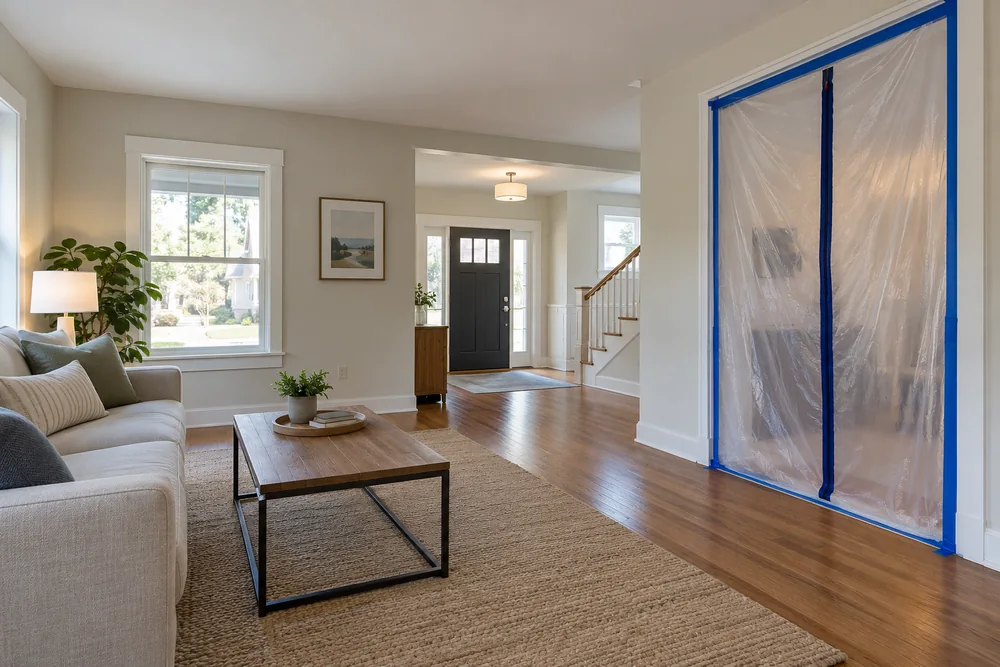
What precautions matter before small-area cleanup?
Small-area mold cleanup requires personal protection and a plan to avoid spreading debris. CDC recommends at least a NIOSH-approved N95 respirator, gloves and eye protection for mold cleanup. Protective equipment does not make every job suitable for DIY work.
CDC advises people with allergies, immune suppression or underlying lung disease against mold cleanup. CDC warns people with asthma, COPD or immune compromise against staying in a moldy home or being present during cleanup. The CDC cleanup precautions explain those limits.
Cleaning products require label-compliant use. Mixed cleaning chemicals create additional hazards. Painting or caulking over mold does not replace cleaning and drying. A consumer cleaner cannot repair the leak that caused the growth.
What should professional remediation add?
Professional remediation should add an assessed scope, appropriate controls and documented cleanup decisions. Equipment alone is not a complete service. The company needs to identify the materials being cleaned or removed and the party responsible for moisture correction.
A written scope should distinguish cleanup from reconstruction and any independent verification. The remediation company selection guide explains how credentials and scope support a hiring decision. The residential remediation pricing guide covers financial benchmarks separately.
Gettysburg Mold Remediation Help offers free referrals to independent companies for assessment. The independent company determines the required work and provides its own pricing. A referral does not commit the homeowner to a remediation contract.