
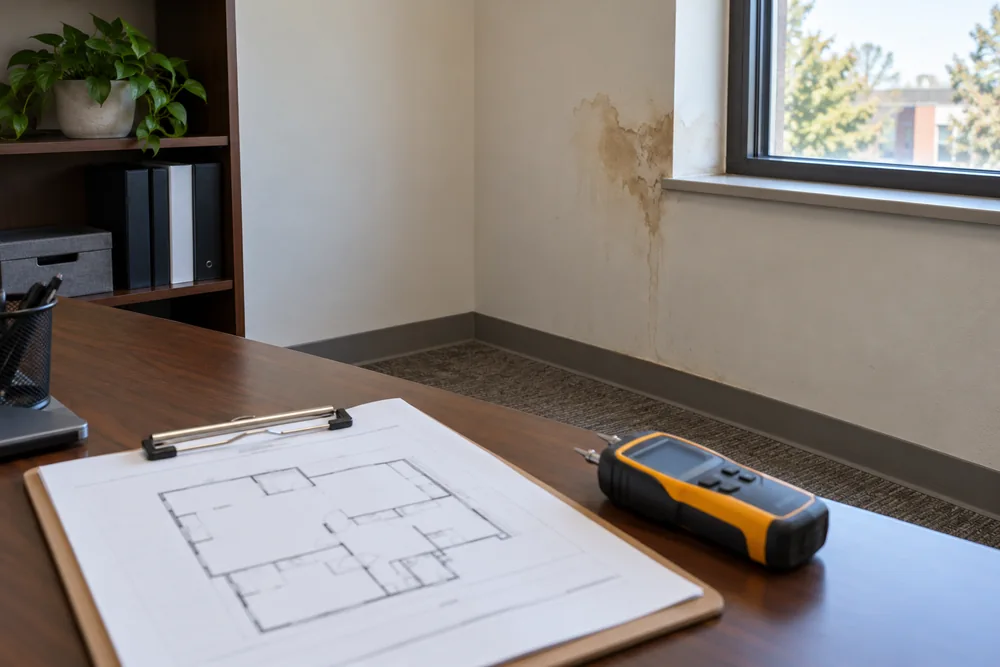
What is the difference between the three terms?
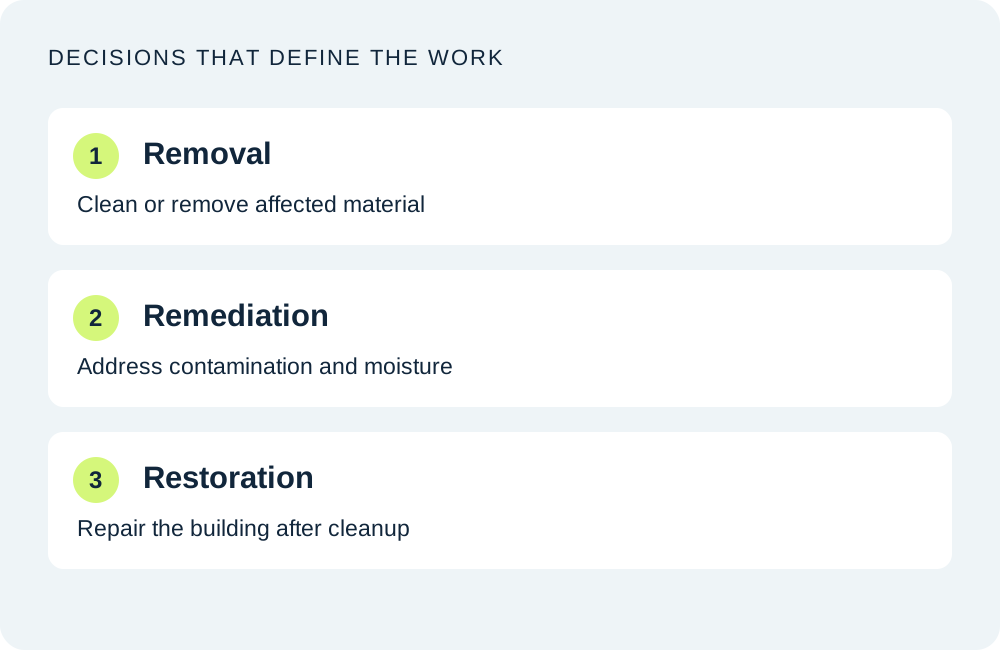
Mold removal describes cleaning or removing mold-affected material. Mold remediation describes the broader response to a contamination problem. Restoration describes repairs that return damaged building elements to use. Contractors sometimes use the terms interchangeably, so the written scope matters more than the label.
| Term | Primary task | Example | Not established by the label |
|---|---|---|---|
| Mold removal | Remove growth or affected material | Clean a hard surface or remove unsalvageable drywall | Whether the leak was corrected |
| Mold remediation | Manage the contamination problem | Assess extent, control work, clean materials and address moisture | Whether reconstruction is included |
| Restoration | Repair damaged building components | Replace drywall, trim or flooring after cleanup | Whether concealed contamination was investigated |
EPA's mold remediation guidance places moisture correction and cleanup within the response. The terminology does not certify a company or guarantee a result.
Does mold removal eliminate every spore?
Mold removal does not eliminate every mold spore from a building. EPA explains that sterilizing a building is generally neither possible nor desirable. The practical objective is correcting the moisture problem and cleaning up contamination.
A contractor's claim to remove all mold should be interpreted carefully. A meaningful scope describes the affected materials and cleanup criteria. A zero-spore claim is different from documenting removal of visible growth and damaged material.
Small surface cleanup also needs the right conditions. The DIY versus professional cleanup guide explains why area, material and water source affect the decision.
Is water-damage drying the same as mold remediation?
Water-damage drying is not the same as mold remediation. Drying removes moisture from affected building materials. Existing mold contamination still requires an appropriate cleaning or removal decision.
Water mitigation describes actions that limit continuing damage, such as controlling a leak and removing excess water. Mold remediation addresses contamination discovered during the response. A single project can require both tasks.
The water-damage response overview explains moisture-control work alongside assessment. A dehumidifier operating in a room does not demonstrate that hidden mold has been removed.
When does restoration follow remediation?
Restoration follows remediation when cleanup leaves building components that need repair or replacement. New drywall and paint should not conceal unresolved moisture or contaminated material. The cleanup review should occur before the relevant assemblies are closed.
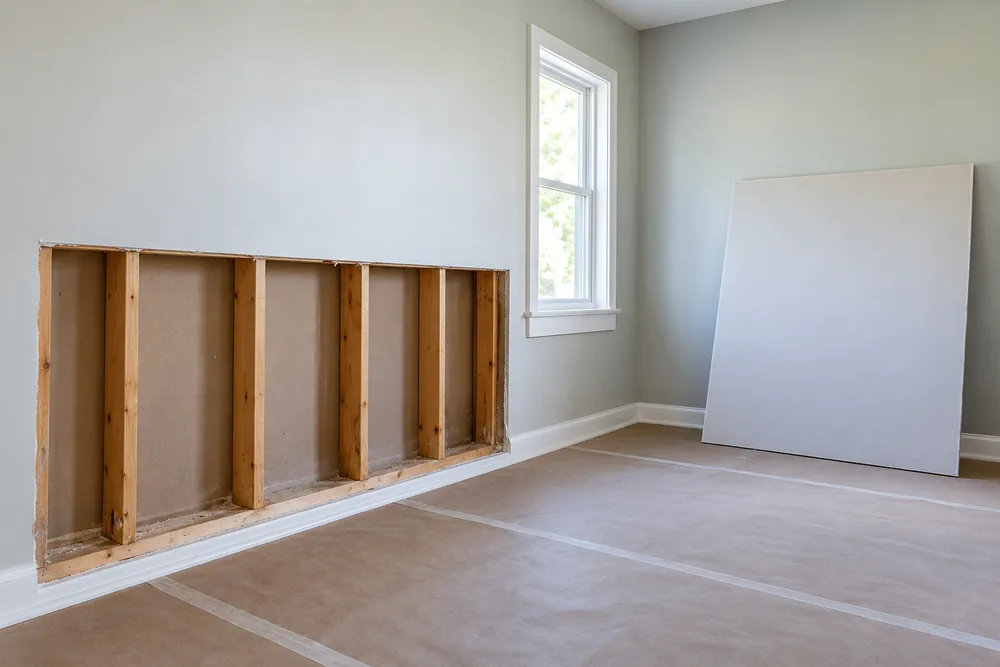
A wall opened for assessment may expose sound framing that remains after appropriate cleaning. Unsalvageable material needs removal. The final repair plan should state which materials will be replaced and which finishes will be restored.
The post-remediation building repair guide covers reconstruction as a separate scope decision. Completed cleanup does not automatically mean a room has finished walls, usable flooring or restored fixtures.
How should the written scope connect the stages?
A written scope should assign moisture repair, contamination cleanup, completion review and reconstruction to named parties. A combined contract should distinguish those tasks. Separate contracts should identify the handover condition between contractors.
- Source correction: identify the fault and the trade responsible for repair.
- Cleanup: identify affected materials, controls and cleaning or disposal methods.
- Review: state the completion evidence and any agreed independent verification.
- Reconstruction: identify materials, finishes and excluded repairs.
Project changes should be documented when opened assemblies reveal additional damage. The contractor should explain how that discovery changes the cleanup area or repair work. A label such as restoration does not resolve an omitted task.
Does every project need a mold test?
Every mold project does not need a mold test. EPA states that sampling is unnecessary in most cases with visible mold. Sampling should answer a defined question when the project calls for it.
A cleanup review is broader than collecting an air sample. Moisture correction, material condition and visible cleanliness remain relevant. The cleanup verification guide explains the evidence considered during completion assessment.
Gettysburg Mold Remediation Help connects property owners with independent companies through a free referral service. The independent company defines its assessment, price and work. The signed scope determines whether remediation, restoration or both are included.