
Does bleach kill mold?
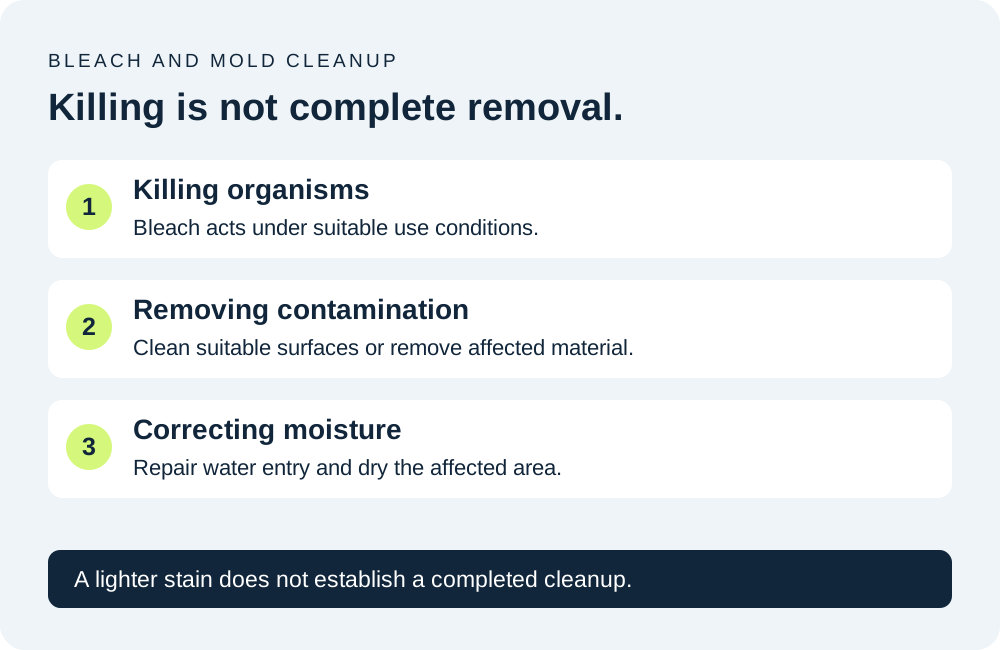
Chlorine bleach can kill mold. Killing mold does not remove the contamination. EPA does not recommend biocides as a routine mold-cleanup method. Physical removal and moisture correction remain necessary.
Dead mold may still trigger allergic reactions in some people, according to EPA's bleach guidance. A faded stain does not establish complete removal. A bleach smell does not establish a dry wall cavity.
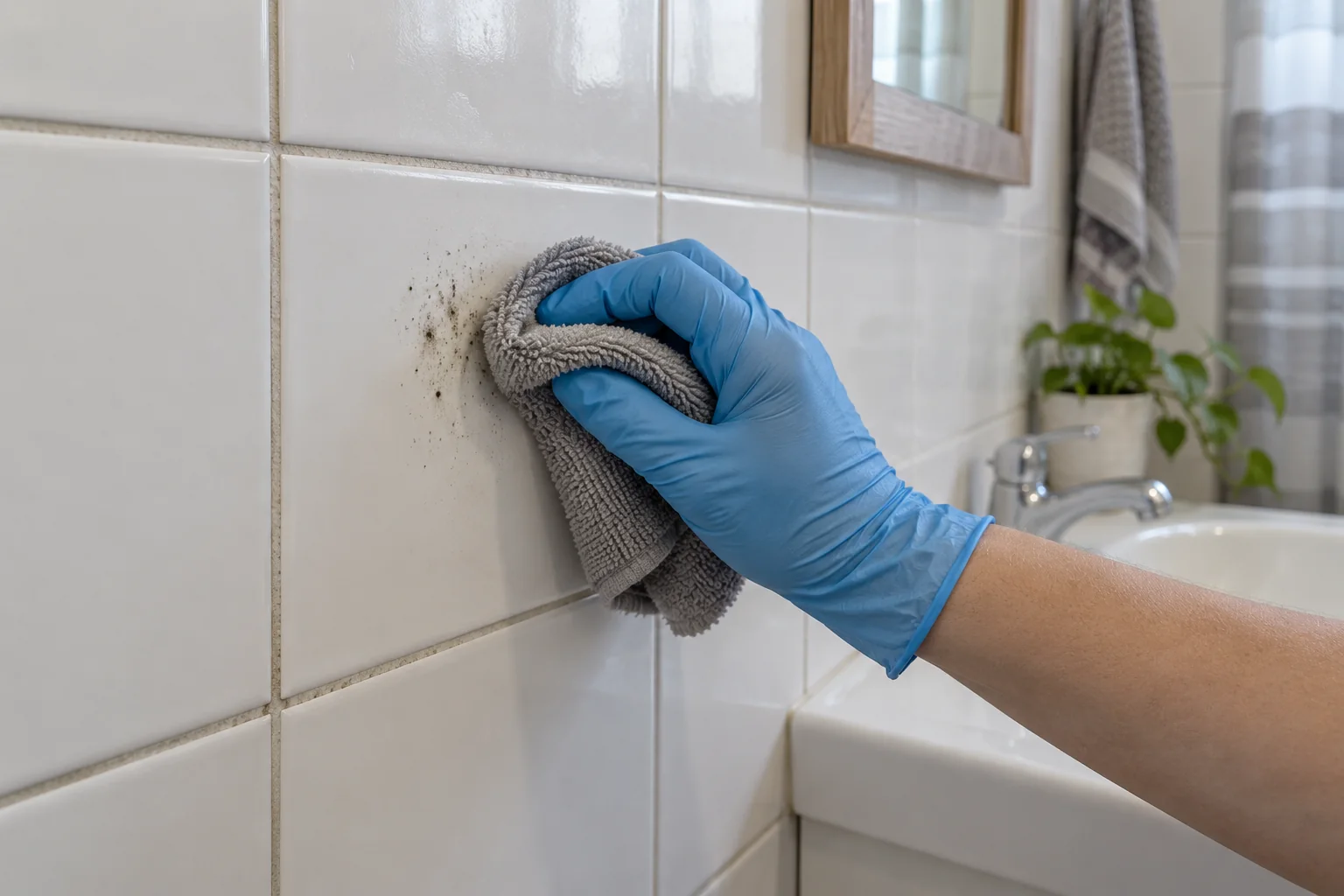
Bleach treatment, cleaning and remediation describe different outcomes. Bleach acts on organisms under suitable conditions. Cleaning removes material from a surface. Remediation addresses affected materials and the building conditions supporting growth.
Why do EPA and CDC give different advice about bleach?
EPA discourages routine biocide use. CDC includes bleach as an option for mold on hard surfaces. Neither agency says that a chemical alone repairs water damage.
| Source | Published guidance | Meaning for a home |
|---|---|---|
| EPA mold guidance | Routine mold cleanup does not require a biocide | Bleach is not the default step for every patch |
| CDC household guidance | Hard-surface cleanup options include soap and water or a bleach solution | Surface type and product instructions matter |
| CDC disaster guidance | Cleaning and sanitizing have different purposes | A floodwater sanitation task is not interchangeable with every mold task |
CDC's household mold advice requires moisture correction alongside cleanup. CDC's disaster sanitation guidance distinguishes food-contact surfaces, other household items and mold growth on hard surfaces. A recipe for one category should not be transferred to another.
EPA allows professional judgment about biocide use in particular circumstances. An occupant's medical vulnerability does not make self-directed chemical treatment appropriate.
Should bleach be used on wood, drywall or bathroom tile?
Mold cleanup needs a material-specific decision, because an intact hard surface differs from absorbent or deteriorated material. A stronger cleaner cannot restore crumbling drywall.
| Material or condition | Cleanup decision | Limit of surface treatment |
|---|---|---|
| Intact glazed tile, glass or other washable hard surface | EPA describes detergent-and-water cleaning followed by complete drying | A clean tile face does not establish the condition behind the wall |
| Moldy ceiling tile or carpet | EPA says porous materials may require disposal | Growth in pores and crevices may resist complete removal |
| Damaged paper-faced drywall | Assess moisture, affected layers and replacement needs | Whitening the surface does not repair softened paper or gypsum |
| Wood with staining or suspected growth | Assess the wood's condition, moisture and cleanup scope | Color change alone does not demonstrate successful remediation |
EPA's home mold guide explains why porous materials present removal difficulties. The guide also notes that staining can remain after cleanup. A dark mark alone cannot determine species, activity or structural condition.
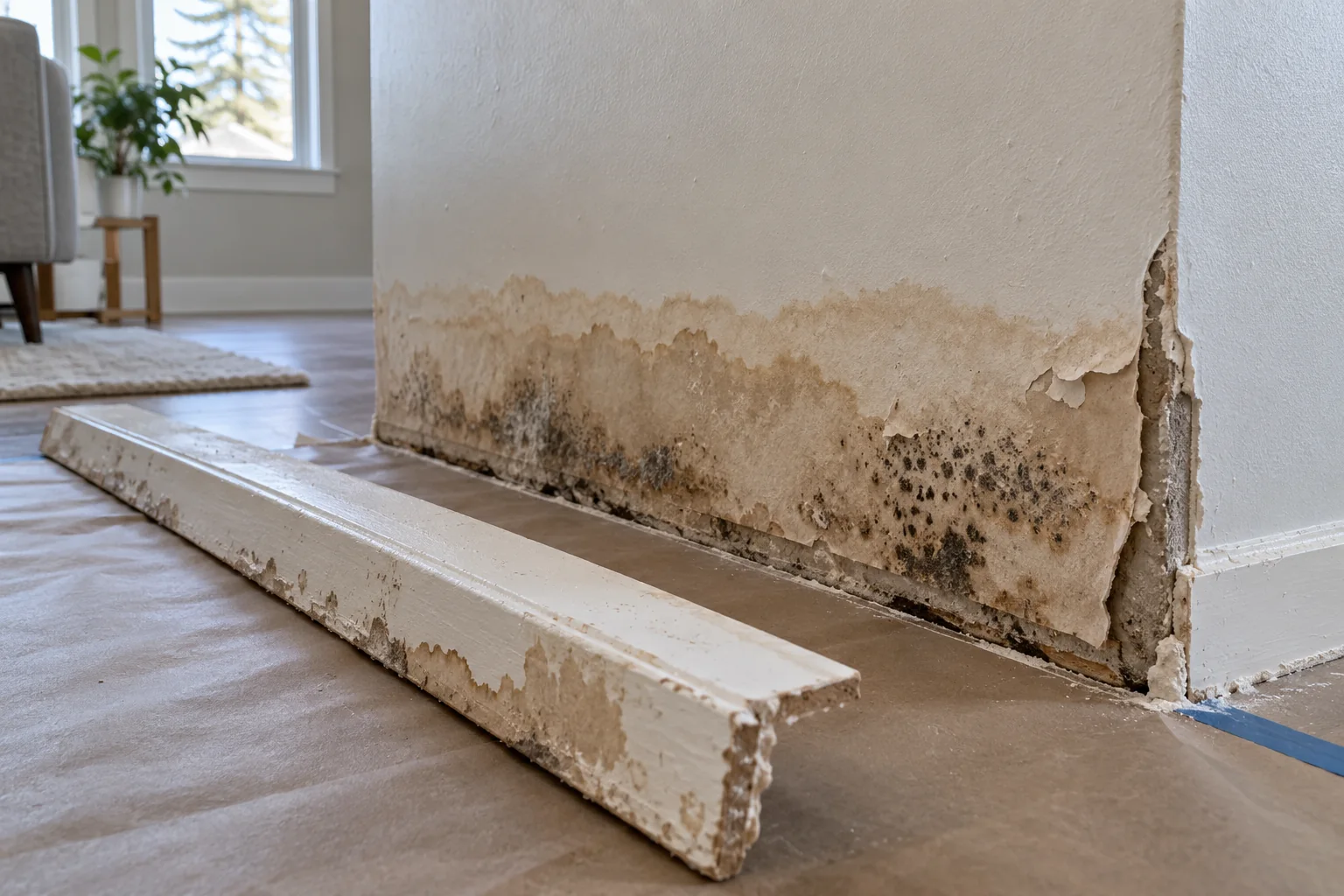
Bathroom cleanup decisions include the condition of tile, grout and adjacent wall materials when growth returns around a shower. Mold damage assessment considers affected building materials and repair needs before finishes are replaced.
How long should bleach stay on mold?
Bleach contact time must follow the specific product label for its stated use. A universal number of minutes would ignore different formulations, surfaces and instructions. Longer exposure does not prove removal from concealed material.
Cleaning-product instructions identify permitted surfaces and required precautions. EPA's disinfectant label guidance defines contact time as the period a treated surface stays visibly wet. A stain-removal claim does not answer whether a product has a disinfecting claim. CDC requires users to follow manufacturer instructions and avoid mixing bleach with other cleaners.
Vinegar, ammonia and other cleaning products must not be mixed with bleach. CDC's guidance does not justify improvising a stronger combination. Bleach should not be layered onto an unidentified cleaner.
Why does mold come back after bleach treatment?
Recurring mold requires investigation of ongoing moisture and remaining affected material. Repeated surface treatment does not repair a leak or remove a concealed source.
- Indoor humidity should remain at 50% or lower under CDC's household recommendation.
- Flood-wet homes need prompt cleanup and drying within 24 to 48 hours under CDC guidance.
- Water-entry repairs address the building condition supporting renewed growth.
- Previously affected areas need follow-up inspection to check the result.
NIOSH's remediation guidance includes drying or removing wet material, repairing water entry and monitoring repaired areas. A fixed claim that bleach always causes regrowth within a particular number of weeks is not a substitute for that investigation.
Mold-free appearance immediately after cleaning does not establish a lasting result. Moisture readings, material condition and follow-up observations answer different questions from stain removal.
What protection is needed during mold cleanup?
Mold cleanup requires exposure precautions. An N95 respirator does not protect against chemical gases or vapors. CDC's respiratory protection guidance distinguishes particle filtration from gas protection.
CDC's mold cleanup clothing guidance includes eye protection, protective gloves, an appropriate respirator, long clothing and waterproof boots. Bleach use also requires fresh-air ventilation and label-specific precautions. Protective equipment does not make chemical mixing safe.
People with asthma or weakened immune systems should not enter mold-damaged buildings under CDC guidance. Children should also stay out of those buildings. Health concerns need medical advice before cleanup.
When should a mold professional handle the problem?
Mold areas above about 10 square feet, substantial water damage, sewage contamination and suspected HVAC involvement need broader assessment. EPA's small-area guidance is not a health-risk cutoff. A smaller patch can still conceal a larger problem.
Black mold color does not determine the cleanup method. NIOSH says color does not establish greater or lesser danger. The black mold remediation process addresses affected materials and containment according to the assessed conditions.
Gettysburg Mold Remediation Help is a free referral service. Gettysburg Mold Remediation Help connects homeowners seeking mold cleanup assessment in Gettysburg with independent companies. Independent companies assess the property, set prices and perform the work.