
What does commercial mold remediation include?
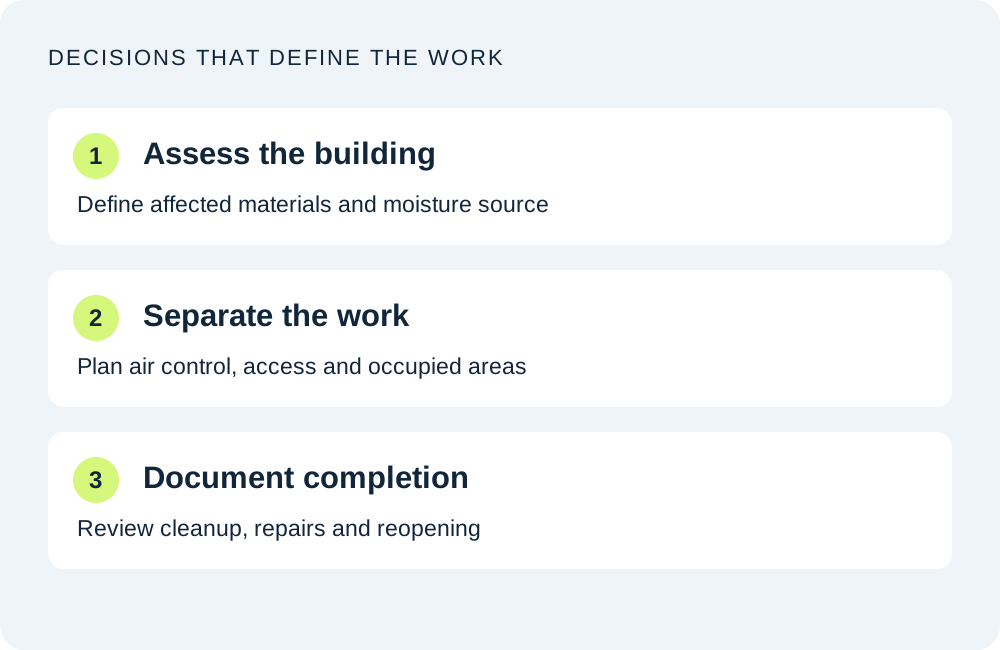
Commercial mold remediation includes a moisture investigation, a defined cleanup area, material-specific removal or cleaning, and a completion review. The written scope identifies the work assigned to each company. Structural repairs, roof repairs and HVAC work need explicit inclusion.
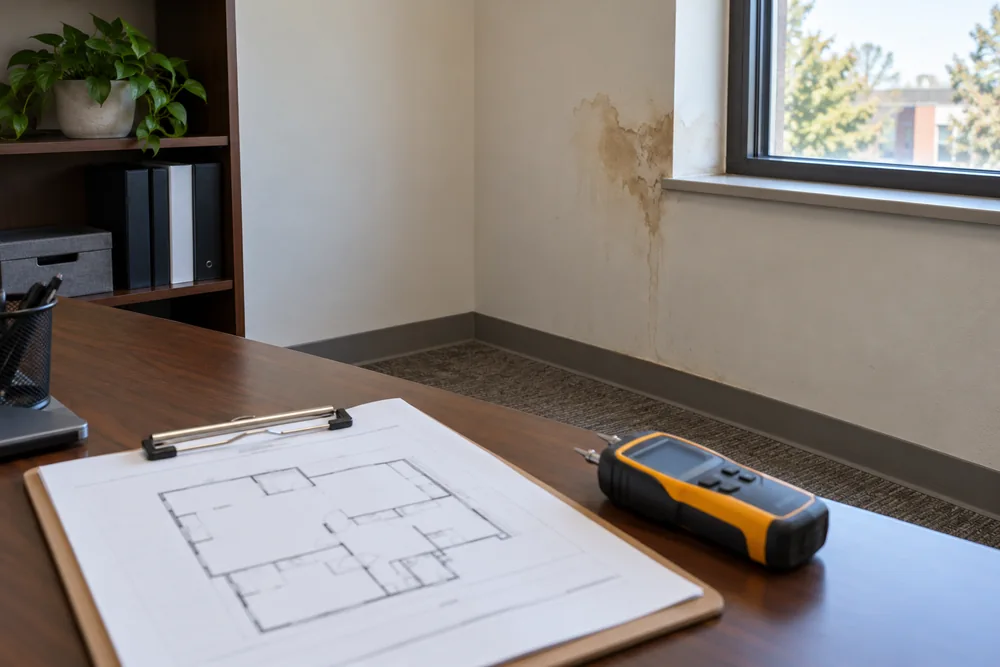
Commercial mold assessment covers the affected room and connected building spaces. A stained ceiling tile beneath a roof leak calls for examination above the tile. A problem beside an air handler calls for attention to the equipment and its condensate drainage. A photograph alone cannot establish the full affected area.
| Work item | Required project decision | Responsible party |
|---|---|---|
| Assessment | Materials, moisture source, extent and access | Independent assessor or remediation company |
| Source repair | Plumbing, roofing, envelope or HVAC correction | Named repair trade |
| Mold cleanup | Containment, removal, cleaning and waste route | Remediation company |
| Building operations | Occupant notices, restricted areas and access | Owner or facility manager |
| Completion | Cleanup review and any agreed independent verification | Party identified in the scope |
Business properties and shared buildings
Gettysburg Mold Remediation Help accepts referral requests for commercial premises and multifamily properties in the Gettysburg area. The independent company confirms the suitability of the request before arranging work.
- Offices and shops: occupied desks, stored stock and customer routes belong in the access plan.
- Hotels and bed & breakfasts: guest-room status and shared ventilation belong in the room-release decision.
- Apartment buildings: adjoining units and shared pipe routes belong in the moisture investigation.
Hospitality operators can use the hotel mold and room-reopening guide to separate guest communications from technical decisions. Property managers can use the multifamily remediation workflow to organize access and records.
Can a business stay open during mold remediation?
A business should remain open only in areas that the project assessment identifies as suitable for continued occupancy. The remediation manager must consider the work area, airborne debris, shared ventilation and occupant concerns. Off-hours work reduces contact with some activities but does not establish that the building is suitable for occupancy.
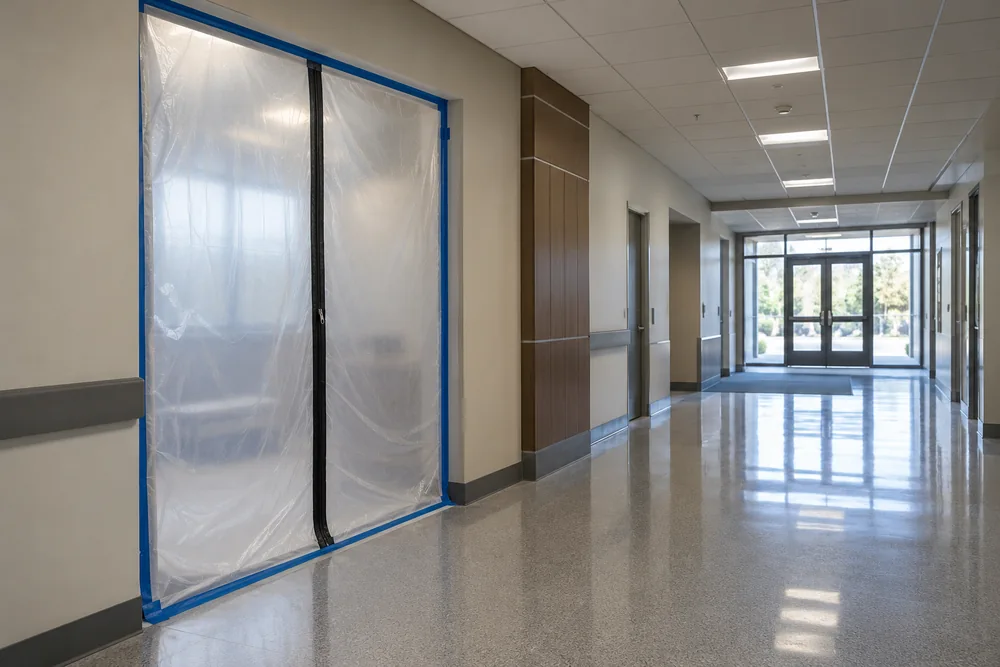
Containment limits movement of debris into adjoining spaces. A plastic doorway alone does not demonstrate that the air-control system works. The project plan also needs a waste route that avoids occupied areas where practicable. Emergency exits must remain usable.
EPA advises against operating HVAC equipment known or suspected to be contaminated with mold. The EPA commercial remediation guidance explains the assessment and containment considerations.
What belongs in a commercial remediation agreement?
A commercial remediation agreement needs a defined area, a material-by-material scope, exclusions and completion criteria. A single total without an affected-area description leaves the owner unable to identify the work being purchased.
- Extent: affected rooms, surfaces and any limits on concealed-space investigation.
- Protection: containment design, equipment arrangements and access restrictions.
- Materials: cleaning, disposal and contents handling decisions.
- Changes: authorization process if opened walls reveal additional damage.
- Handover: cleanup documentation, repair responsibility and follow-up review.
Commercial project pricing requires an assessed scope. Residential benchmarks in the mold remediation cost guide do not establish a quote for a hotel, office or apartment complex. Gettysburg Mold Remediation Help does not set the independent company's charges.
How is commercial cleanup checked?
Commercial cleanup should be reviewed against corrected moisture conditions, completed material cleanup and the agreed project scope. Visible growth, mold-damaged material and moldy odor should not remain after successful cleanup. Follow-up observation helps identify a continuing water problem.
Mold sampling is not automatically necessary when visible mold already establishes a cleanup need. EPA has not set a federal airborne mold pass/fail limit. A sampling plan needs a defined question and qualified interpretation. The post-remediation verification service overview explains the role of a separate completion assessment.
Gettysburg Mold Remediation Help provides a free connection to an independent company. The independent company determines assessment availability, work methods, pricing and contractual terms.