
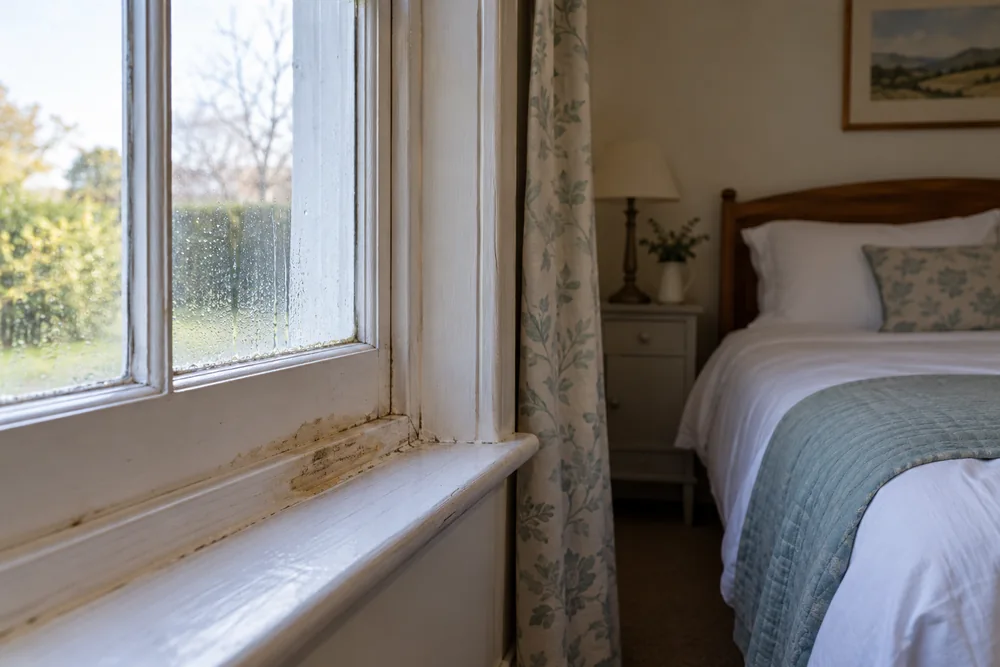
What should hotel staff do after finding mold?
Hotel staff should remove the affected room from guest inventory and notify the manager responsible for maintenance. The maintenance record should identify the room, discovery time, visible condition and any known leak. Staff should avoid opening wall cavities or disturbing suspect material during routine housekeeping.
Hotel management should arrange an assessment before deciding whether adjacent rooms need restrictions. A shared wall, pipe chase or ventilation connection gives the assessor a reason to examine connected spaces. A room number alone does not define the affected area.
Guest reports deserve a documented response without a diagnosis. A musty odor does not identify a mold species. A building contractor does not determine the cause of a guest's symptoms.
Where should a hospitality moisture investigation focus?
A hospitality moisture investigation should follow the water source through the room and connected building components. Guest-room bathrooms, window reveals, roof penetrations and air-conditioning condensate systems need different repair decisions.
| Observed condition | Assessment focus | Operational implication |
|---|---|---|
| Damp wall beside a bathroom | Supply, drainage, seals and concealed materials | Consider adjoining or lower rooms |
| Staining around a window | Rain entry, surface condensation and wall layers | Inspect the opening before cosmetic repair |
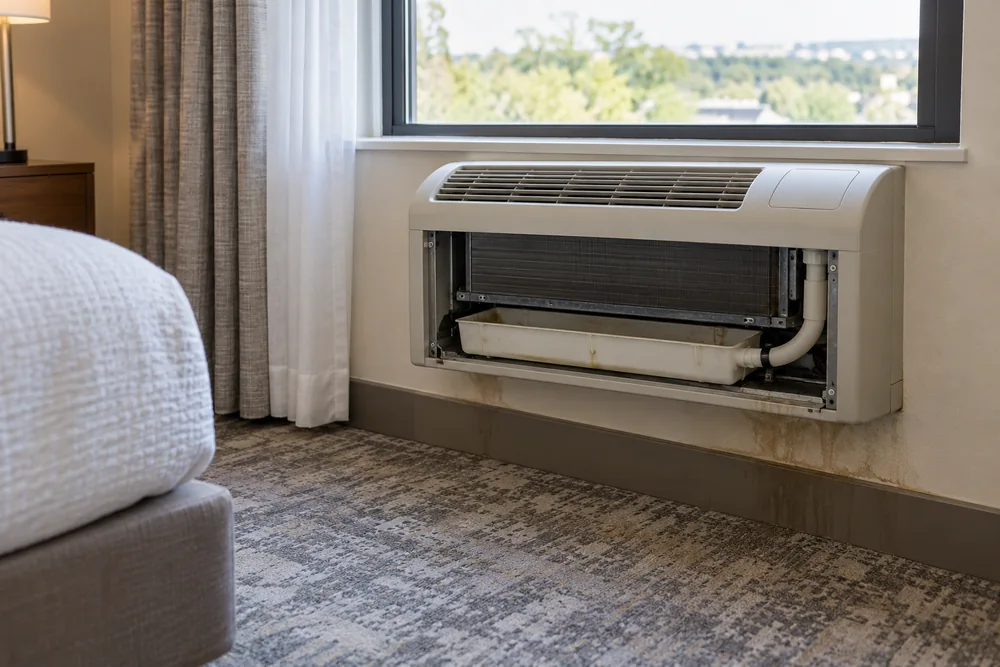
| Moisture beneath a room air conditioner | Condensate collection, drain path and surrounding wall | Review equipment operation with the assessor |
| Recurring ceiling marks | Roof, upstairs plumbing and ceiling cavity | Investigate beyond the replacement tile |
EPA identifies condensate pans and hidden wall surfaces among possible mold locations. The EPA building-investigation guidance supports an investigation beyond the visible patch.
Can unaffected hotel rooms remain in use?
Unaffected hotel rooms need a project-specific occupancy decision before continued use during nearby remediation. The decision must consider shared air pathways, work access and debris removal. Distance from the work room alone does not demonstrate separation.
Hotel management should assign responsibility for room closures, guest relocation and housekeeping access. The remediation company should define the work-zone restrictions. Maintenance staff should coordinate any water or ventilation shutdowns with the affected departments.
Bed-and-breakfast operators need particular attention to shared corridors and small-building layouts. A contained room beside the only guest staircase creates a different access problem from a detached guest suite. The commercial mold assessment overview explains how building operations fit into the scope.
What should guests and staff be told?
Guest and staff communications should state the affected area, access restrictions, next action and contact person. A confirmed schedule change deserves an update. A proposed completion date should not be described as a clearance result.
EPA recommends open communication about the investigation and remediation status. The EPA occupant-communication guidance also addresses relocation and individual concerns.
- Front desk: maintain accurate room availability and relocation arrangements.
- Housekeeping: keep routine cleaning staff outside restricted work zones.
- Maintenance: document source repairs and equipment changes.
- Management: communicate confirmed findings without speculative health assurances.
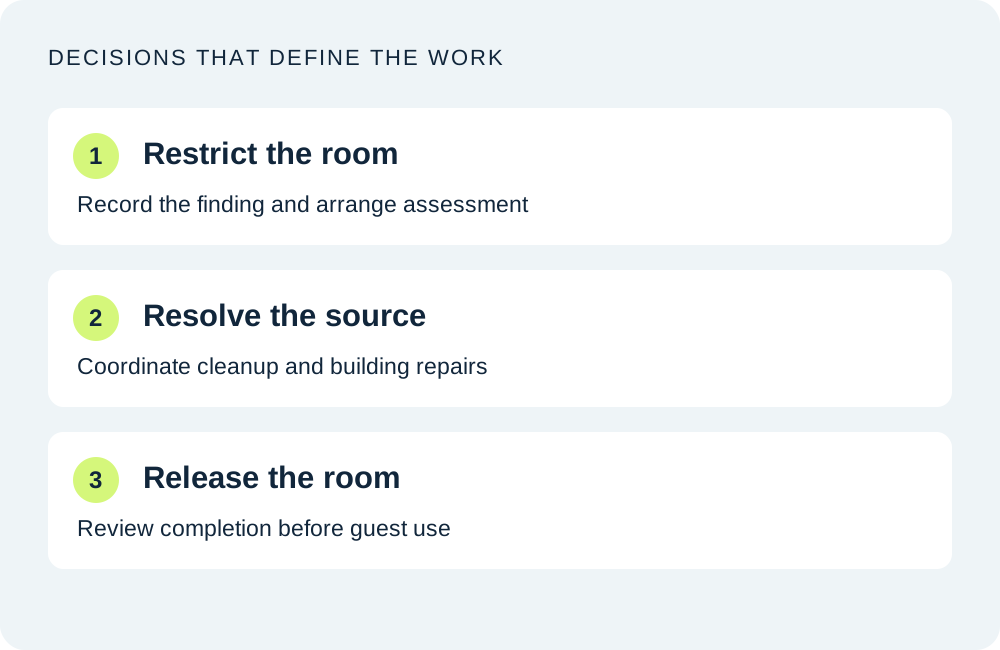
When can a hotel room return to service?
A hotel room can return to service after the project team has reviewed cleanup completion and resolved the conditions that prevent occupancy. A fresh paint finish or a lack of visible surface marks is not sufficient evidence by itself.
Room-release records should identify the corrected moisture source, removed or cleaned materials, drying evidence and any outstanding repairs. The agreed verification process should be completed before the room is released. A separate assessor's role belongs in the original scope where independent verification is required by the project.
Hotel reconstruction and mold cleanup are different tasks. The removal, remediation and restoration comparison explains why a room can finish cleanup before it is ready for guests.
Gettysburg Mold Remediation Help connects hospitality operators with independent companies through a free referral service. The independent company confirms the assessment scope and the price of any work.