
How should a property manager handle a mold report?
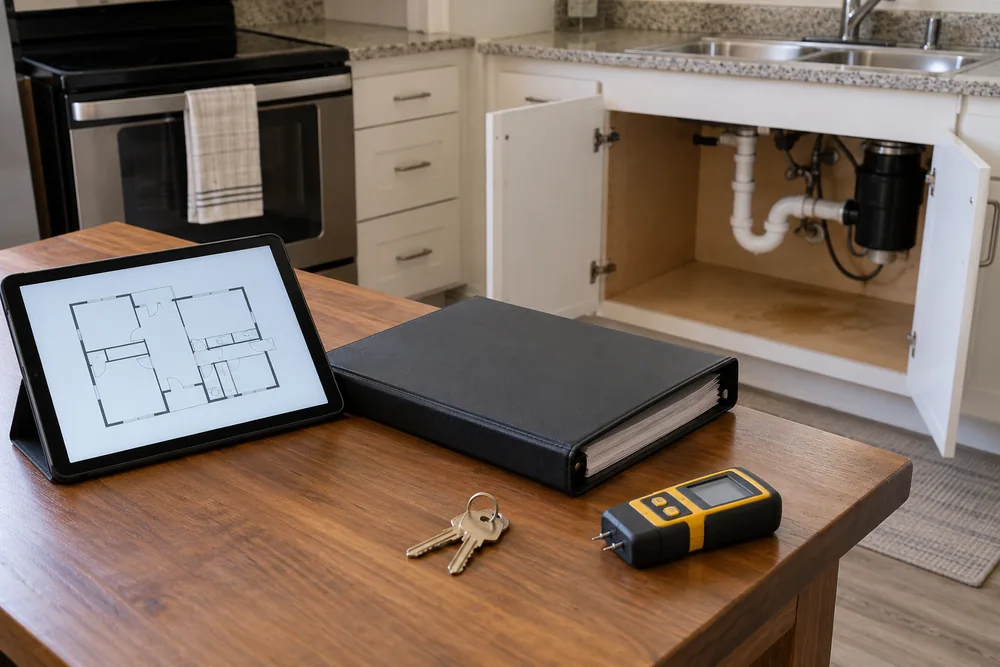
A property manager should record the reported location, arrange access and investigate the moisture source. A tenant photograph supports the record but does not establish the full remediation scope. The report needs a named person responsible for the next update.
Active leaks require prompt attention from the appropriate maintenance trade. Suspect wall or ceiling material should remain undisturbed until the assessment defines the work. Repeated cleaning of a returning patch does not resolve an uncorrected water source.
Property managers should document the resident's description without converting a complaint into a medical conclusion. Health concerns belong with a healthcare professional. Building findings belong in the assessment record.
Which neighboring areas need assessment?
Neighboring areas need assessment when the water history or building layout indicates a connected moisture path. Relevant connections include stacked bathrooms, shared pipe chases, roof drainage and common ventilation. The investigation should follow evidence rather than automatically declaring every adjacent unit affected.
| Report | Connected area to consider | Useful record |
|---|---|---|
| Ceiling below another bathroom | Upstairs plumbing and intervening ceiling cavity | Leak repair history and inspection findings |
| Similar patches on an outside wall | Window openings and exterior wall assembly | Weather pattern and affected room locations |
| Musty common corridor | Ceiling void, nearby rooms and air pathways | Moisture findings and ventilation layout |
| Recurrence after a turnover | Previously covered surfaces and unresolved source | Earlier scope, repairs and follow-up observations |
EPA's commercial-building investigation guidance identifies hidden surfaces and utility routes that warrant attention when moisture evidence points beyond a room.
Who coordinates remediation in an occupied building?
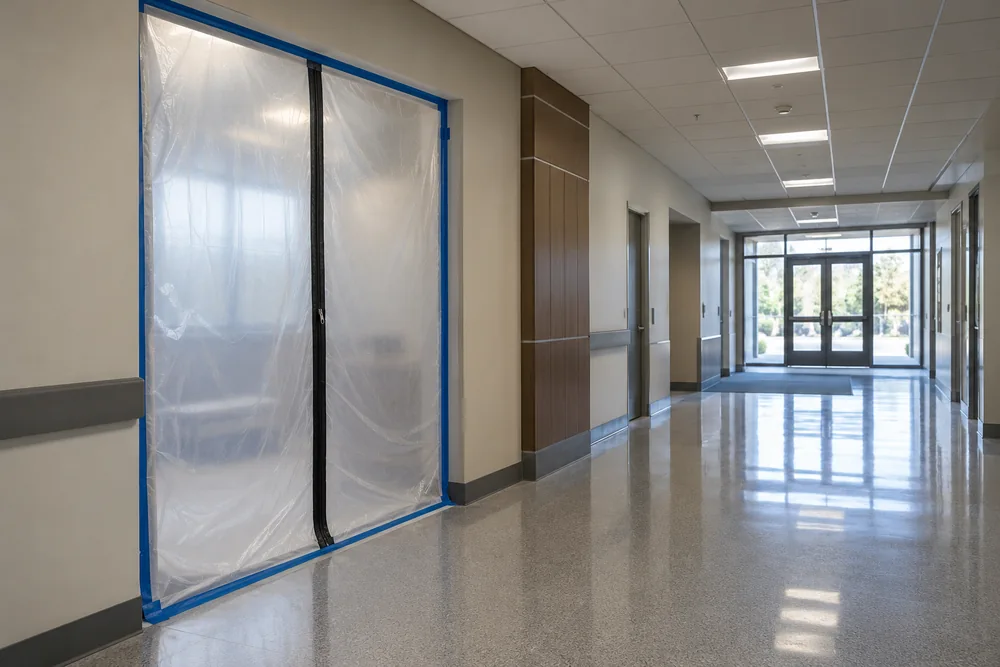
A named property contact should coordinate access, occupant notices and contractor decisions. The remediation company should control its work zone. The repair trade should document correction of the identified source.
- Management: confirm access arrangements and the person authorized to approve scope changes.
- Assessor or remediator: describe affected materials, investigation limits and proposed cleanup.
- Repair trade: correct the identified plumbing, roof, envelope or equipment fault.
- Remediator: perform the agreed removal and cleaning with appropriate controls.
- Completion reviewer: evaluate the work against the defined completion criteria.
Occupied-unit decisions need to account for individual concerns and the work's potential to affect neighboring spaces. EPA's building-occupant communication guidance explains the need for clear updates and relocation planning.
What documentation should the manager retain?
A property manager should retain the original report, assessment findings, authorized scope, source-repair record and completion documents. The record should distinguish observed facts from assumptions about cause. A scope change should identify newly discovered damage and the work authorized in response.
Useful completion records include dated area photographs, material removal descriptions and drying observations or measurements. Any laboratory report needs its sampling locations and interpretation. A laboratory result without a sampling plan cannot explain the condition of every unit.
Property managers should keep reconstruction responsibility explicit. The mold-damage repair overview covers rebuilding decisions after cleanup. A closed work order should not hide unfinished repairs behind a completed cleaning task.
When is the remediation work order complete?
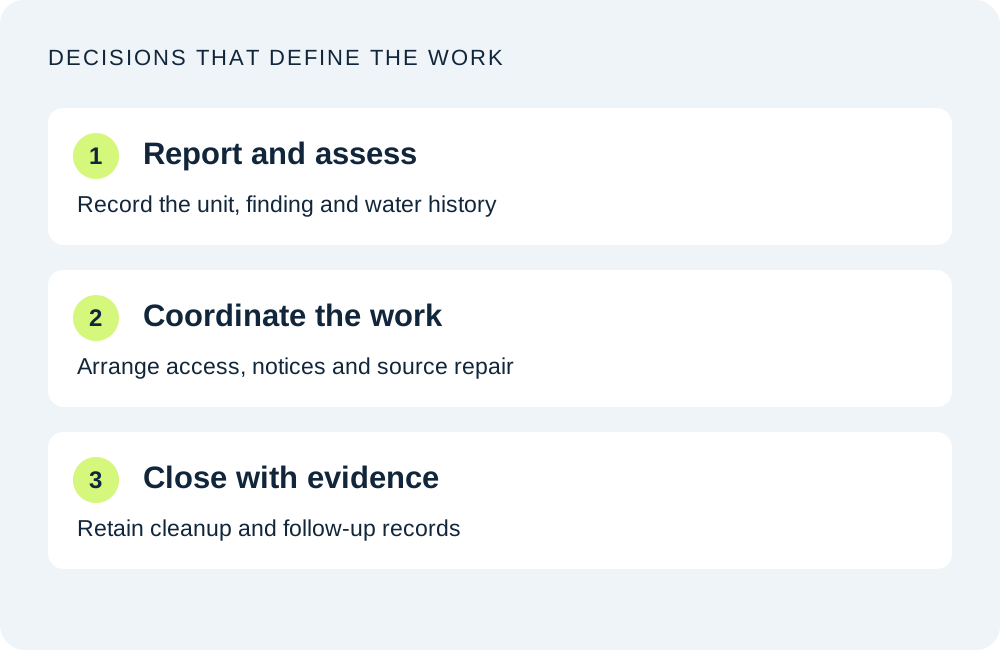
A remediation work order is complete when the agreed cleanup has been reviewed and the remaining responsibilities have been documented. A separate reconstruction work order may remain open. The owner should retain a follow-up date for checking the original moisture problem.
Mold clearance is not a universal federal spore-count number. EPA states that federal mold thresholds have not been established. The independent cleanup-review overview describes verification as an assessment of the project evidence.
Property-management contracts and legal obligations require their own review. The workflow on this page does not determine Pennsylvania notice periods, tenant remedies or responsibility for payment.
Gettysburg Mold Remediation Help offers free referrals for apartment buildings and business properties. The commercial remediation referral page explains the independent company's role in assessment, pricing and work.