
Why does mold grow on window sills?
Window sill mold grows when the surface stays damp from condensation, rain entry or another moisture source. Dust, wood and surrounding finishes can support growth. Cleaning the visible spots without correcting the wetting leaves the conditions for recurrence.
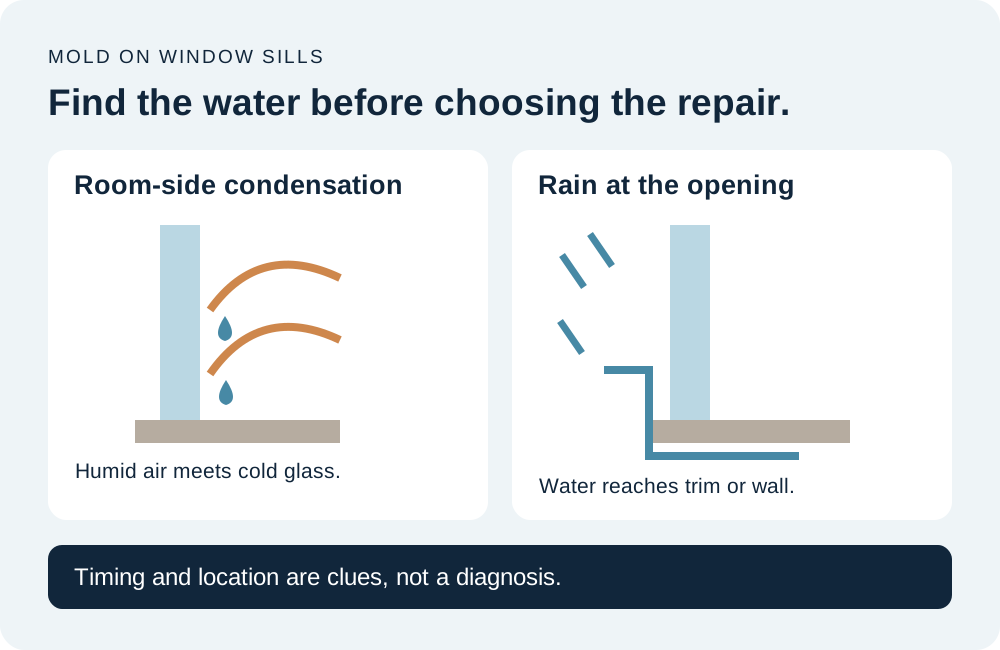
Window condensation forms when humid indoor air meets sufficiently cold glass or framing. Rain entry is different: liquid water gets into the window opening or surrounding wall. The EPA explains the connection between cold surfaces, humidity and mold. A wet corner does not, by itself, establish which path is responsible.
Is it condensation or rain leaking around the window?
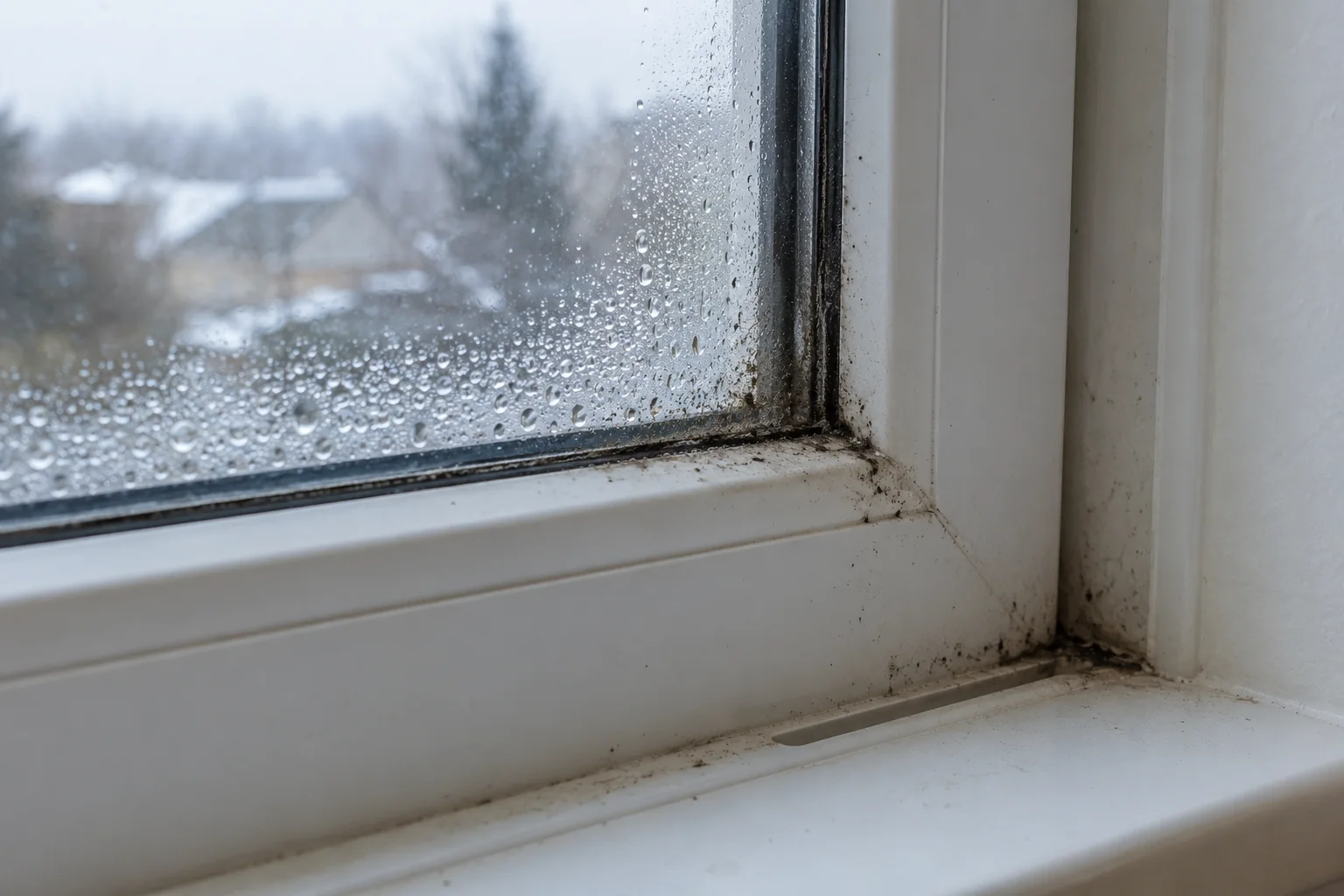
Window condensation produces cold-weather droplets on the room-side glass. Wet trim after rain suggests water entry. Moisture patterns provide investigation clues rather than conclusive tests. Condensation and rain entry can affect the same window.
| Observed pattern | Possible explanation | What remains uncertain |
|---|---|---|
| Inside glass is wet on cold mornings | Indoor moisture condenses on a cold surface | Humidity, surface temperature and airflow all matter |
| One corner or wall below gets wet after rain | Rain entry at or above the opening | The visible stain may be below the actual entry point |
| Water remains in the window track | A drainage problem or retained water | Check the product's drainage design before altering anything |
| Outside glass is misty but the room side is dry | Exterior condensation | Exterior condensation alone does not explain indoor mold |
| Fog remains inside a sealed glass unit | A possible insulating-glass seal problem | Sealed-unit fog differs from condensation on accessible glass |
Window moisture patterns help direct a window mold and moisture inspection toward the affected components. A shower, cold night or storm provides a different moisture clue. Similar wetting on several windows warrants checking indoor conditions.
How do you clean mold from a window sill?
Window sill mold on a small, accessible hard surface needs detergent cleaning followed by complete drying. Moisture-source correction prevents repeated wetting. Cleaner compatibility protects the window material.
- Check the extent. Growth that continues behind trim, substantial water damage or contaminated floodwater needs a different approach from a small surface patch.
- Protect yourself. Use gloves, eye protection and a properly fitted N95 respirator for mold cleanup. Seek medical advice before cleanup if you have health concerns.
- Clean the affected hard surface. Use controlled amounts of water and a suitable cloth. Avoid soaking wood joints or adjoining drywall.
- Dry and reassess. A cleaner-looking sill does not establish that the wall or wood beneath it is dry.
Window sill cleanup follows the EPA home mold guide for hard surfaces. Do not paint or caulk over growth. Do not mix cleaning products or use a universal bleach recipe on every frame material.
Window care instructions in the manufacturer care guide warn against abrasive tools and incompatible solvents. Aggressive scraping can turn a limited cleanup into damaged glass, seals or finishes.
Which window materials need repair or replacement?
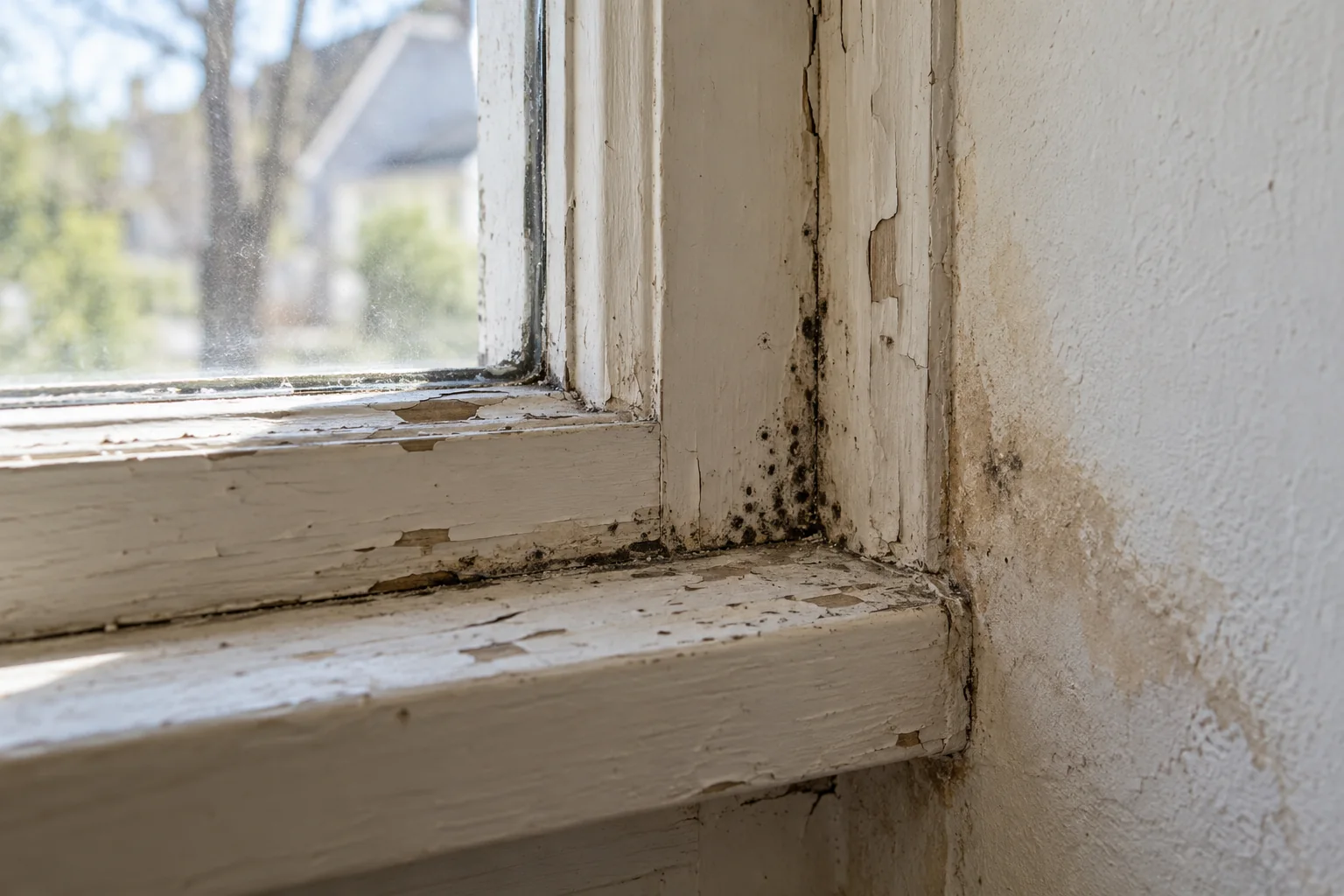
Window sill materials need assessment for damage before a cleaning or replacement decision. A vinyl track, painted wooden sill and paper-faced wall are not interchangeable cleaning surfaces.
| Material or condition | Decision to consider |
|---|---|
| Glass or intact vinyl | Compatible cleaning treats accessible surfaces. Joints and drainage need separate inspection |
| Sound, intact painted wood | Careful cleaning and drying protect sound wood. The finish and substrate need checking before refinishing |
| Soft, swollen or deteriorated wood | Damage assessment determines repair needs. Surface cleaning does not restore strength |
| Loose or deteriorated caulk | The joint and substrate need assessment. New caulk must not conceal growth |
| Affected drywall or wallpaper | Porous layers need assessment for concealed moisture. Removal may be needed |
Porous window surrounds have cleaning limits described in the EPA cleanup guidance. Residual staining does not establish active growth. Fresh paint does not establish a completed repair. Window damage requires repairs to mold-affected trim and walls when the underlying material has deteriorated.
Why does window mold keep coming back?
Recurring window mold warrants investigation of repeated wetting and remaining affected material. A stronger cleaning product does not repair rain entry, cold surfaces or poor drainage.
- Control indoor moisture. The CDC recommends indoor humidity no higher than 50% throughout the day. Use a humidity gauge and exhaust cooking and shower moisture outdoors.
- Check the cold surface. Even a room-wide humidity reading does not describe the temperature at a glass edge. Window condensation guidance explains how cold frame components and limited air circulation contribute.
- Preserve intended drainage. Clear debris only as the product instructions allow. Do not seal a designed weep opening with caulk.
- Resolve repeat rain wetting. If the same trim or wall gets wet after storms, have the water-entry route investigated.
Window mold prevention combines the household moisture-control measures with correction of window-specific wetting. A clean sill should remain dry through the conditions that previously caused moisture accumulation.
Does mold on a sill mean you need new windows?
Window sill mold alone does not establish a need for whole-window replacement. The diagnosed defect determines the repair scope.
Window fog trapped inside a sealed insulating-glass unit is a separate issue from room-side droplets. Manufacturer guidance on glass replacement notes that replacement of the glass unit may be possible without replacing the entire window. Separate storm panels or hinged glazing arrangements require their own assessment. New windows also do not automatically correct every source of indoor humidity.
Is black mold on a window sill dangerous?
Window mold color cannot identify a mold species. Dark spots cannot predict a person's health response. Mold exposure can cause symptoms in some people. Other people may experience no symptoms. People with asthma, mold allergies or weakened immune systems need particular care around mold.
Window mold needs removal and moisture correction under CDC guidance regardless of mold type. A healthcare professional evaluates symptoms. A window photograph cannot diagnose illness.
When should you get professional help for window mold?
Window mold needs professional assessment when growth is extensive, concealed or recurrent after moisture corrections. The EPA says that patches smaller than about 10 square feet can often be handled by homeowners, but size is only one consideration. Sewage contamination, hidden damage and health concerns change the decision.
Gettysburg Mold Remediation Help connects homeowners seeking help with window mold in Gettysburg with independent contractors. The independent company assesses the property. The independent company prices and performs the work. A website photograph cannot establish the extent of damage in your home.