
How do you prevent mold in a home?
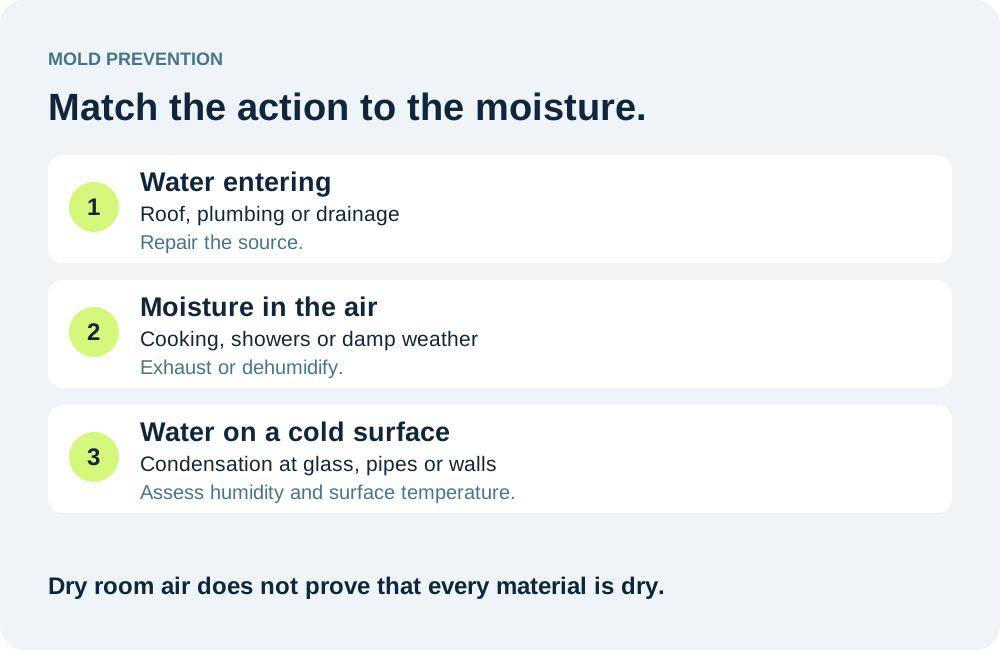
Prevent mold by repairing water entry, exhausting moisture outdoors and keeping indoor materials dry. Start with the source: a roof leak, shower steam and a cold basement wall need different solutions. A dehumidifier can help with humid air, but it cannot repair a leak or remove existing growth.
- Stop incoming water: repair plumbing and building leaks; keep roof drainage working.
- Remove moisture where it starts: use functioning bathroom and kitchen exhaust systems.
- Measure and control humidity: check the rooms that actually stay damp.
- Respond to wet materials promptly: drying the air alone does not establish that a wall cavity is dry.
These priorities combine moisture-source control with material assessment. Prevention also follows cleanup: covering a recurring patch with paint leaves the underlying problem unresolved.
What humidity level helps prevent mold?
Aim for roughly 30% to 50% indoor relative humidity, while checking for condensation and wet materials. The EPA recommends staying below 60%, ideally 30% to 50%; the CDC advises keeping humidity no higher than 50% throughout the day. These are moisture-control guidelines, not a guarantee that every surface is dry.
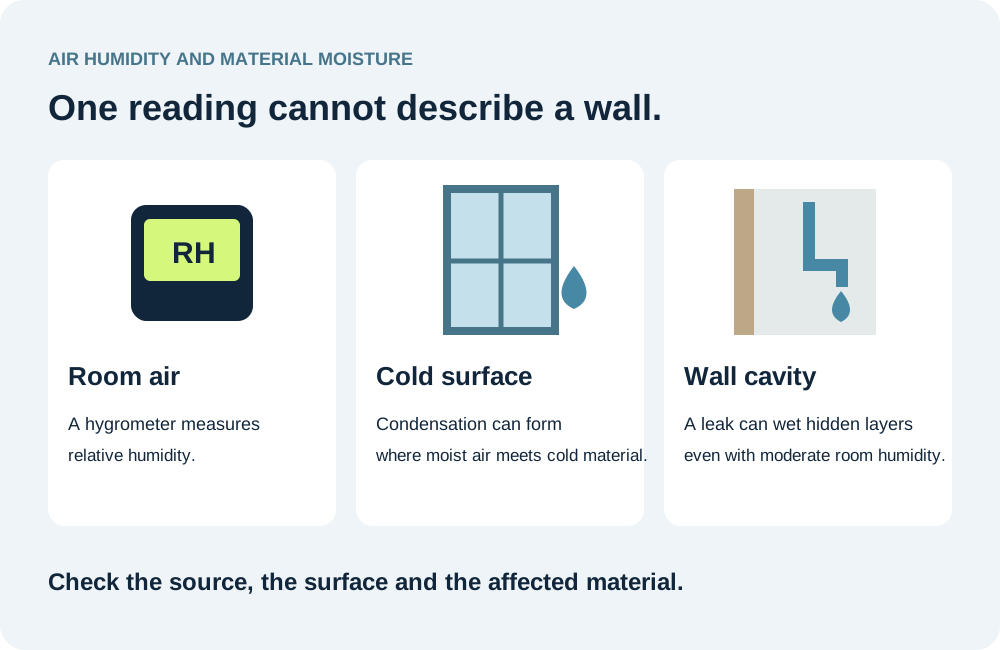
Use a hygrometer to observe room conditions at different times, including after showers and during humid weather. A reading beside a heater or directly in an exhaust stream may not represent a colder corner. Compare the damp room with other rooms instead of assuming one hallway monitor describes the entire home.
A hygrometer measures air humidity. It does not measure the moisture inside drywall, wood or insulation. If a stain spreads after rain while room humidity stays moderate, investigate water entry rather than simply lowering the humidistat.
Which moisture problem needs fixing?
The timing and location of dampness help distinguish leaks, condensation and moisture generated indoors. Treat the patterns below as starting points for an inspection, not diagnoses. More than one mechanism can affect the same room.
| Observed pattern | Possible mechanism | Useful next action | What that action cannot establish |
|---|---|---|---|
| Window droplets during cold weather | Humid room air contacting cold glass or frames. | Address humidity, air circulation and cold surfaces. | A dry window does not prove an adjoining wall cavity is dry. |
| Basement wall gets wet after rain | Water entry associated with drainage or the building envelope. | Inspect gutters, downspouts, exterior drainage and the wet wall. | Lower room humidity does not repair water entry. |
| Stain appears near a pipe or appliance | A plumbing leak or condensate problem. | Find and repair the source; assess affected material. | The visible stain does not define the full damage boundary. |
| Bathroom stays damp after showers | Moisture production exceeds effective removal. | Check fan operation, duct routing and exterior discharge. | Fan noise alone does not prove adequate extraction. |
| Cold basement surfaces feel damp in summer | Moist air contacting cool materials. | Assess dehumidification and air entering the space. | Opening windows does not necessarily dry a cool basement. |
The EPA explains how condensation can form on cold surfaces and identifies hidden moisture behind wall finishes and in HVAC components. This is why a moisture investigation should connect the room reading with the material and its exposure to water.
How does mold prevention change from room to room?
Bathrooms and kitchens need source exhaust; basements need water-entry and humidity control; attics need the roof and air pathways assessed. Choose work that matches the room's construction and moisture source rather than applying the same product everywhere.
| Location | Priority | Important limit |
|---|---|---|
| Bathroom | Use outdoor exhaust during moisture-producing activities; repair leaks around fixtures. | Persistent dampness needs a fan and duct assessment, not just a longer timer setting. |
| Kitchen and laundry | Exhaust cooking moisture and dryer discharge outdoors; inspect appliance connections. | A recirculating hood is not an outdoor moisture exhaust. |
| Basement | Address rainwater entry, then control air humidity; keep stored items accessible for inspection. | Do not enclose a persistently damp wall behind new finishes. |
| Crawl space | Assess drainage, ground moisture and the existing ventilation or enclosure design. | Adding plastic or opening vents without assessing the assembly can leave moisture unresolved. |
| Attic | Check roof leaks and bathroom exhaust routing; assess air leakage from living spaces. | Do not assume that adding a fan fixes the underlying moisture source. |
| Bedrooms and closets | Check cold corners, condensation and air circulation around stored belongings. | A comfortable room temperature does not rule out a cold, damp surface. |
Building America guidance requires bathroom exhaust to discharge outdoors, not into an attic or another enclosed space. It also distinguishes a fan's rated capacity from its actual installed airflow. Duct condition and termination matter as well as the fan itself.
When growth is already present, use the relevant service information for bathroom mold removal, basement mold remediation or attic mold removal. Prevention and cleanup address different parts of the problem.
Can a dehumidifier prevent mold on its own?
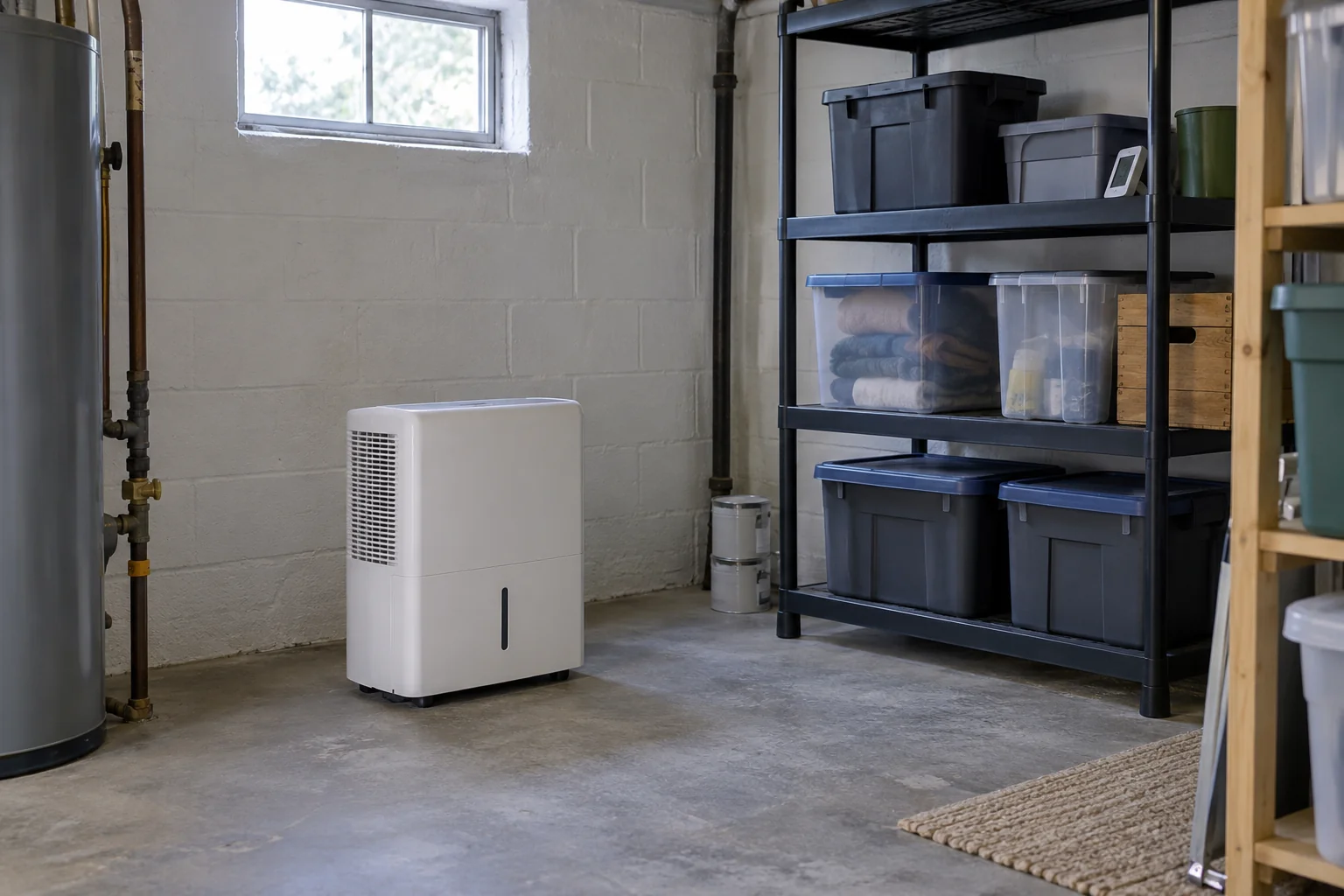
No. A dehumidifier reduces moisture in the air; it does not stop a building leak or clean contaminated materials. It is useful when excess humidity is part of the problem and the unit suits the room and operating conditions.
- Match capacity to the space and dampness: do not select by room area alone.
- Check temperature limits: equipment intended for a warmer room may perform poorly in a cold basement.
- Provide airflow and drainage: follow the model's clearance, tank and drain instructions.
- Maintain the equipment: check the filter, collection system and humidity response.
ENERGY STAR's buying guidance addresses capacity, low-temperature performance and safe drainage. It recommends closing doors and windows to the space while dehumidifying. A continuously running unit with little humidity improvement is a reason to review the load and setup, not proof that mold cannot grow.
Should you open windows to prevent mold?
Opening windows may help when outside air can dry the space, but damp outdoor air can make a cool basement wetter. Do not use an outdoor relative-humidity percentage alone as a universal window-opening rule: relative humidity depends on temperature, and indoor surfaces can be much colder than the air outside.
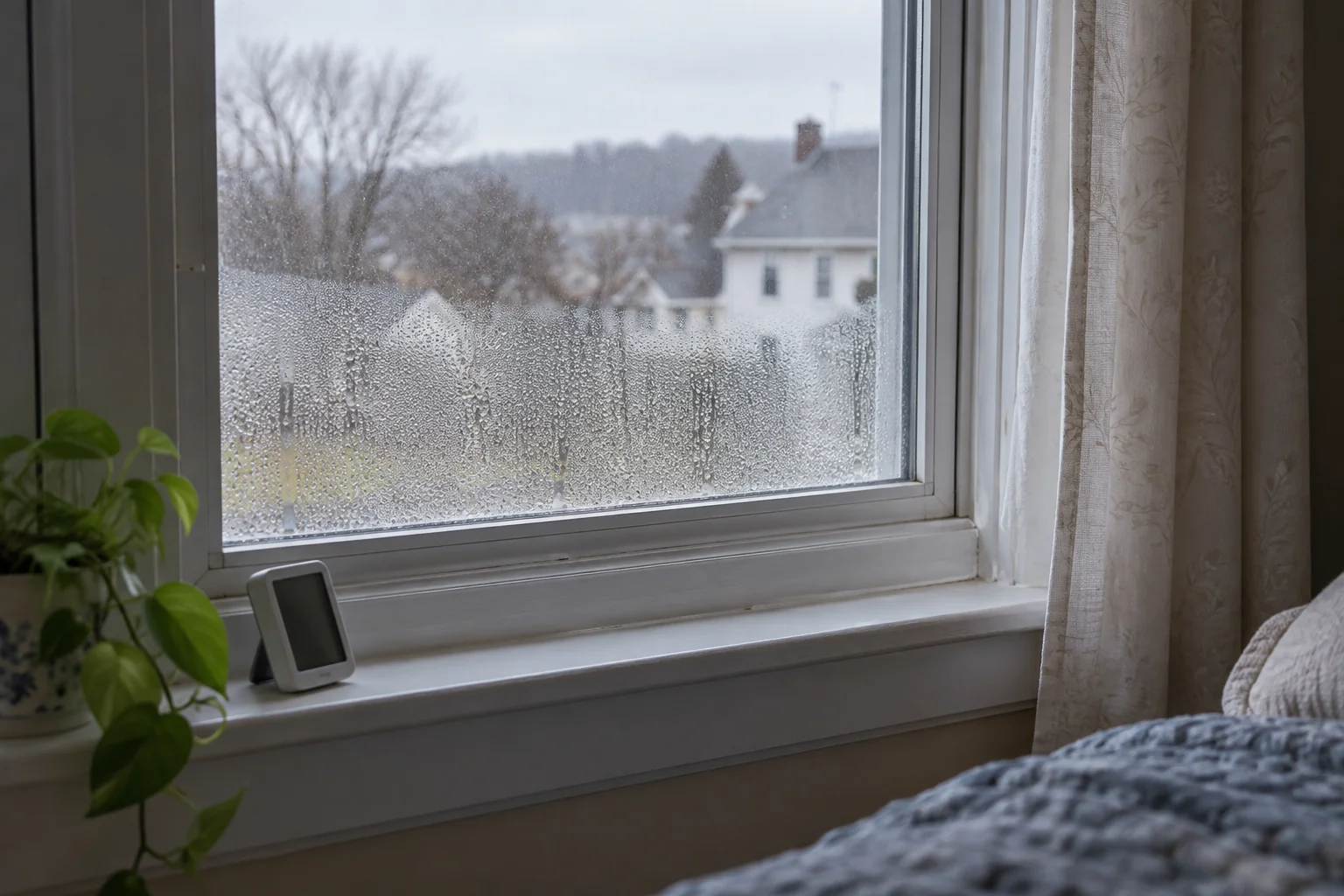
University of Minnesota Extension advises against open windows during damp weather while using air conditioning or a dehumidifier. For showering and cooking, a properly functioning outdoor exhaust system removes moisture at its source. Recurring winter condensation may also require a building assessment of insulation, air leakage and surface temperatures.
How quickly should wet materials be dried after a leak?
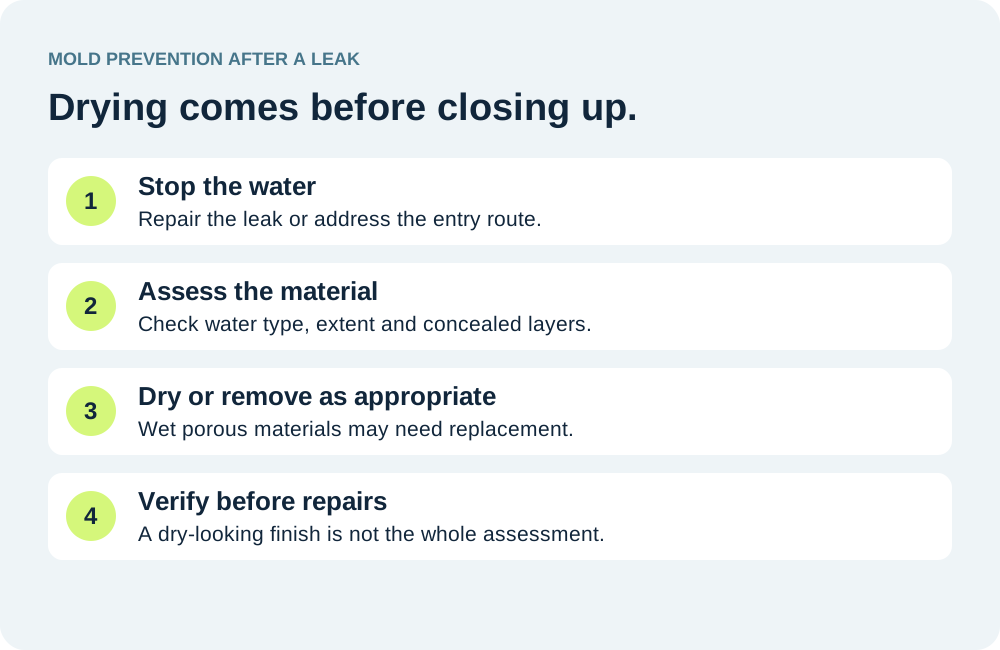
Begin promptly and aim to dry wet materials within 24 to 48 hours. This is a prevention target, not a countdown that guarantees mold is absent before the deadline or present afterward. Water type, the material and access to concealed layers affect the response.
The National Pesticide Information Center emphasizes rapid drying and notes that affected porous materials may need removal. Electrical hazards or contaminated floodwater require a different response from a small clean-water spill. Do not set up electrical drying equipment in standing water.
For wall-specific decisions, see mold on drywall and inside walls. If water has spread through floors or concealed spaces, water damage restoration addresses extraction, drying and the condition of affected materials. A dry-looking painted face is not sufficient evidence to close a wet cavity.
Why does mold come back after cleaning?
Mold can return when moisture persists, affected material remains or a new water problem develops. Repeatedly treating the visible spot does not resolve those conditions. Paint, fragrance and a lower room humidity reading are not substitutes for correcting the source.
Escalate recurring or concealed growth, major water damage and suspected HVAC contamination to a qualified professional. Avoid opening a suspect cavity simply to see how much growth is inside. For help with an existing problem, see our mold removal in Gettysburg, PA services. The useful outcome is a defined moisture correction and appropriate cleanup, followed by evidence that the affected materials are ready for repair.