
Can mold grow on concrete walls and floors?
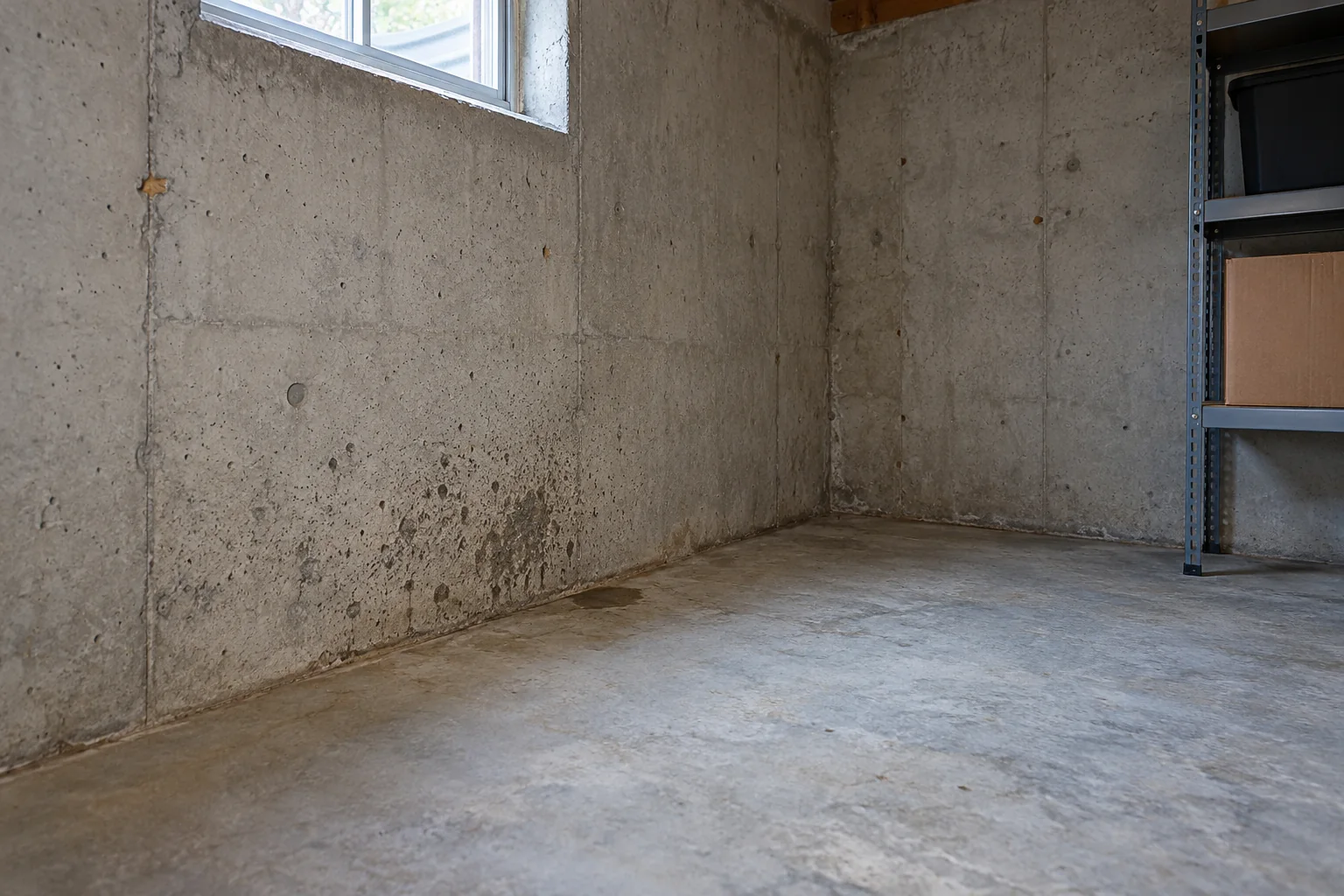
Mold on concrete grows where moisture supports contamination on the surface, including dust and paint. A concrete wall needs assessment of the surface layer as well as the mineral substrate. Removing a wall is not the automatic response to surface spotting.
Dust and paints are among the materials identified in CDC's explanation of indoor mold growth. A bare-looking basement wall can still carry surface deposits. A painted wall adds a coating that needs its own condition check.
| Surface condition | Assessment target | Decision |
|---|---|---|
| Bare concrete with spotting | Surface contamination and moisture pathway | Assess cleaning access before proposing removal of the substrate |
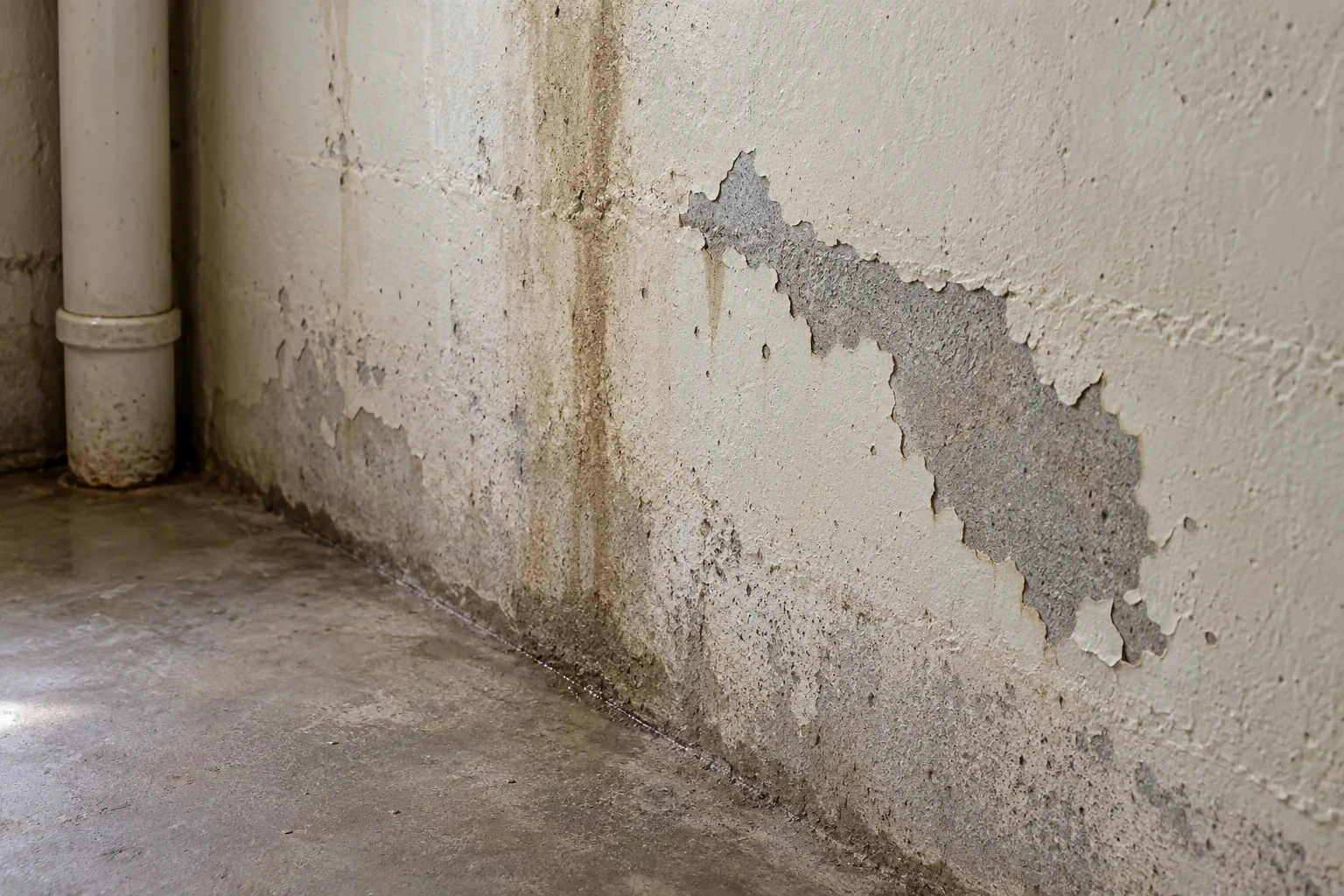
| Painted concrete | Coating condition and the concrete beneath | Determine whether the finish can remain after cleanup |
| Concrete beneath carpet or flooring | Backing, adhesive, underlay and slab | Assess each layer rather than treating the slab as the whole problem |
| Concrete behind a finished wall | Framing, insulation and wall covering | Investigate concealed materials before limiting the work to visible concrete |
Floor assemblies with concealed mold beneath flooring layers need access and drying decisions beyond a washable surface. A clean slab does not establish that a retained carpet cushion is clean.
How does moisture reach a concrete basement wall?
Concrete basement walls receive moisture through liquid entry, capillary suction, vapor movement and condensation. Groundwater and room humidity require different repairs.
Capillary suction moves water through concrete's pores. Vapor diffusion moves water vapor through a material. Condensation forms when humid air meets a sufficiently cold surface. The University of Minnesota's basement moisture guidance explains these pathways.
| Observed pattern | Possible pathway to investigate | Useful distinction |
|---|---|---|
| Wetting after rain | Runoff, gutters, grading or foundation entry | Indoor dehumidification does not redirect rainwater |
| Dampness near the wall base | Capillary movement or water entering at joints | A darker band alone does not identify the entry route |
| Moisture on cool surfaces in humid weather | Condensation | Opening windows can introduce more humid air |
| Dampness beneath a floor covering | Slab moisture or a leak affecting the assembly | A dry exposed edge does not establish conditions under the covering |
Basement moisture repairs should address interior moisture sources and exterior drainage. Gutters, downspouts and grading deserve assessment before major drainage work. Interior coatings without drainage generally do not solve continuing basement water entry.
Is white material on concrete always mold?
White material on concrete is not automatically mold. Efflorescence is a mineral deposit associated with moisture movement. Paint residue and other surface materials also need consideration.
Concrete deposits need an assessment that separates appearance from identification. A water spray or bleach spot is not a laboratory identification of the whole surface. The comparison of efflorescence and mold deposits explains the distinction without assigning a mold species from a photograph.
Mold cleanup does not require a species name before moisture is corrected. CDC advises removing mold and fixing the moisture problem when mold is seen or smelled. Unexplained deposits should not be labeled toxic from their color.
How should a small area of mold on concrete be cleaned?
A small, accessible hard-surface mold patch is cleaned with detergent and water, followed by thorough drying. EPA's homeowner guidance describes most areas under about 10 square feet as manageable by the homeowner, with exceptions. Sewage, extensive water damage and health concerns change that decision.
- Moisture correction addresses the leak or wetting pathway.
- Personal protection includes a properly fitted N95 respirator, gloves and goggles.
- Surface cleaning removes contamination using detergent and water, with product-label instructions followed.
- Drying follows cleanup before any new finish covers the surface.
EPA's home mold cleanup guide does not recommend bleach as a routine treatment. Killing mold alone does not remove the contamination. Cleaning chemicals must never be mixed.
Concrete water extraction and mold cleanup are separate operations. EPA's remediation course describes water-extraction equipment for wet concrete. Wet vacuums used on dry materials can spread spores. EPA recommends HEPA vacuuming for final cleanup after drying and removal of contaminated materials.
Basement cleaning should not copy an outdoor pressure-washing procedure. Indoor work needs control of runoff and contaminated debris. A larger or inaccessible area belongs in a remediation plan that accounts for occupants, containment and adjacent materials.
Can concrete be painted or sealed after mold cleanup?
Concrete must be cleaned and dry before painting over a previously moldy surface. A new coating does not replace correction of the water source. EPA warns that paint applied over mold is likely to peel.
Coating selection needs a defined substrate condition. A proposed finish should identify the surface preparation and moisture conditions required for that product. An elapsed drying period alone does not establish compatibility.
Concrete staining can remain after cleaning. A lingering stain does not, by itself, prove active growth or successful cleanup. Source correction, contamination removal and material condition remain separate checks.
Why does mold return after a concrete wall is cleaned?
Recurring concrete mold warrants investigation of continuing moisture and overlooked materials. A surface cleaner cannot repair a plumbing leak or redirect groundwater. A finished wall may conceal a second affected surface.
Indoor relative humidity should stay no higher than 50% under CDC guidance. Room humidity is an air measurement rather than proof of a dry slab. CDC's 24-to-48-hour drying advice concerns rapid response after flooding, not a guaranteed deadline for curing wet concrete.
Basement assessment through basement mold remediation in Gettysburg should include the adjoining wall assembly when hidden contamination is suspected. A repaired moisture source needs follow-up observation under the conditions that previously produced wetting.
Gettysburg Mold Remediation Help provides a free referral service for Gettysburg mold removal and moisture assessment through independent companies. The independent company assesses the property, prices the work and performs the service.