
Why does mold grow in a closet when the bedroom looks dry?
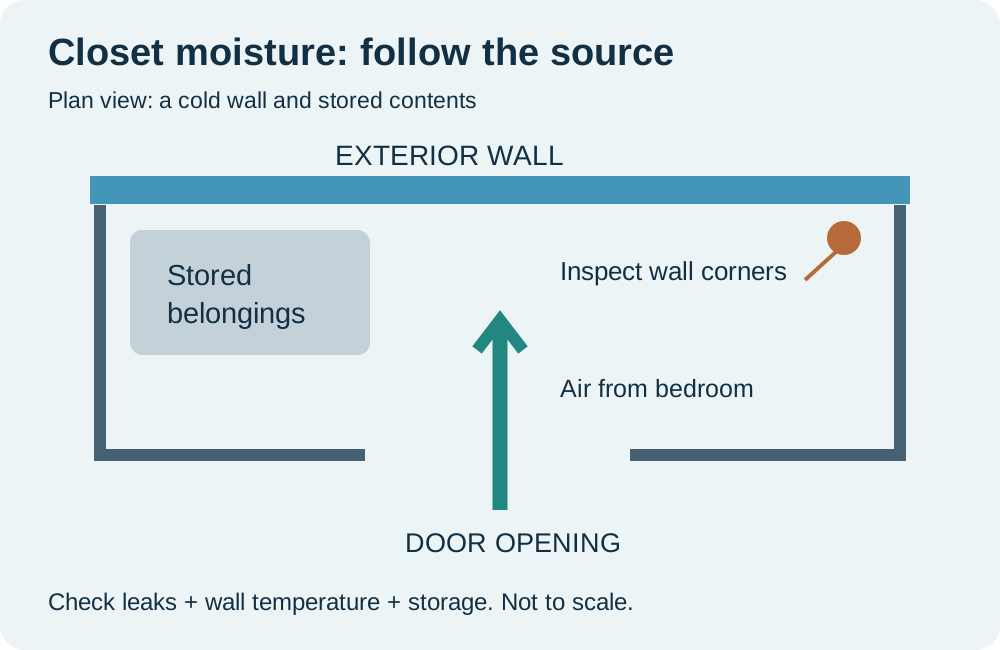
Mold in a closet develops where moisture reaches susceptible materials, even when the adjoining bedroom looks dry. A cold exterior wall, a concealed leak or damp stored clothing creates a different problem from ordinary dust. Dense storage also obstructs access to wall corners where damage begins.
Closet air becomes more humid relative to its temperature when the closet stays colder than the bedroom. Exterior walls lose heat during cold weather. Clothes packed against those walls further separate the surface from room warmth. Building Science Corporation explains this mechanism in its closet moisture analysis. Opening a door alone does not repair a leak or remove existing growth.
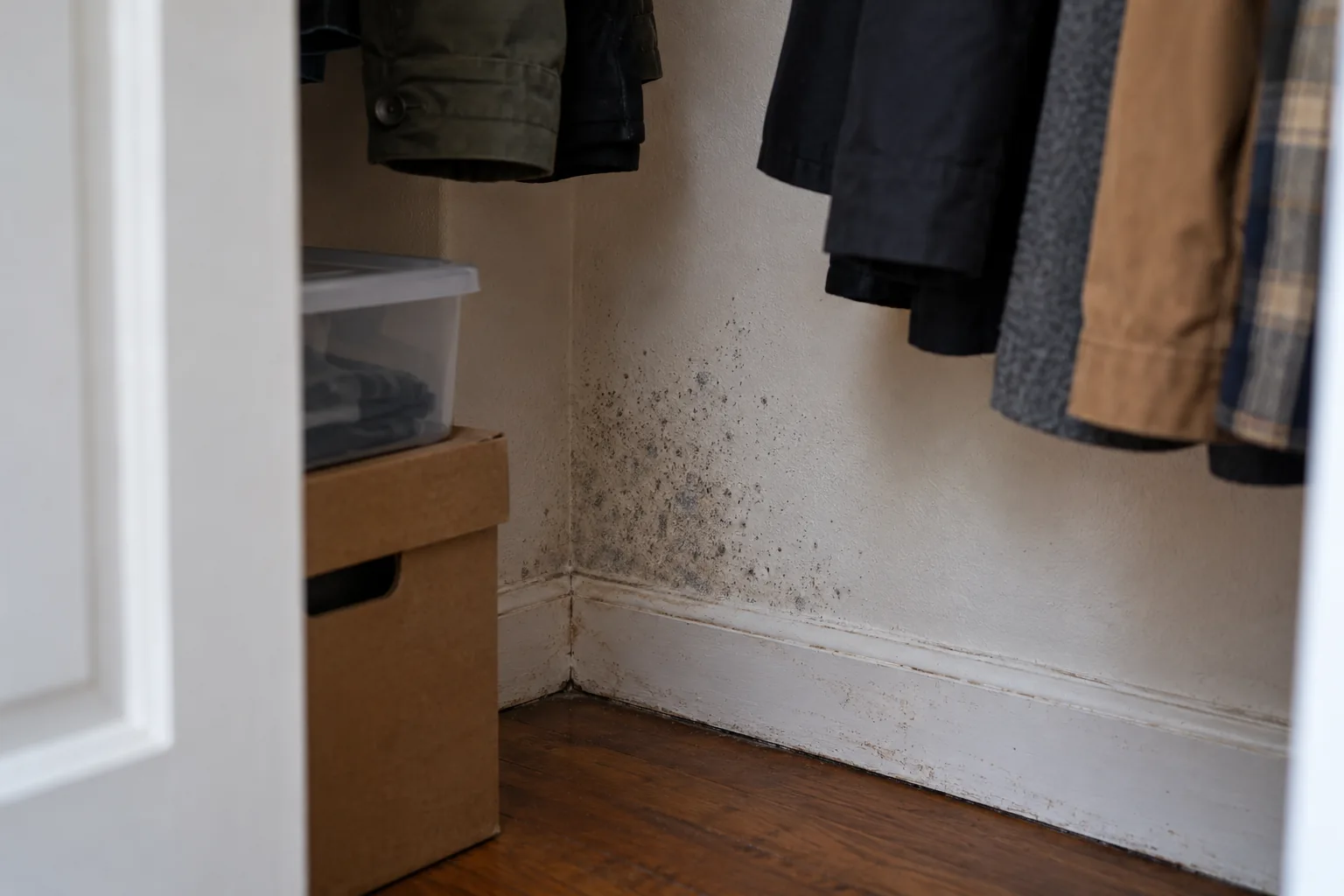
Closet moisture also comes from roofs, windows, adjacent plumbing and wet belongings. The University of Georgia home moisture guidance connects indoor inspection with exterior water entry and storage conditions. A closet beneath a bathroom needs a plumbing check alongside an airflow assessment.
Does closet mold mean condensation or a water leak?
Closet mold alone does not distinguish condensation from a leak. The location, weather history, nearby plumbing and moisture measurements guide the investigation. A single dry reading cannot establish what happened during an earlier rainstorm or cold night.
| Observation | Useful next check | Limit of the observation |
|---|---|---|
| Growth behind clothing on an exterior wall | Compare closet and bedroom temperature and humidity. Examine the exterior for water entry. | A cold wall does not exclude a roof or siding leak. |
| New staining after rainfall | Inspect the corresponding roof, window, flashing or wall exterior. | A stain shape does not locate the entry point by itself. |
| Dampness beside bathroom plumbing | Arrange a plumbing assessment and material moisture checks. | The visible wet patch may be smaller than concealed damage. |
| Damp shoes or clothes with dry surrounding surfaces | Check whether belongings entered storage before drying. | A dry wall does not establish that every stored item is unaffected. |
Closet investigations should remain non-destructive until the extent of suspected growth is understood. Pulling off wallpaper or opening a wall can expose concealed contamination. Professional inspection of moisture and suspected hidden mold helps define the investigation before demolition starts.
What humidity should a closet have?
Closet humidity should follow CDC's indoor recommendation of no higher than 50% relative humidity throughout the day. EPA describes an ideal indoor range of 30% to 50%. A room-level reading does not prove that a cold wall surface stays equally dry.
Closet monitoring works best when the closet and adjoining room are compared under ordinary use conditions. Temperature and humidity readings taken with the door usually closed explain more than one reading immediately after opening it. CDC's home mold prevention guidance recommends checking humidity more than once daily because conditions change.
Thermal cameras show surface temperature patterns rather than seeing water through walls. FLIR's thermal leak-detection guidance requires moisture-meter confirmation of suspected wet areas. A dark thermal image patch is not proof of mold. Instrument findings need interpretation alongside the building history and visible condition.
Can a homeowner clean mold inside a closet?
A homeowner can often handle a mold area smaller than about 10 square feet, according to EPA, when the situation has no additional hazards. Larger damage, sewage contamination, concealed growth or suspected HVAC involvement needs a different response. Closet dimensions do not equal the total affected surface area.
Cleanup decisions should count affected walls, shelving and contents together. A small visible patch beside soft drywall or a persistent leak deserves further assessment. EPA's home mold cleanup guidance explains the small-area threshold and the reasons to seek professional help.
Mold cleanup requires protective equipment. CDC recommends at least a NIOSH-approved N95 respirator, gloves and protective goggles. People with mold allergies, immune suppression or underlying lung conditions should avoid cleanup, following CDC's mold cleanup precautions. Cleaning products must never be mixed.
Affected belongings need separation from clean belongings during assessment. Shaking clothes or brushing visible growth in the bedroom spreads debris. Fans directed across moldy surfaces are not a substitute for controlled cleanup.
Which closet materials need cleaning or replacement?
Hard, washable surfaces may be cleaned and dried, while mold-affected porous materials may require removal. Material condition matters more than whether the closet has a small footprint. Swollen boards and deteriorated drywall require assessment beyond wiping the visible face.
| Material | Decision | Reason |
|---|---|---|
| Sound metal rod or washable hard surface | Clean with detergent and water when appropriate, then dry completely. | Surface contamination differs from damage within absorbent material. |
| Soft drywall, carpet or moldy cardboard | Assess removal or disposal. | Porous material can contain growth beyond the reachable surface. |
| Swollen particleboard shelf | Assess replacement and the source of wetting. | Cleaning does not reverse swelling or restore structural strength. |
| Washable clothes, leather shoes or bags | Separate items and choose a material-specific recovery route. | Fabric laundering and leather treatment are different processes. |
Closet surface treatment should follow EPA's basic mold cleanup steps for hard surfaces and porous materials. Painting or caulking over growth leaves the cleanup unfinished.
Clothing recovery needs care-label decisions. The guide to washing or discarding mold-affected clothes separates washable fabrics from items needing specialist care. The guide to mold on leather shoes and bags explains why repeated wet treatments can damage finishes.
How should closet storage change after cleanup?
Closet storage should keep wall corners accessible, hold only dry belongings and avoid packing clothes tightly against exterior walls. No universal spacing measurement resolves every closet moisture problem. The useful outcome is visible, accessible surfaces and an unobstructed path for room air.

Closet ventilation changes require attention to the surrounding building. A louvered door can help room warmth reach an ordinary clothes closet, as Building Science Corporation describes. Fire-rated doors and mechanical enclosures need professional evaluation before alteration. Door changes do not replace insulation repair or leak correction.
Dehumidifiers reduce moisture in air but do not remove existing mold or repair water entry. A collection tank filling quickly does not identify the moisture source. Closet prevention also requires drying laundry fully before storage and checking the affected corner again after wet weather or cold conditions.
When can clothes go back into the closet?
Clothes can return after the moisture source is corrected, cleanup is complete and the closet and belongings are dry. A fixed waiting period does not establish those conditions. Persistent visible growth, dampness or musty odor calls for further assessment.
Closet recovery includes checking for recurrence. EPA's mold and moisture guide emphasizes correcting water problems and revisiting the cleaned area. Drying newly wet materials within 24 to 48 hours helps prevent growth. The drying window is not proof that material becomes safe or unsafe at a precise hour.
Gettysburg Mold Remediation Help provides a free referral service for mold removal assessment in Gettysburg homes through independent companies. The independent company assesses the property, explains the work and sets its price. Closet repairs and contents recovery should be confirmed in the company's scope before work begins.