
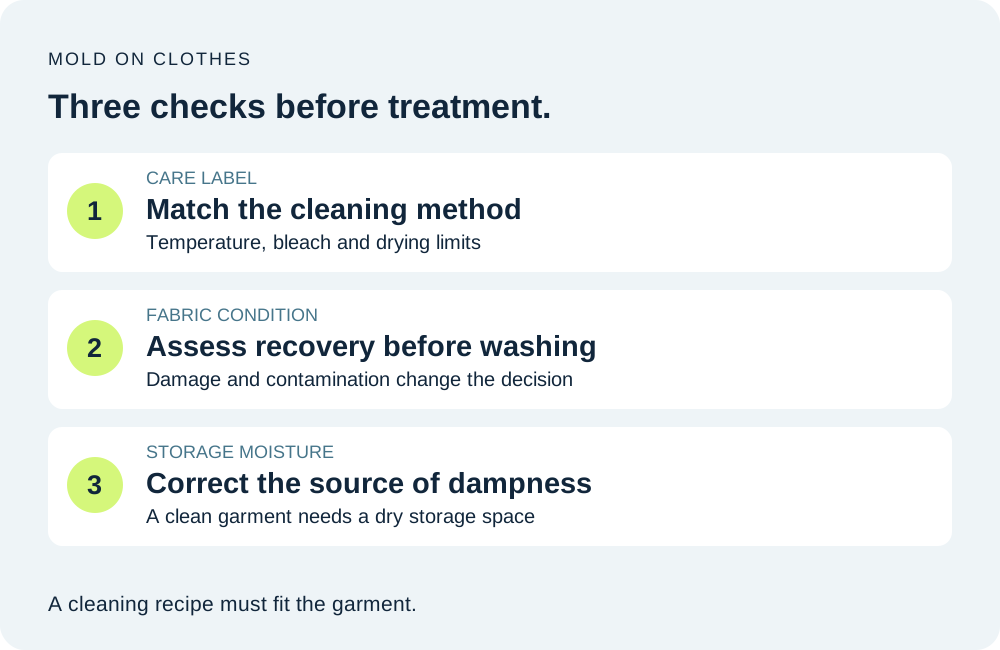
Can moldy clothes be cleaned?
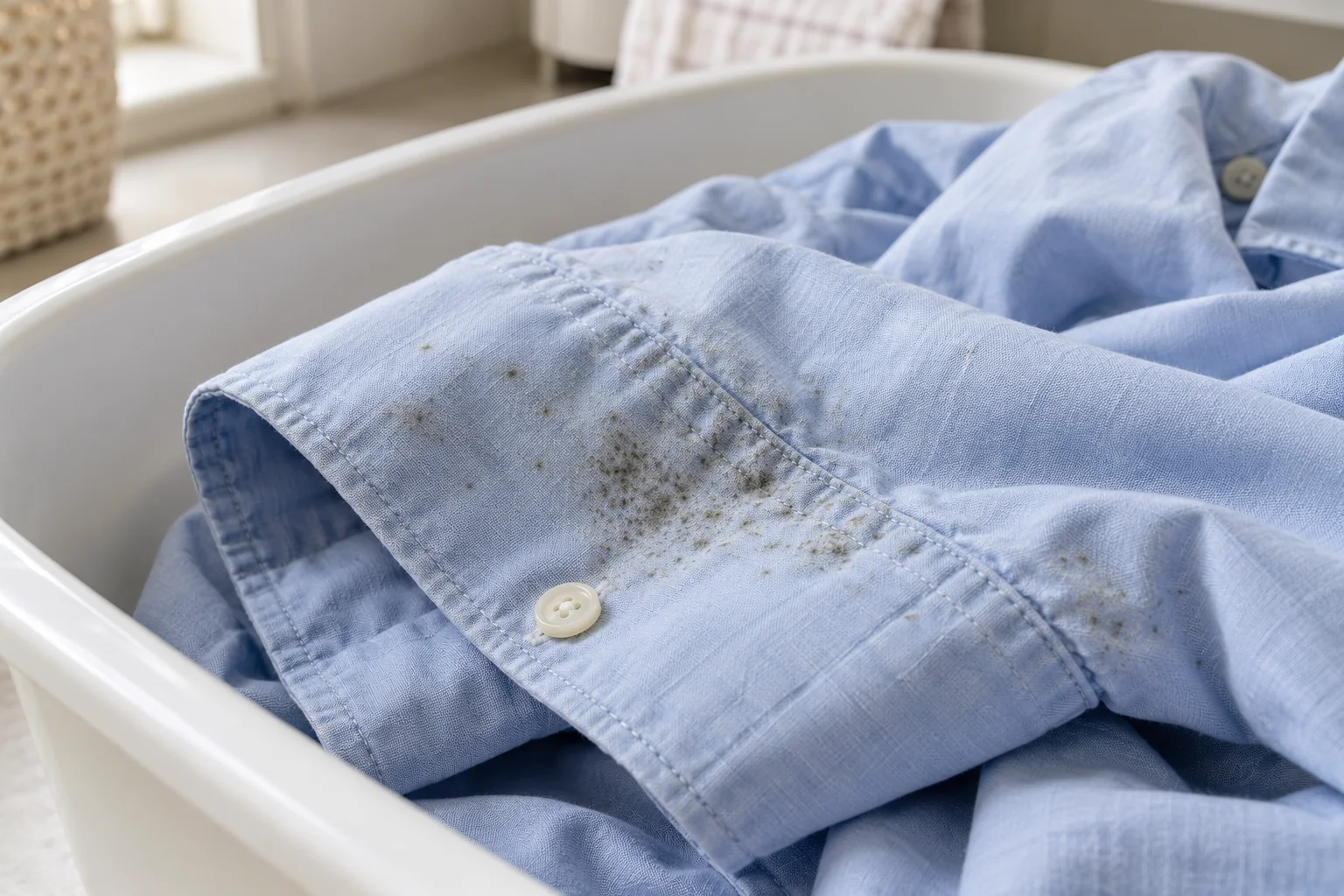
Moldy washable clothes may be recoverable when the fabric remains sound and the care label permits effective cleaning. Torn fibers, extensive growth or a garment that still has visible growth after appropriate cleaning make replacement or specialist assessment the better next step. A laundry cycle cannot repair weakened fabric.
Mold on clothes needs a separate decision from mold on the storage wall. A clean shirt returned to a damp closet remains exposed to the original moisture problem. The decision table below separates garment treatment from the conditions surrounding the garment.
| Finding | Next step | Limit |
|---|---|---|
| Small affected area on an intact, washable garment | Follow the garment and laundry-product instructions, then inspect after drying. | A permitted wash method does not guarantee recovery. |
| Dry-clean-only garment or missing care label | Have a textile cleaner assess the item before treatment. | A household hot wash risks damage to construction, dyes or trim. |
| Holes, weakened seams or widespread growth | Consider disposal. Seek specialist advice for an irreplaceable textile. | Stain removal cannot rebuild damaged fibers. |
| Sewage or floodwater exposure | Use contamination-specific recovery advice before handling or laundering. | Ordinary closet-mold instructions do not address contaminated water. |
| Growth on clothes and the surrounding wall | Assess both the textiles and the building moisture source. | Laundry alone does not treat the closet. |
North Carolina State Extension explains that mold can permanently damage clothing. The university's household-item recovery guidance supports laundering washable textiles with suitable products. The garment label still sets the treatment limits for the individual item.
Clothing recovery also requires a dry storage space, so Mold in a closet explains cold walls, concealed leaks and airflow around stored belongings.
How does the care label change mold treatment?
A clothing care label determines the permitted washing method, temperature, bleach use and drying procedure. A white shirt is not automatically bleach-safe. A cotton blend can include trim, elastic or construction that requires different care from plain cotton fabric.
The Federal Trade Commission's Care Labeling Rule requires instructions for regular garment care and warnings about harmful procedures. A regular-care label protects the garment during cleaning. A regular-care label does not certify a mold-removal process.
| Label instruction | Practical meaning | Avoid |
|---|---|---|
| Machine wash at a specified temperature | Use the stated cycle and temperature limits. | Choosing an arbitrary 140°F setting for every fabric. |
| Non-chlorine bleach only | Use only a compatible product when its own label permits the application. | Substituting chlorine bleach because the item looks white. |
| Do not bleach | Keep bleach out of the treatment. | Assuming an oxygen product is exempt from the warning. |
| Dry clean only | Disclose the mold and water history to the cleaner before delivery. | Soaking the item at home as a test. |
| Line dry or low-temperature drying | Follow the specified drying method. | Overriding the label with high dryer heat. |
How should washable clothes with mold be washed?
Washable mold-affected clothes need label-compatible pretreatment, detergent washing and complete drying. North Carolina State Extension recommends pretreating washable fabrics with a non-ammonia detergent. The university also describes suitable bleach use for compatible fabrics. Product concentration and machine instructions determine the dose.
- Check the item. Separate affected garments for assessment. Avoid shaking or brushing growth into indoor air.
- Match the instructions. Read the clothing label, washing-machine manual and treatment-product label together. Stop if the instructions conflict.
- Pretreat where permitted. Use a product intended for the garment and stain. Follow its directions for application and rinsing.
- Wash within the label limits. Use detergent and the hottest temperature the garment instructions permit. Keep incompatible fabrics out of the same treatment load.
- Dry and reassess. Complete the specified drying procedure promptly. Examine seams and folds before returning the item to storage.
Bleach must never be mixed with vinegar, ammonia or other cleaners. CDC's mold-cleanup guidance warns that mixing bleach with other cleaners can produce poisonous gas. A hard-surface mold product is not automatically suitable for skin-contact clothing.
Persistent growth after a compatible cleaning attempt calls for a new salvage decision. Repeatedly increasing chemical strength or wash temperature risks ruining a garment without resolving the contamination. A textile professional can assess a valuable item before further treatment.
Does a remaining stain or musty smell prove mold is still growing?
A stain or musty smell alone does not establish active mold growth or identify a species. Mold can leave permanent cosmetic damage. An odor also warrants checking the washing machine, damp storage and incomplete drying.
EPA's home mold-cleanup advice distinguishes removal from restoring an item's original appearance. A faded stain is not proof of successful remediation either. Visible growth, fabric damage and the moisture history remain relevant after washing.
Whirlpool's mildew-odor guidance for laundry addresses damp loads and lingering smells. A washer with an existing odor needs its manufacturer-approved cleaning procedure. Fragrance should not substitute for investigating the source.
Will a hot dryer or sunlight remove mold from clothes?
A hot dryer or sunlight does not provide a universal mold-removal guarantee for clothing. Drying is one part of the recovery process. Heat does not repair fibers or establish that an affected garment has been adequately cleaned.
Garment drying instructions remain the limit for tumble heat, line drying and shrinkage control. A routine dry cycle must not become a reason to skip washing or ignore continued growth. Prompt drying also prevents a freshly washed load from remaining damp in the drum.
Why does mold return to clothes after washing?
Mold returns when clothing or its storage space remains damp. Laundry left wet in a machine, incompletely dried seams, condensation and a leaking closet wall each require a different correction. A second wash cannot repair a building leak.
CDC recommends keeping indoor humidity no higher than 50%. A hygrometer helps check the storage area's relative humidity. EPA recommends drying water-damaged items within 24 to 48 hours to help prevent mold in its home moisture guide. The drying interval is a prevention target, not a guarantee that every fabric will remain mold-free until hour 48.
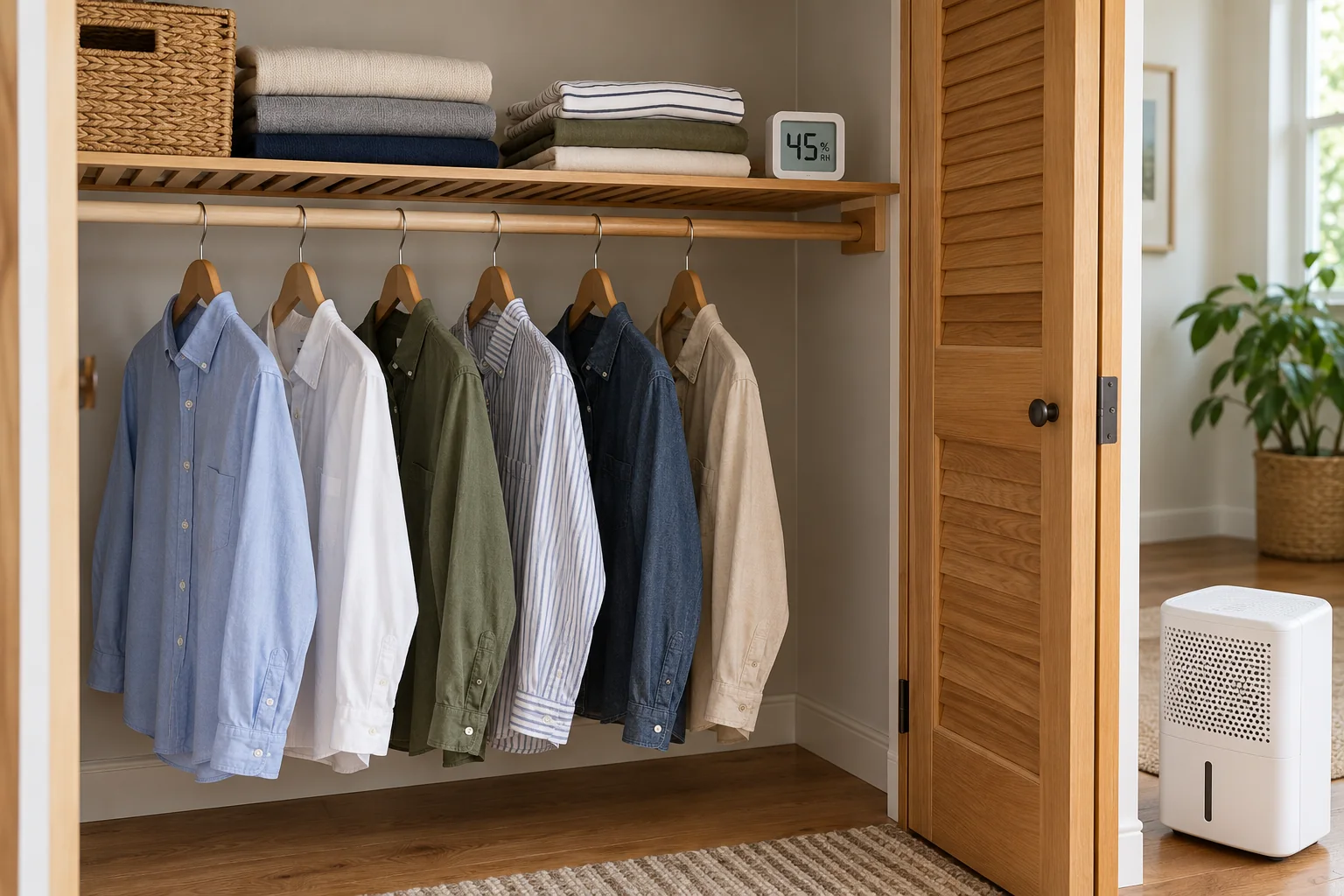
- Store garments only after complete drying, including thick hems and pockets.
- Keep clothing clear of damp walls and wet floors.
- Correct leaks before returning textiles to the affected space.
- Avoid packing damp clothes into sealed bags or bins.
- Follow the washer manual for drum, gasket and detergent-dispenser cleaning.
When does mold on clothes need professional help?
Mold on irreplaceable textiles, severely damaged garments or clothes from a contaminated-water incident needs specialist advice. Mold across multiple stored items also warrants an assessment of the surrounding building. Personal health concerns belong with a healthcare professional.
CDC reports that mold exposure may cause irritation or allergic reactions in some people. A photograph cannot determine an individual's health risk. Clothing color, mold color and a smell test cannot provide medical clearance.
Gettysburg Mold Remediation Help provides a free referral service. Independent companies assess the scope of mold-affected contents cleaning and decide which items they can treat. The independent company sets its prices and performs the work.
Gettysburg homeowners can use mold removal referrals in Gettysburg, PA when a damp room or wall needs assessment alongside the affected wardrobe. Clothing recovery and building remediation address different parts of the same moisture problem.