
What should happen first when mold appears under a kitchen sink?
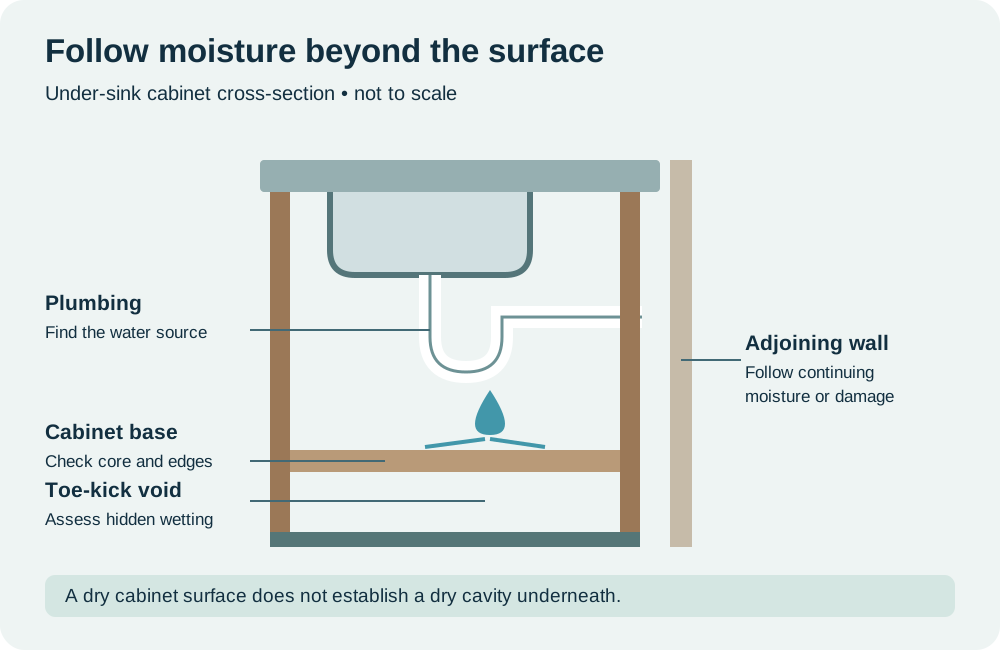
Mold under a kitchen sink requires moisture-source repair, an assessment of the cabinet material and removal of the contamination. A clean-looking cabinet floor does not establish whether the space beneath the cabinet is dry.
Kitchen sink use should stop when running water produces another leak. A plumber should repair an unresolved drain or supply connection. Wet electrical outlets, disposal wiring or standing water near electrical equipment require professional attention before anyone reaches into the cabinet.
Cabinet moisture deserves attention even when the visible patch is small. Gettysburg Mold Remediation Help offers a free referral to an independent company through its Gettysburg mold cleanup referral service for properties needing an assessment. The independent company determines the scope, price and work.
Why does mold grow under a kitchen sink?
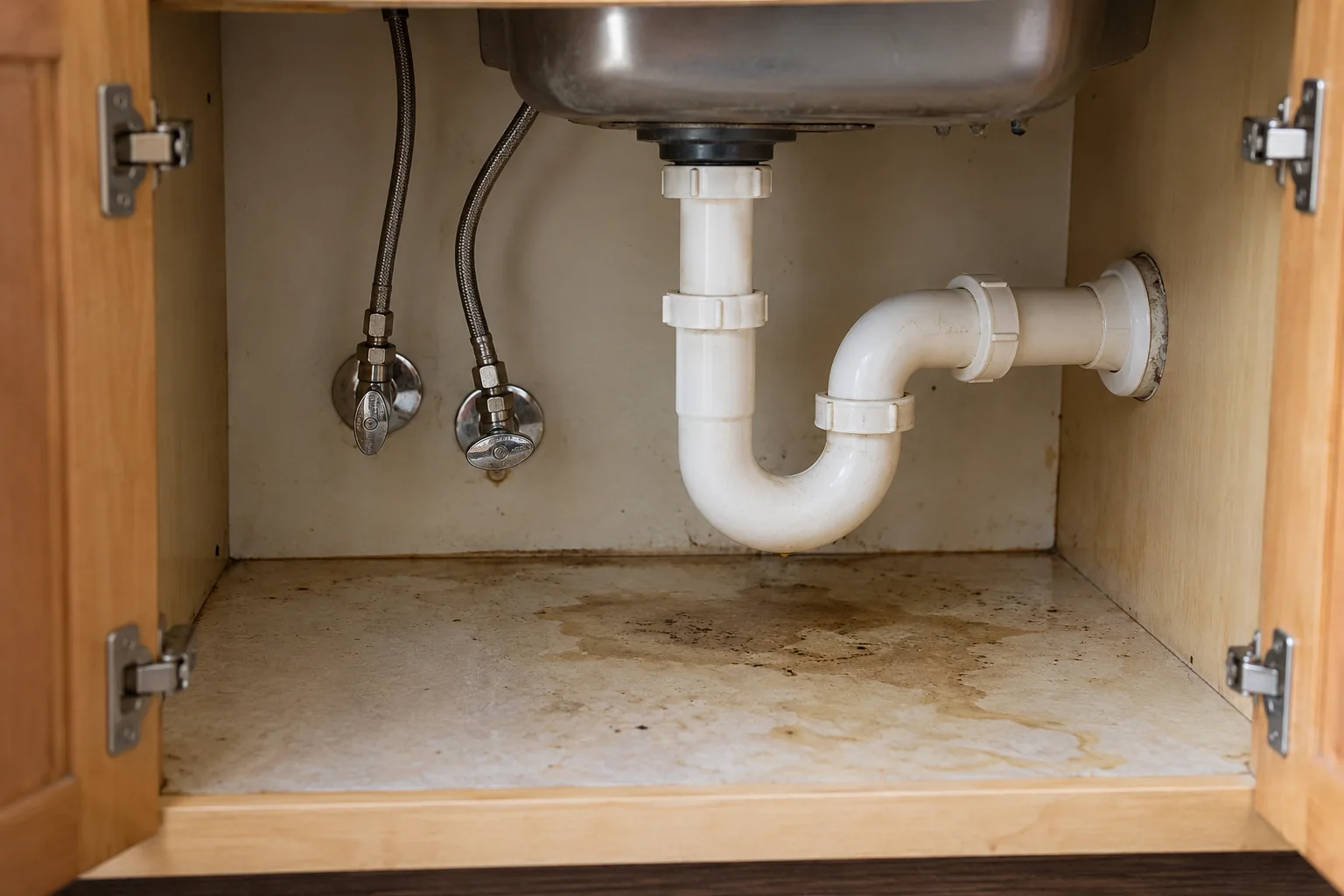
Under-sink mold grows when leaks, condensation or repeated spills leave cabinet materials damp. A closed door conceals the problem. A closed door alone does not create a plumbing leak.
| Observed clue | Component to check | Important limit |
|---|---|---|
| Water appears during draining | Sink strainer, drain joint, P-trap and disposal discharge | Water can travel along a pipe before dripping |
| Wet supply fitting while the tap is off | Shutoff valve, supply hose and connection | A supply line remains pressurized with the faucet closed |
| Moisture after dishwasher operation | Dishwasher hose and its connection under the sink | The appliance or adjoining floor may also need inspection |
| Droplets along a cold pipe | Condensation and room humidity | Droplets do not rule out a separate joint leak |
| Staining high on the cabinet back | Faucet base, sink rim and plumbing penetrations | The nearest visible stain is not necessarily the leak origin |
Leak clues narrow an investigation without proving the cause. Deliberately running a leaking fixture to reproduce damage is unnecessary. A plumber can test the repaired connection under controlled conditions.
Can a moldy kitchen sink cabinet be saved?
A sound cabinet with accessible surface contamination may be cleaned and dried. A soft, crumbling or delaminated cabinet base needs a repair or replacement assessment. Cleaning removes contamination from a suitable surface. Cleaning does not rebuild a failed panel.
| Material condition | Reasonable approach | Check before closing the cabinet |
|---|---|---|
| Intact hard laminate with localized spotting | Compatible surface cleaning and drying | Exposed edges and the underlying core remain sound |
| Finished solid wood without softness | Assess finish compatibility and cleanability | Joints, underside and adjacent panels are dry |
| Swollen particleboard or MDF with a crumbling edge | Assess replacement of the damaged panel or cabinet box | Remaining supports and adjoining materials are serviceable |
| Wet or moldy back panel and wall | Assess concealed damage before repair | The wall cavity and floor beneath the cabinet are addressed |
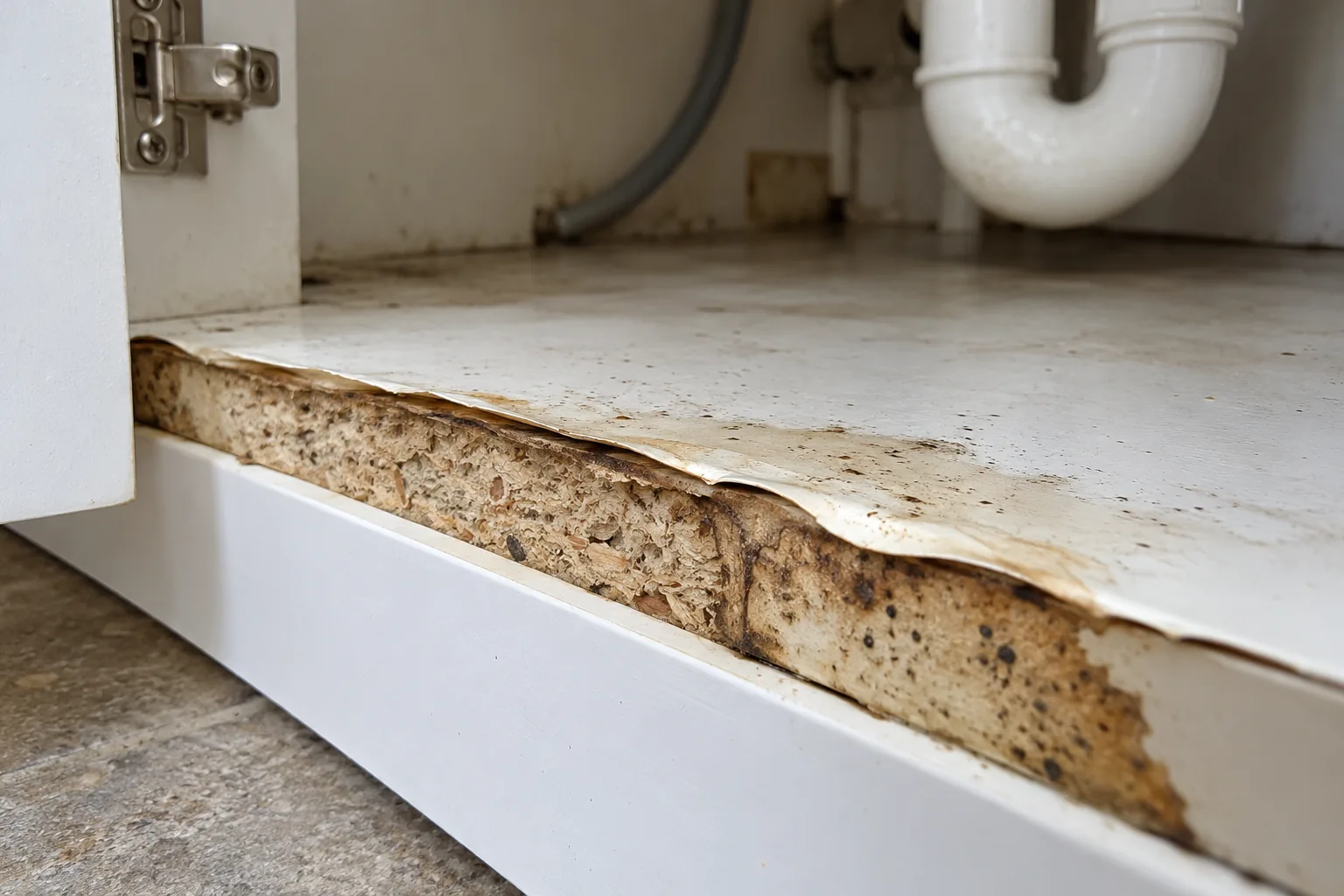
Wood-panel edges deserve particular attention. Purdue Extension's wood-panel guidance explains that panel ends and edges absorb moisture faster than the broad surface. A laminated face therefore does not establish that the entire panel resisted a leak.
Cabinet damage does not automatically require replacing every kitchen cabinet. A repair specialist must assess the damaged unit, its supports and access to affected materials. The guide to mold-related material damage explains why cosmetic staining and damaged building materials require different decisions.
How should a small patch of mold under the sink be cleaned?
A small patch on an accessible hard surface needs compatible cleaning, removal of residue and thorough drying after leak repair. EPA's home cleanup guidance describes detergent and water for hard surfaces. Porous moldy materials may require disposal.
Cabinet finishes need their own compatibility check. KraftMaid's cabinet care guidance favors gentle cleaning and prompt drying. A soaking spray or abrasive scrub is not an appropriate default for a finished wood cabinet.
- Leak repair comes before cosmetic treatment.
- Cleanup protection includes an N95 respirator, gloves and goggles.
- Accessible hard surfaces receive a material-compatible cleaning method.
- Contaminated porous items require an individual salvage decision.
- Cleaned surfaces and affected surrounding materials require complete drying.
EPA generally allows homeowner cleanup of areas under about 10 square feet in most cases. Extensive water damage, contaminated water and health concerns change that decision. Sewage or other contaminated-water damage needs an experienced professional. Household cleaners must never be mixed.
Paint, a cabinet liner or a new cover panel does not remove mold underneath. EPA advises cleaning and drying moldy surfaces before painting or caulking.
How quickly should a wet sink cabinet be dried?
Wet materials should be dried within 24 to 48 hours to help prevent mold growth, according to EPA. The EPA moisture guide presents this as a prevention window. An already moldy cabinet still needs cleanup and a material assessment.
Cabinet drying has no reliable deadline based solely on the visible stain. A dry laminate face does not establish a dry panel core. A closed cabinet should not conceal unresolved moisture behind a replacement surface.
Drying equipment must match the water conditions. EPA's remediation course warns against using fans before confirming that the water is clean or sanitary. Airflow aimed at exposed growth is not a substitute for controlled cleanup.
How can mold be prevented from returning under the sink?
Under-sink mold prevention requires a repaired water source, dry cabinet materials and continued access for leak checks. A leak alarm offers an additional warning. An alarm does not repair a pipe or detect every concealed wet area.
Kitchen humidity control supports prevention. CDC's mold guidance recommends indoor humidity no higher than 50%. Room humidity and cabinet-material moisture are different measurements.
- Plumbing connections should remain visible instead of buried behind stored bottles.
- Stored products belong in removable containers that allow inspection beneath them.
- A protective tray belongs only in a clean, dry cabinet and needs checks underneath.
- Returning spots or odor warrant a renewed moisture assessment.
Sink-rim sealant needs a separate joint assessment. The sealant cleaning and replacement guide explains the distinction between surface residue and a failed bead, while sink installation instructions govern the actual sink joint.
Does black mold under a sink need a different response?
Dark mold under a sink needs the same moisture and material assessment as other visible mold. Color does not establish species or a health diagnosis. CDC reports that damp and moldy environments may cause health effects or none at all.
Health concerns need advice from a healthcare professional before cleanup. A photo cannot determine a person's exposure or explain symptoms. A hidden leak, damaged cabinet or inaccessible growth deserves attention regardless of color.