
Can wood with mold be saved?
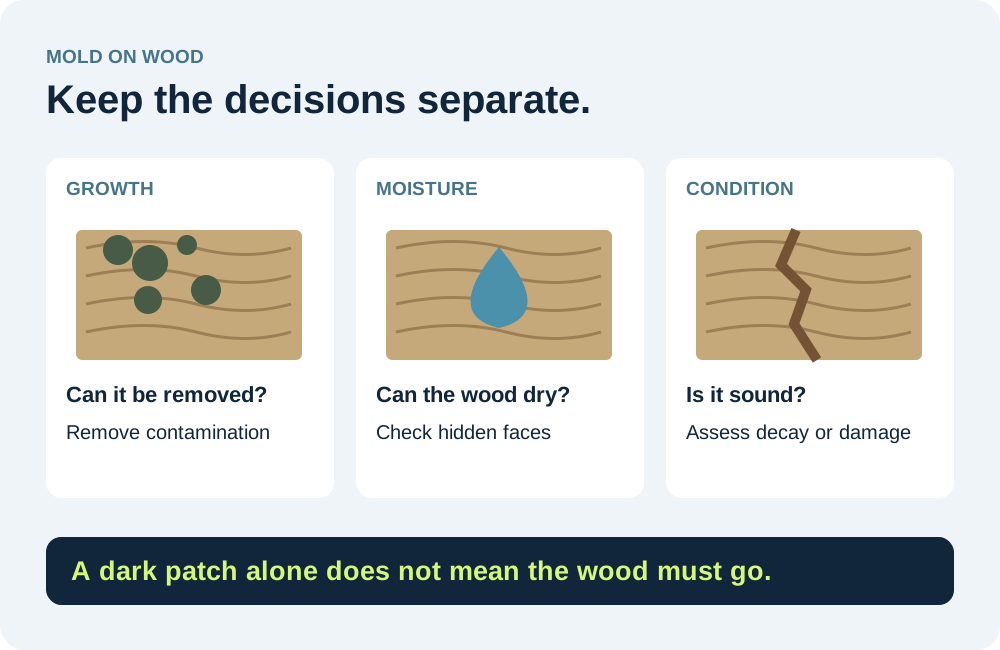
Sound wood can often be cleaned and dried; wood with decay, failed layers or inaccessible contamination needs a different assessment. A dark patch alone does not justify replacing a joist, but wiping that patch does not establish that the joist is sound.
Start with three separate decisions: can the growth be removed, can the wood dry, and can the component still do its job? A cabinet back, a roof panel and a load-bearing beam may look similar when stained but have different consequences if they fail. The U.S. Environmental Protection Agency's material-specific remediation guidance includes cleaning methods for wood, rather than requiring every moldy wooden item to be discarded.
- Potentially salvageable: accessible, sound material with a moisture source that can be corrected.
- Needs investigation: recurring growth, wet hidden faces, separation between layers or uncertainty about structural condition.
- Needs a repair decision: confirmed decay or damage that prevents the wood from serving its intended purpose.
How is mold on wood different from staining or rot?
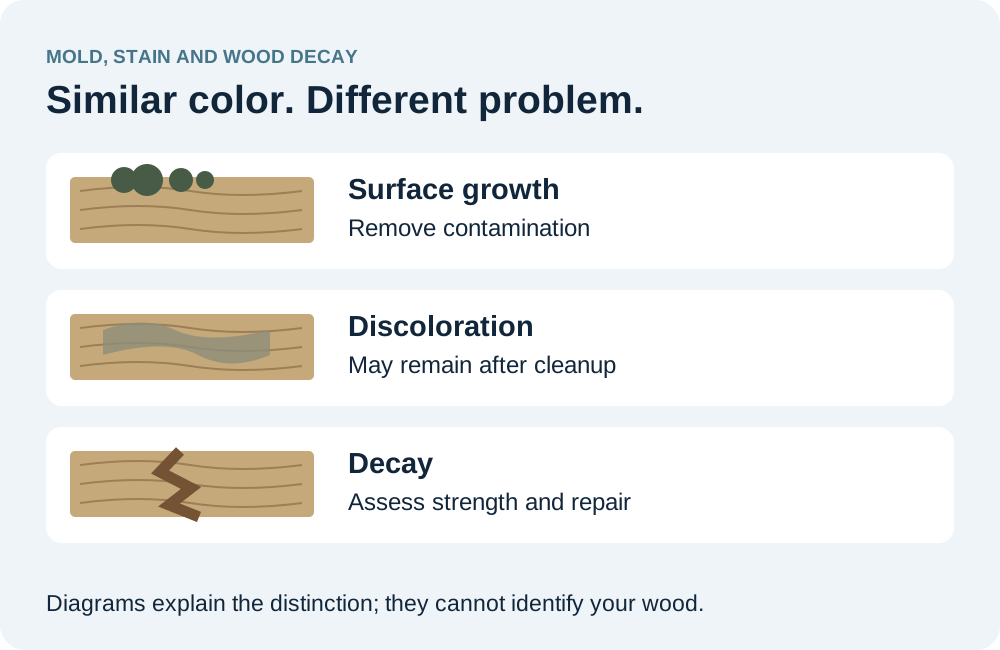
Mold is fungal growth, staining is a change in appearance, and rot is decay that damages wood. They can occur together, so a single visual clue cannot reliably separate them.
| Observation | Possible explanation | What it does not prove |
|---|---|---|
| Fuzzy or powdery patches | Surface fungal growth | The species, health risk or full extent |
| Flat discoloration after cleaning | Residual fungal stain or another wood stain | That growth remains active or cleanup is complete |
| Soft, crumbly or unusually weakened wood | Possible decay or other material damage | That surface treatment will restore strength |
| Swollen edges or separating layers | Moisture-related panel damage needing evaluation | That mold alone caused the change |
The USDA Forest Service Wood Handbook, chapter 14, distinguishes mold and stain fungi from wood-decay fungi. Mold and stain usually affect strength only slightly, while decay can cause substantial strength loss. Early decay can also be difficult to see. Some stains penetrate too deeply to remove by surfacing.
This distinction matters for understanding mold damage: a cosmetic stain and a weakened framing member require different decisions. Do not sand away structural wood simply to make its color uniform.
Do solid wood, plywood, OSB and furniture need different treatment?
Yes. The finish, layers, joints and structural role change what can be cleaned and how damage is assessed. Use the material comparison below to identify the next decision, rather than choosing a chemical by the color of the patch.
| Wood product | Potential route | Reason to stop and reassess |
|---|---|---|
| Solid framing or floor joists | Clean accessible surfaces and dry sound wood | Suspected decay, damaged connections or concealed growth |
| Plywood roof sheathing or subfloor | Evaluate both faces, edges, drying and panel condition | Separated layers, continuing wetness or uncertain serviceability |
| Oriented strand board (OSB) | Assess surface growth separately from swelling and panel performance | Deteriorated edges or other changes affecting its intended use |
| Finished solid-wood furniture | Consider gentle cleaning compatible with an intact finish | Lifting finish, affected joints or a valuable original surface |
| Veneer over particleboard or medium-density fiberboard (MDF) | Inspect the core and hidden faces, not only the outer veneer | Swollen core, detached veneer or contamination that cannot be reached |
These are assessment prompts, not automatic discard rules. APA, The Engineered Wood Association, treats moisture exposure, buckling and delamination as separate panel-serviceability questions in its wood structural panel moisture guidance. A wet plywood or OSB panel is not automatically a failed panel.
For example, a small patch on an intact varnished shelf presents a different access problem from growth between a cabinet's veneer and swollen core. This is a material comparison, not a diagnosis of either item. Furniture with monetary or sentimental value deserves a restorer's assessment before abrasive or chemical treatment.
How do you remove a small area of mold from wood?
Correct the moisture source, remove the growth using a method compatible with the wood, and dry the material thoroughly. For a small accessible area on sound finished wood, gentle detergent cleaning may be appropriate. Unfinished lumber and damaged finishes need their own assessment.
EPA says a homeowner can usually handle an area smaller than about 10 square feet, subject to important exceptions. That size is not a guarantee of safety. Significant water damage, sewage, suspected HVAC contamination, hidden growth or health concerns change the decision. Read the EPA home-cleanup guidance before starting.
- Stop the water problem. Repair the leak or address the damp condition before treating the surface.
- Limit exposure. Keep other people away from the work. Use properly fitting N95 protection, gloves and eye protection as described in EPA's protective-equipment guidance.
- Check compatibility. Follow the wood or finish manufacturer's care instructions. Test an inconspicuous area before wider cleaning.
- Remove, rather than cover, the growth. On a suitable intact finish, use mild detergent and a damp cloth or gentle brush without soaking the wood. Stop if the finish lifts or the material starts breaking down.
- Dry and reassess. Check hidden faces where accessible. A return of growth or odor calls for further investigation.
Do not use dry sanding as the default next step when discoloration remains. Abrasion removes material and can disperse contaminated dust. For larger or complicated work, mold removal in Gettysburg, PA should address the affected assembly as well as the visible wood surface.
Should you use bleach, vinegar or paint on moldy wood?
Do not paint over mold, and do not assume bleach or vinegar makes contaminated wood ready to reuse. Physical removal and moisture control still matter, even when a product kills organisms.
EPA does not recommend biocides such as chlorine bleach as a routine mold-cleanup practice. If a specialist selects a treatment, the product must suit the material and be used according to its label. Do not mix cleaning products. There is no universal household chemical recipe for unfinished framing, delicate furniture and engineered panels.
A stain that remains is not, by itself, an instruction to use a stronger chemical. Conversely, a surface that has become lighter has not necessarily been adequately cleaned. Follow EPA's cleanup sequence: address the water, remove contamination and dry before painting.
What changes when mold is on floor joists or attic sheathing?
Access, the moisture pathway and the role of the wood in supporting the building become central. Treating one visible face may miss adjacent subflooring, insulation or concealed connections.
- Floor joists: investigate plumbing leaks, damp foundation conditions and the underside of the floor. The crawl space mold remediation page explains work in that setting.
- Attic sheathing: consider roof leaks and condensation, including moisture entering from the house. See attic mold removal for the service scope.
- Enclosed framing: do not cut open walls or floors merely to chase a stain. Plan investigation so disturbing hidden growth does not spread contamination.
A moisture reading cannot establish structural capacity. If a joist, beam or roof panel seems weakened, a qualified building professional must evaluate repair or replacement. Cleaning and mold damage repairs solve different parts of the problem.
How dry should wood be before you cover or refinish it?
Wood should meet the drying requirements for its intended use and the finish or flooring system before enclosure. A dry-looking surface or a single meter reading is not enough to confirm that the whole assembly is ready.
Room relative humidity and wood moisture content are different measurements. A hygrometer describes the air; a wood moisture meter estimates moisture in the material. Compare readings from appropriate locations, use the meter's material settings, and follow the product manufacturer's installation requirements. Do not treat a general mold-growth threshold as a universal flooring or paint specification.
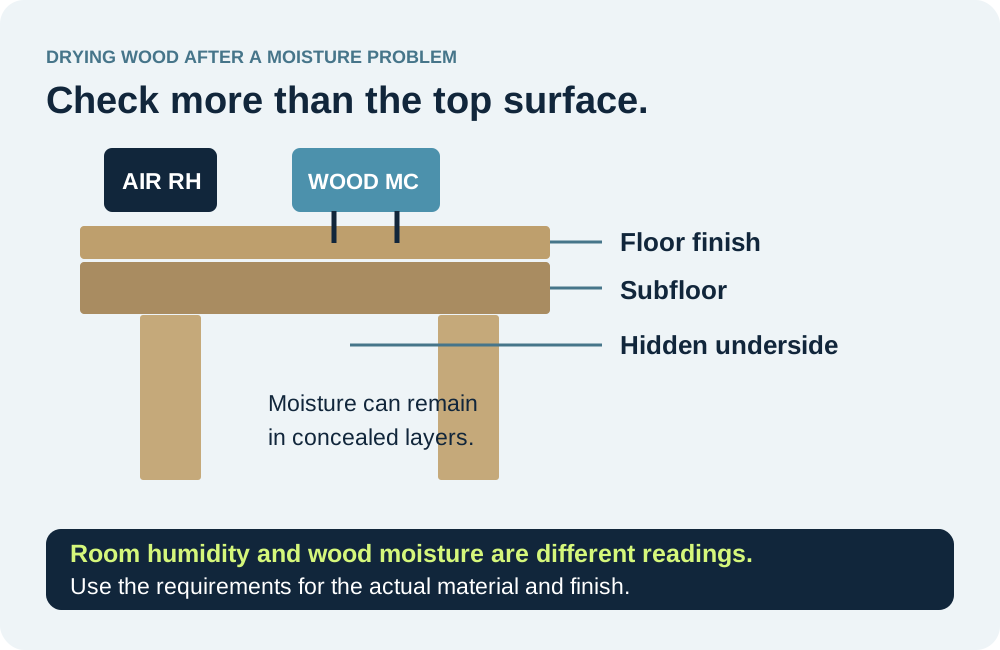
The EPA water-damage table emphasizes prompt drying and checking underflooring. Its 24 to 48 hour prevention window is not a promise that a thick beam or layered floor dries within that time. Existing mold requires remediation, not simply more drying time.
How do you stop mold on wood from coming back?
Keep the wood dry by correcting the actual moisture pathway and checking that it stays corrected. A protective finish cannot compensate for a leaking pipe, wet roof assembly or damp concealed surface.
EPA recommends keeping indoor relative humidity below 60%, ideally 30% to 50% where possible. Control condensation, exhaust moisture-producing activities outdoors and deal with leaks promptly. After cleanup, revisit the area for renewed dampness, growth or musty odor.
Black, white or green growth needs the same attention to moisture and removal. Color does not determine the danger: the Centers for Disease Control and Prevention advises removing mold of any type and fixing the moisture problem. If exposure is causing symptoms or you have a condition that increases your risk, discuss cleanup exposure with a healthcare professional.
If the visible patch returns despite cleaning, investigate what kept the wood wet and whether contamination remains out of reach. The next useful step is finding that cause, not repeatedly changing the surface cleaner.