
Can moldy upholstered furniture be saved?
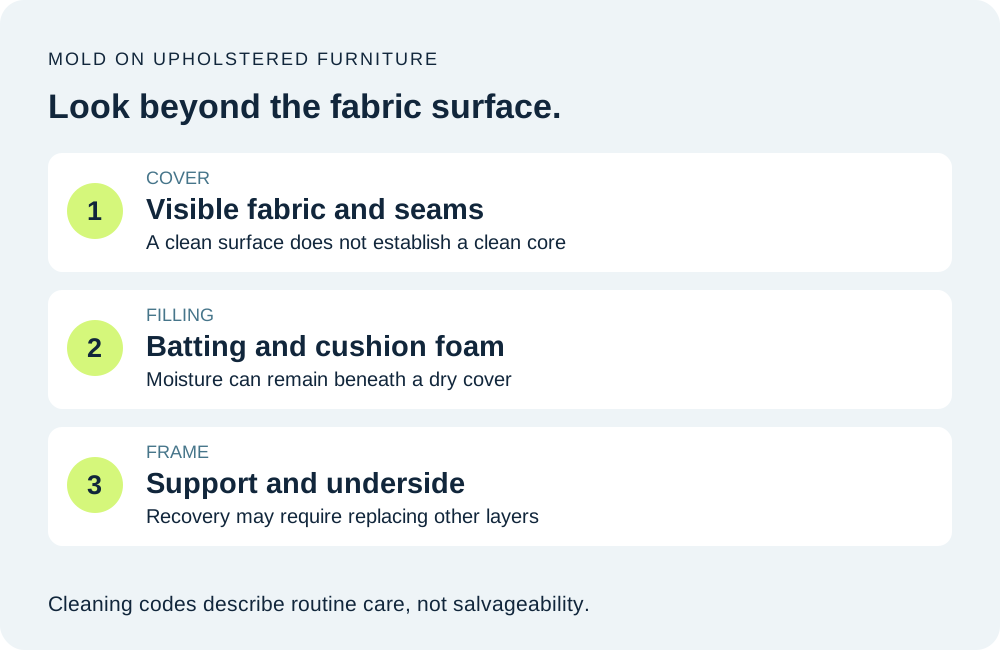
Moldy upholstered furniture is difficult to salvage when water and growth reach the padding or other concealed materials. A limited fabric-surface problem needs a different assessment from a saturated sofa. A valuable frame may justify professional restoration even when the cover and filling require replacement.
North Carolina State Extension describes water-and-mold-damaged upholstery as seldom salvageable in its household recovery guidance. The university also identifies stripping and reupholstering a recoverable frame as a possible route. A clean-looking cover does not establish that the entire chair or couch is clean.
| Furniture condition | Practical decision | Reason |
|---|---|---|
| Limited surface growth with no known saturation | Have the material and cleaning code assessed before treatment. | A surface photograph cannot confirm the condition of concealed filling. |
| Growth on foam, batting or the underside | Consider replacement of affected components or disposal of the piece. | Wiping the cover does not reach every affected layer. |
| Soaked upholstery that cannot be dried promptly | Remove or replace the affected upholstery. | CDC recommends replacement when soaked upholstery cannot be dried right away. |
| Valuable furniture with a potentially sound frame | Request a restoration assessment before disposal. | Reupholstery may preserve the frame without preserving damaged filling. |
| Sewage or contaminated floodwater exposure | Use a professional assessment for contaminated-water damage. | A routine stain-cleaning method does not address the full contamination. |
CDC's mold guidance supports removing or replacing soaked upholstery that cannot be dried promptly. Furniture value does not make contaminated padding cleanable. A restoration decision needs the material condition and the water history.
Mattress filling creates its own recovery limits, so Mold on a mattress needs a separate decision about replacement, the bed base and ongoing moisture.
Does mold on the fabric mean the foam and frame are affected?
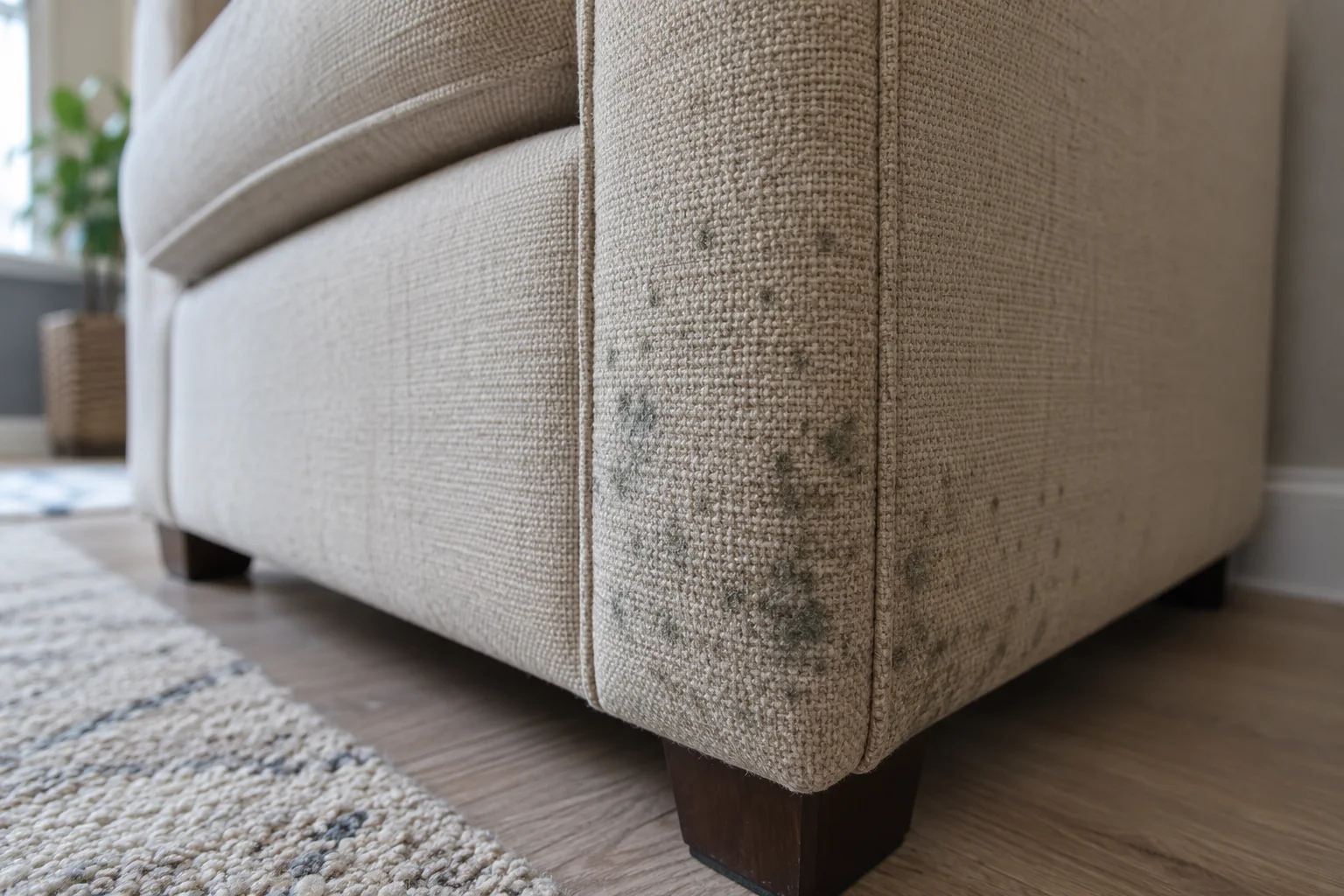
Mold on the fabric does not prove that every internal layer is affected, but surface cleaning cannot rule out hidden damage. Upholstered furniture combines a cover, batting or padding, cushion filling and a supporting frame. Water can reach materials that remain invisible during normal use.
A furniture assessment separates the source of the water from its path through the piece. A spill on a removable cushion differs from water rising through the lower frame. A damp wall behind the sofa also requires inspection beyond the seat surface.
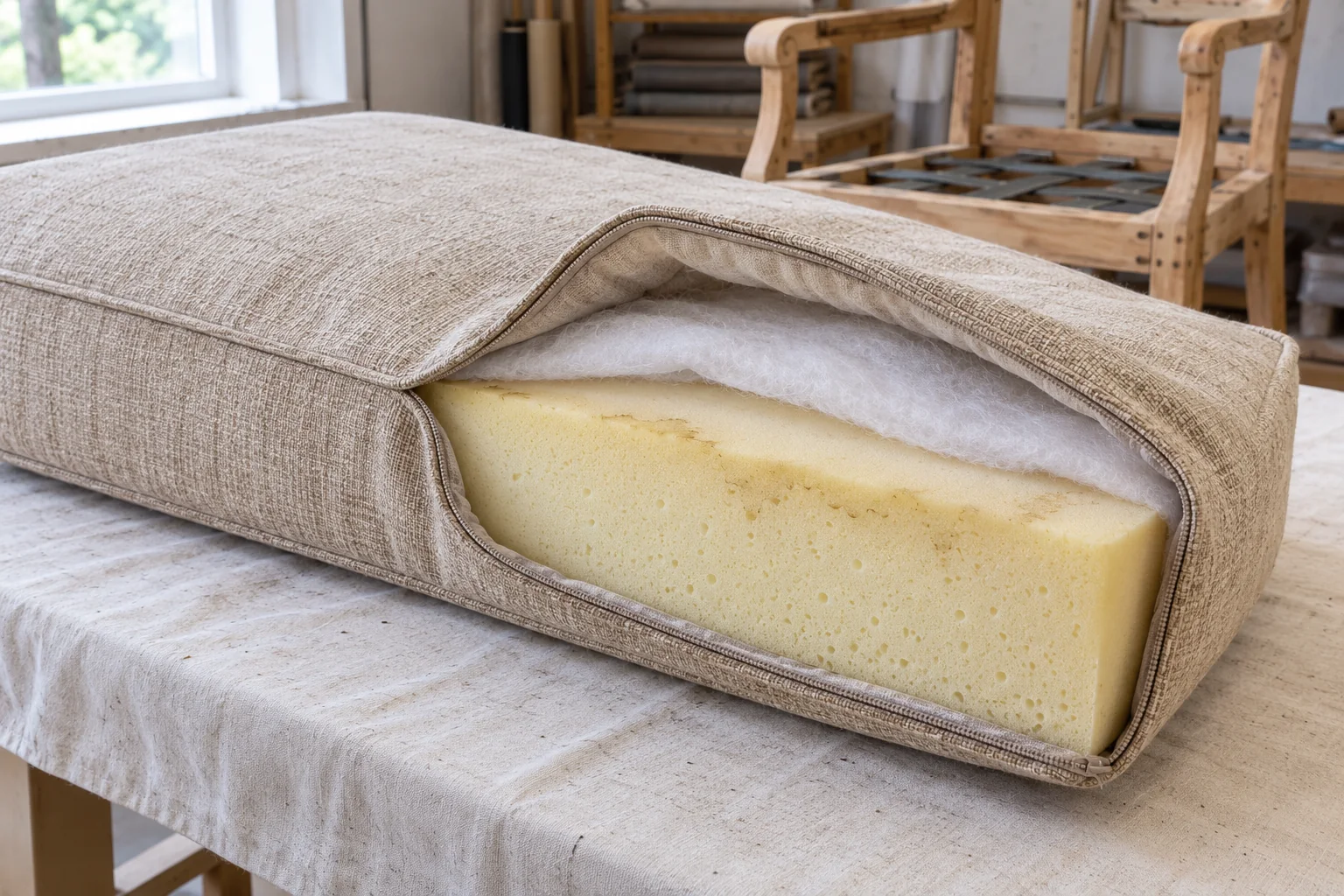
- Cover: identify the fabric, care instructions and visible affected area.
- Batting and foam: assess moisture, deterioration and accessible evidence of growth.
- Frame and underside: examine the path of water and the condition of joints and surrounding materials.
- Room: check the wall, floor and original source of dampness.
Suspected hidden contamination is a reason for a trained assessment rather than indoor cutting or dismantling. Opening an affected piece can disturb material that was previously enclosed. Upholstery should remain out of use while the recovery decision is unresolved.
What do W, S, W-S and X cleaning codes mean?
Upholstery cleaning codes specify compatible routine cleaning methods, not a guarantee that moldy furniture is salvageable. The actual furniture manufacturer's instructions take priority over a generic code chart. An attached zipper does not automatically make a cushion cover washable.
| Code | Usual care restriction | Mold-related limit |
|---|---|---|
| W | Water-based spot-cleaning products specified by the manufacturer. | Permission for spot cleaning is not permission to soak the cushion. |
| S | Water-free solvent cleaning specified by the manufacturer. | A water-and-vinegar spray conflicts with the water restriction. |
| W-S or WS | Specified water-based or solvent methods for the appropriate stain. | The code does not authorize bleach or unrestricted extraction. |
| X | No foam or liquid cleaner. Routine care is limited to the stated dry methods. | Visible mold needs professional assessment rather than a household wet-cleaning recipe. |
| Missing or unreadable code | Obtain the original product's care information. | Fabric appearance alone cannot establish chemical compatibility. |
La-Z-Boy's fabric-care instructions illustrate important restrictions. The manufacturer prohibits saturation for W and S fabrics. Its W instructions also advise against hot-water extraction and laundering removed cushion covers. Those instructions describe routine care for the manufacturer's products, not a mold-remediation protocol.
Will vinegar, bleach or steam cleaning remove mold from a couch?
Vinegar, bleach and steam cleaning are not universal treatments for a moldy couch. Product suitability depends on the upholstery instructions and the affected layers. A treatment that lightens a stain cannot demonstrate removal from foam, batting or concealed frame surfaces.
Clorox's fabric-furniture guidance distinguishes outdoor cushions from indoor upholstery. The manufacturer warns that indoor fabric is less likely to tolerate chlorine bleach without color damage. A patio-cushion method should not be transferred to an indoor sofa without the relevant care approval.
Professional cleaning should use a method compatible with the specific piece. A cleaner should also establish how any added moisture will be removed. A general-purpose vacuum, dry brushing indoors or repeated soaking is not a substitute for that assessment.
EPA explains that porous materials may be difficult or impossible to clean completely in its home mold-cleanup guidance. EPA's advice supports a material-specific salvage decision rather than a promise that any chemical will rescue every couch.
How quickly does wet upholstered furniture need to dry?
Wet upholstered furniture needs prompt drying, with EPA using 24 to 48 hours as a mold-prevention target for water-damaged items. A cushion cover that feels dry does not establish that its interior has dried. Existing mold requires a cleanup assessment even after the piece dries.
EPA's remediation training chapter notes that completely drying upholstered furniture within 48 hours may be difficult. The agency recommends considering a furniture-restoration specialist for a valuable piece. The interval does not guarantee mold-free conditions before a deadline.
Drying equipment must fit the contamination conditions. A furniture-restoration specialist should assess existing growth before selecting a drying method. Surface drying alone does not resolve concealed contamination.
Why does mold return behind a sofa or inside a cushion?
Mold returns when the moisture source remains or affected materials stay damp. A leaking wall, a wet floor, room humidity and incomplete drying after cleaning each need a different correction. Replacing a cushion does not repair a wall leak.
CDC recommends indoor humidity no higher than 50%. A room hygrometer can help track humidity near furniture. A normal room reading does not rule out a local leak or damp wall behind the couch.
- Correct plumbing, roof or wall leaks before replacing affected furniture.
- Keep furniture away from surfaces that remain damp.
- Allow washed covers to dry fully according to their care instructions.
- Check stored furniture after a moisture incident rather than covering up the odor.
- Assess nearby carpet or flooring if the water reached the furniture from below.
Gettysburg homeowners comparing basement mold cleanup and moisture control should include the affected room around stored furniture. The building assessment establishes the source that upholstery treatment alone cannot remove.
When should moldy furniture be professionally assessed or discarded?
Moldy furniture needs professional assessment when concealed filling is affected, contamination involves dirty water or preservation of a valuable frame is being considered. Replacement is the practical route for soaked upholstery that cannot be dried promptly. Extensive deterioration also limits the value of further cleaning.
A furniture-restoration assessment should identify which components remain, which components are replaced and how the retained materials are cleaned and dried. A generic promise to deodorize the couch does not describe that work. A written scope should distinguish a cleaned cover from restoration of the complete piece.
Mold color does not establish a species or a person's medical risk. CDC notes that exposure may produce health effects or no effects. A healthcare professional should assess symptoms or individual concerns.
Gettysburg Mold Remediation Help provides a free referral service for assessment of mold-damaged furniture and belongings by independent companies. The independent company determines salvageability, prices the work and performs the service.
Gettysburg property owners can request local mold remediation assistance in Gettysburg when furniture damage accompanies a wider building problem. A referral does not guarantee that a particular couch can be restored.