
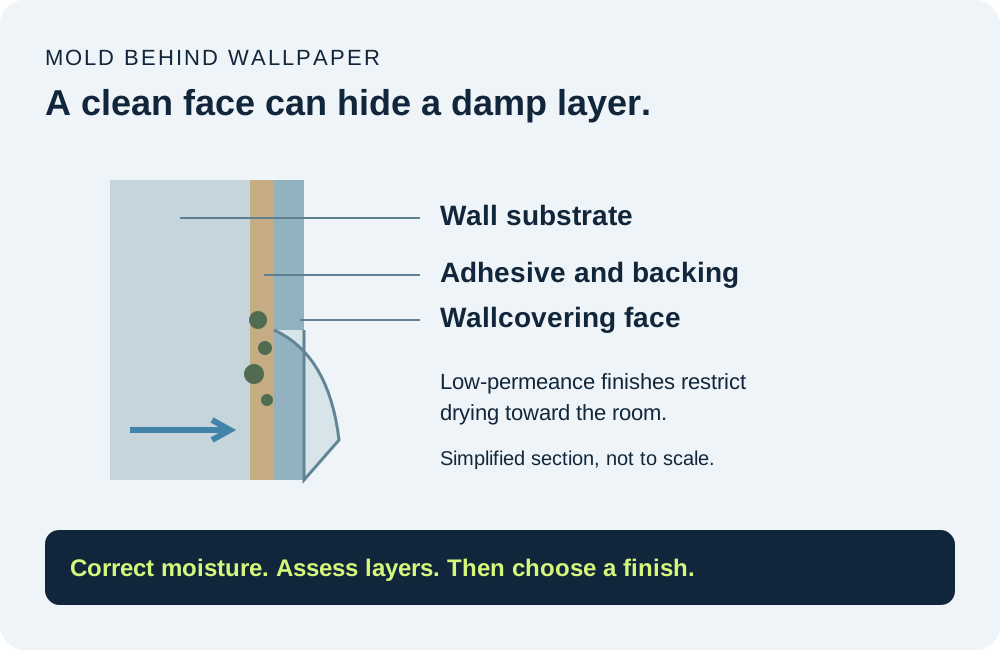
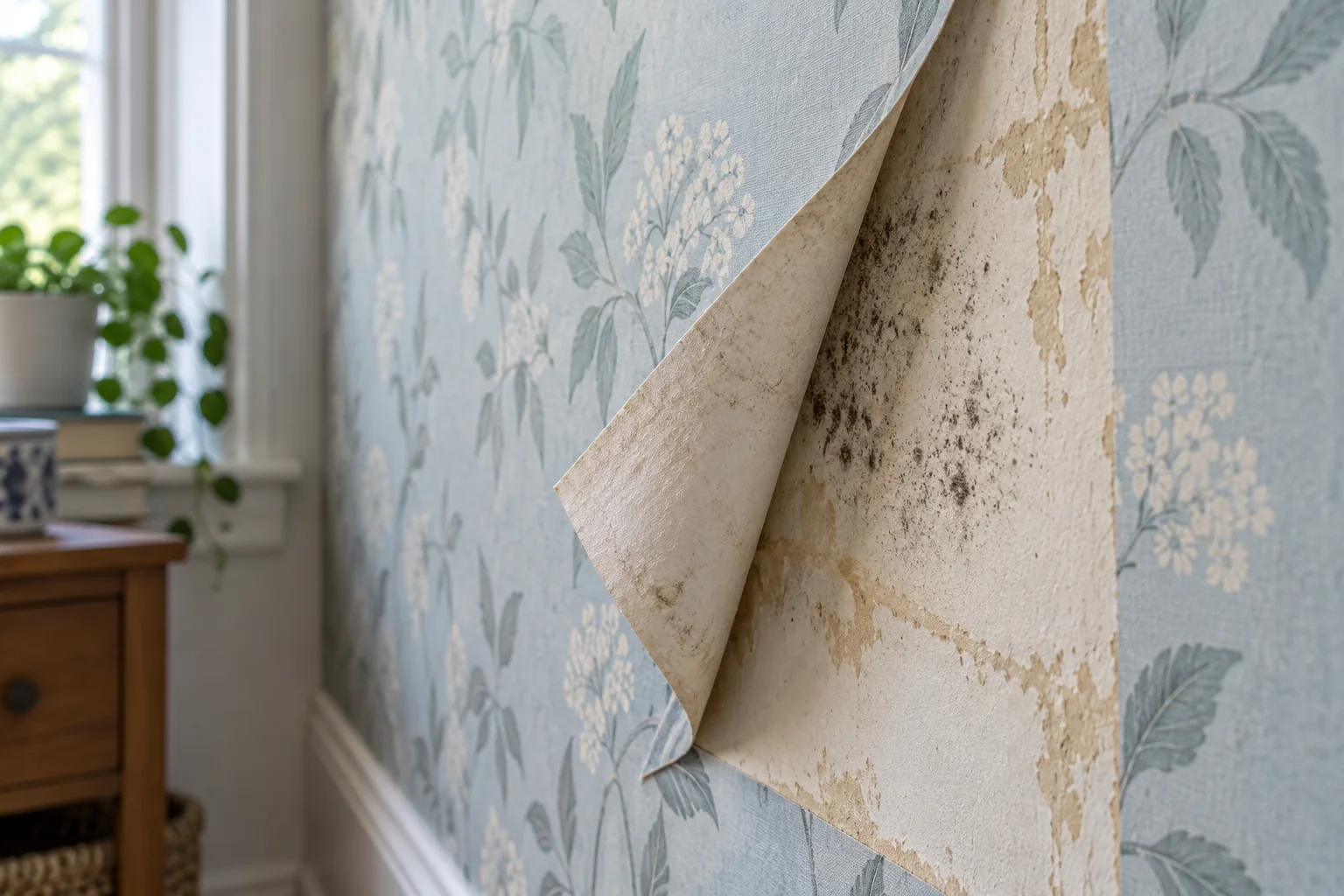
Does peeling or stained wallpaper prove hidden mold?
Peeling wallpaper and stains do not prove mold behind the covering. Adhesive failure, installation problems and water damage need consideration alongside hidden growth.
| Observation | Useful investigation | Unproven conclusion |
|---|---|---|
| Lifted seam or bubble | Adhesion, installation history and moisture | The wall definitely contains mold |
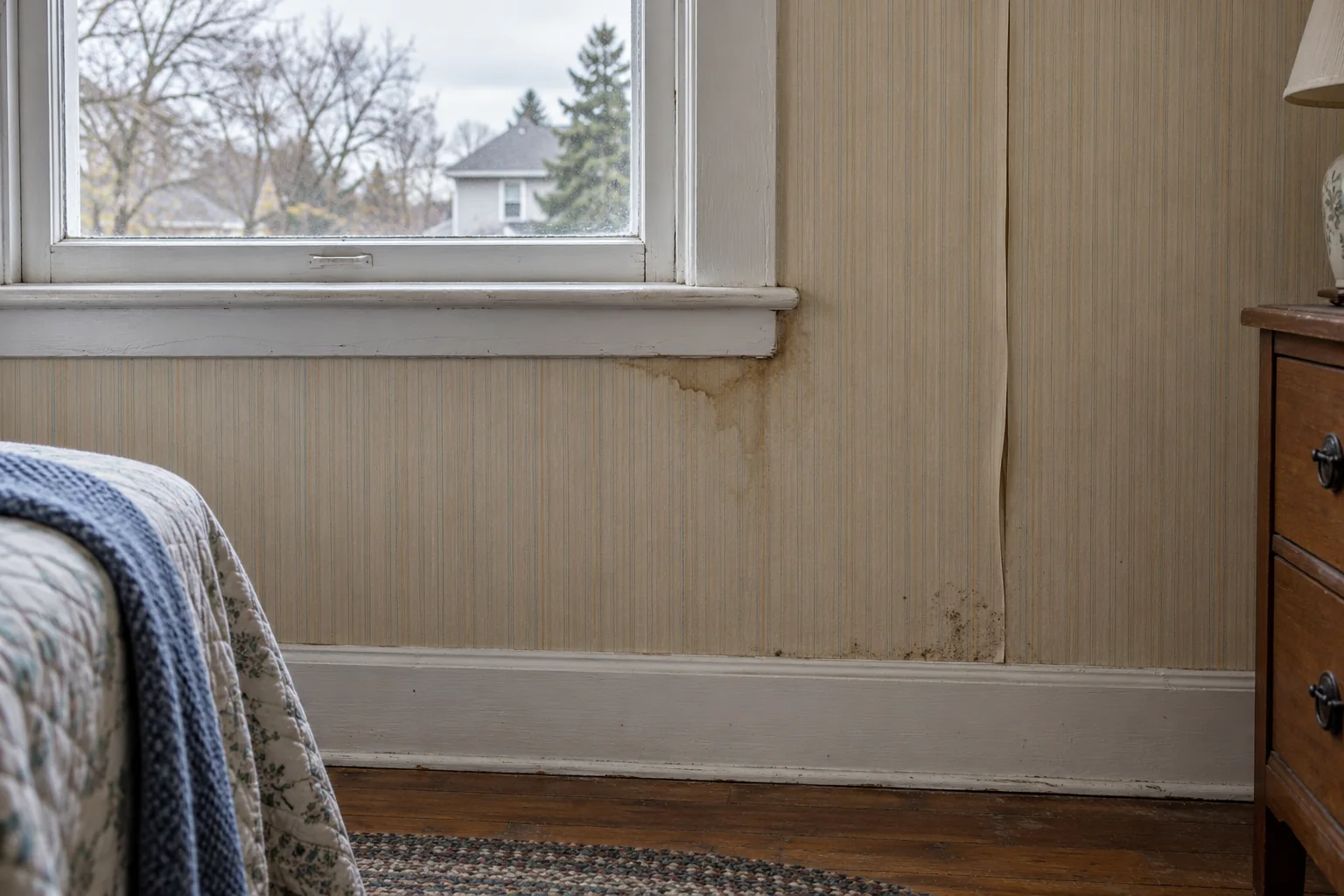
| Stain beneath a window | Window water entry and condensation patterns | A roof leak is the only possible cause |
| Musty odor near a wall | Concealed damp materials and nearby sources | The odor identifies a species or the full affected area |
| Dark spotting at an exposed edge | Backing, substrate and extent of suspected growth | The visible patch represents all hidden damage |
Wallpaper installation defects offer a real alternative explanation for bubbles. ROMAN's wallcovering installation FAQ explains how inadequate booking can leave wrinkles or bubbles as pasted paper expands. A bubble alone cannot distinguish installation movement from later wetting.
How is mold behind wallpaper investigated?
Hidden wallpaper mold is investigated by combining the moisture history, material inspection and targeted access when needed. A moisture reading measures a building condition rather than identifying a fungus.
EPA's mold investigation course describes moisture meters for locating wet areas and monitoring drying. A borescope shows only a small portion of a concealed space. Neither tool establishes the condition of every covered surface.
| Evidence | Question addressed | Limit |
|---|---|---|
| Leak and repair history | Where and when did wetting occur? | A repaired leak does not demonstrate removal of existing growth |
| Moisture readings | Which measured areas are wet or drying? | A reading is not a mold species result |
| Targeted access | What condition exists at the inspected location? | A small opening does not reveal an entire wall |
| Environmental sample | What does this sample contain? | A sample does not establish the full concealed extent |
Visible mold usually does not require sampling under EPA guidance. Sampling should answer a defined question that changes the investigation or cleanup. A species name is not a substitute for finding the moisture source.
Wall assessment through mold inspection of concealed wall materials should distinguish observations, measurements and unresolved areas. A report should identify the access limits rather than label an unexamined wall clean.
Should moldy wallpaper be peeled off immediately?
Suspected hidden mold calls for a removal plan before wallpaper is disturbed. EPA warns that stripping wallpaper from a moldy wall can release large quantities of spores. EPA recommends considering an experienced professional for hidden mold.
EPA's homeowner mold guidance uses about 10 square feet as one cleanup-scope consideration. A small mark on the wallpaper front does not establish that the concealed area falls below that threshold. Sewage contamination, extensive water damage and health concerns also change the response.
- Active water entry needs correction before decorative repairs.
- Suspected wall growth needs assessment before broad stripping or sanding.
- Removal planning should address debris, occupant exposure and retained materials.
- Cleanup should precede drying verification and replacement finishes.
Gettysburg Mold Remediation Help provides a free referral service for mold removal assessment in Gettysburg homes through independent companies. The independent company assesses the property, prices the work and performs the service.
Does mold behind wallpaper mean the drywall must be replaced?
Drywall replacement requires assessment of contamination, physical damage and access to the wall cavity. Wallpaper removal alone does not determine whether the board can remain. Moldy porous materials may need disposal under EPA guidance.
Drywall with damaged facing needs a different decision from sound plaster with surface deposits. The guide to mold on drywall covers board-specific cleaning and replacement decisions. Wallpaper assessment focuses on the finish, adhesive and moisture trapped at their interfaces.
Wall repairs should identify the material being retained. A proposal that names only wallpaper removal leaves the substrate decision unresolved. A repair plan should also account for affected insulation or framing discovered during access.
When can a wall be painted or wallpapered again?
A wall is ready for a new finish after moisture correction, mold cleanup and drying of the retained materials. A stain-blocking primer does not replace those steps. EPA advises against painting moldy surfaces.
New wallpaper also needs a compatible substrate, primer and adhesive. ROMAN states that preservatives in its products do not kill existing wall mold. Product instructions and the wall assembly's drying needs should guide finish selection.
Indoor humidity should remain no higher than 50% under CDC's mold prevention guidance. Room humidity does not measure moisture inside the wall. CDC's 24-to-48-hour drying advice is a water-damage response goal, not proof that a covered wall has dried.
Reconstruction through mold damage repairs to wall finishes should follow the cleanup scope. Recurring stains after redecoration warrant renewed moisture investigation rather than another decorative covering.