

Who should leave during mold cleanup?
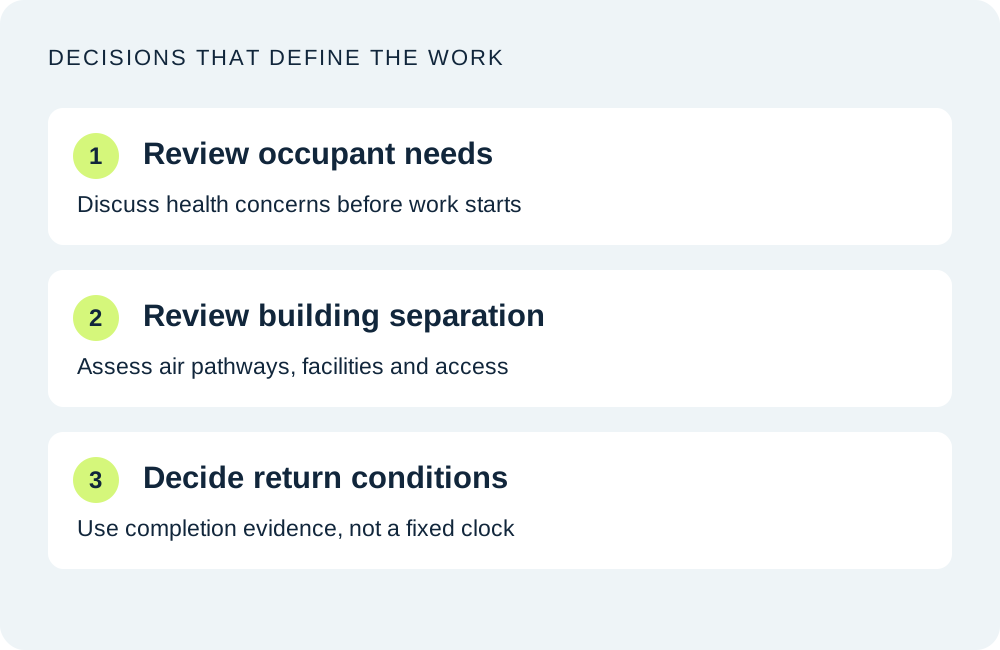
People with asthma, COPD or immune compromise should not stay in a moldy home or be present during mold cleanup, according to CDC. Other occupants still need a decision based on the actual work and building conditions. A contractor cannot provide personal medical clearance.
CDC's mold cleanup and exposure guidance explains precautions. A healthcare professional should address individual health concerns before a household chooses an occupancy arrangement.
The remediation manager should explain which rooms are restricted and whether work can affect the remaining living space. Essential rooms, ventilation connections and exit routes need explicit attention. A promise to work carefully does not replace an occupancy plan.
What building conditions affect the decision?
Building conditions that affect occupancy include the work-zone location, shared HVAC, access to essential rooms and the potential for debris to reach occupied space. The household needs the plan before demolition or cleaning begins.
| Condition | Occupancy implication | Decision needed |
|---|---|---|
| Work in the only bathroom or kitchen | Daily living facilities are unavailable | Arrange usable alternatives or temporary accommodation |
| Work across an exit route | Normal movement conflicts with the work zone | Provide an unobstructed route before occupancy |
| Shared air system or suspected HVAC contamination | Room separation may not separate airflow | Assess ventilation and equipment operation |
| Extensive or concealed contamination | The final scope may exceed the visible area | Reassess occupancy when the scope changes |
| Health concerns identified by CDC | Remaining present during cleanup is discouraged | Arrange relocation and seek medical advice |
EPA advises against running HVAC equipment known or suspected to contain mold. The EPA remediation guidance also addresses relocation and hidden contamination.
Does plastic containment make staying home safe?
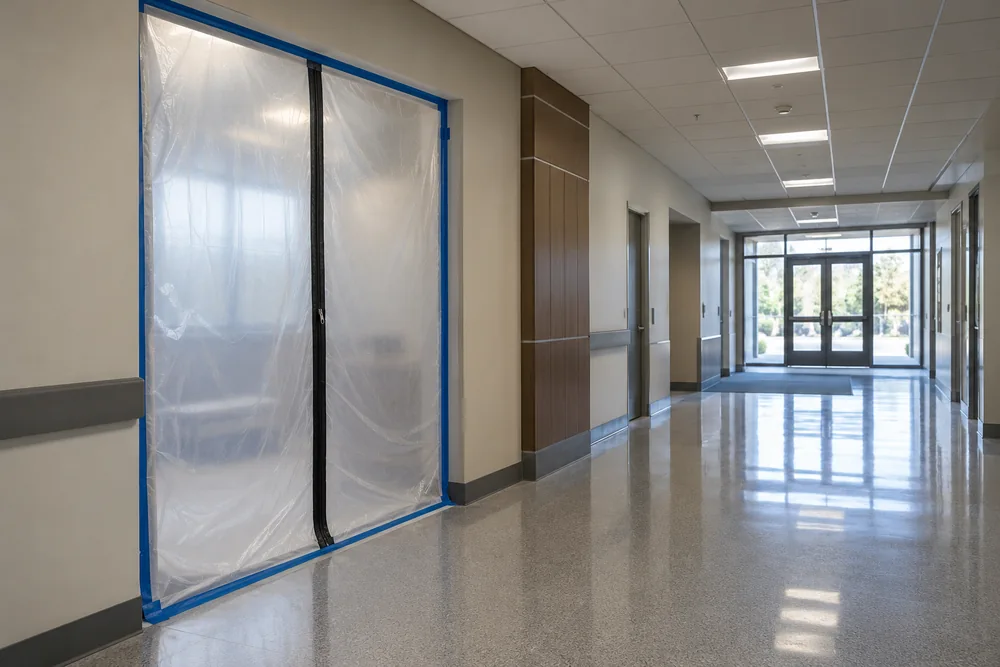
Plastic containment does not by itself establish that staying home is suitable. Containment is one part of a designed control system. Professional judgment determines the necessary barriers and air-control arrangements.
Work-zone barriers should remain closed during restricted work. Occupants should not enter the work area to retrieve possessions without the contractor's permission. A household fan should not blow air from the work zone into other rooms.
Shared-building residents also need a suitable route between their unit and the outside. The property-manager coordination guide explains responsibility for access and occupant updates.
What arrangements should be confirmed before work?
Household arrangements should identify restricted rooms, permitted access, essential facilities and the person responsible for updates. Temporary accommodation needs to remain available if newly discovered damage changes the scope. The first estimated finish date is not a guaranteed return date.
- Occupants: discuss relevant concerns with the appropriate professional before work.
- Access: collect necessary belongings before the zone is restricted.
- Pets: keep animals outside restricted areas and arrange care where needed.
- Communication: agree how the contractor will report changes affecting occupancy.
The home remediation preparation guide covers practical arrangements before the contractor arrives. The remediation duration guide explains the work stages that affect scheduling.
When can occupants return after mold remediation?
Occupants should return after the project team has reviewed cleanup completion and resolved the conditions that required restricted occupancy. A fixed number of hours does not establish completion. Product-label re-entry restrictions also need to be respected if a treatment was used.
Completion evidence should address the water source, affected materials, cleanup and remaining repairs. EPA describes the absence of visible growth, mold-damaged material and moldy odor among completion considerations. Odor alone is not a comprehensive test.
Independent verification should follow the agreed scope when that service is part of the project. The post-cleanup verification overview explains the assessment without promising a universal federal pass/fail spore count.
Gettysburg Mold Remediation Help provides free referrals to independent companies. The independent company assesses building conditions and defines its work. A healthcare professional addresses individual medical concerns.