
Are home mold test kits accurate?
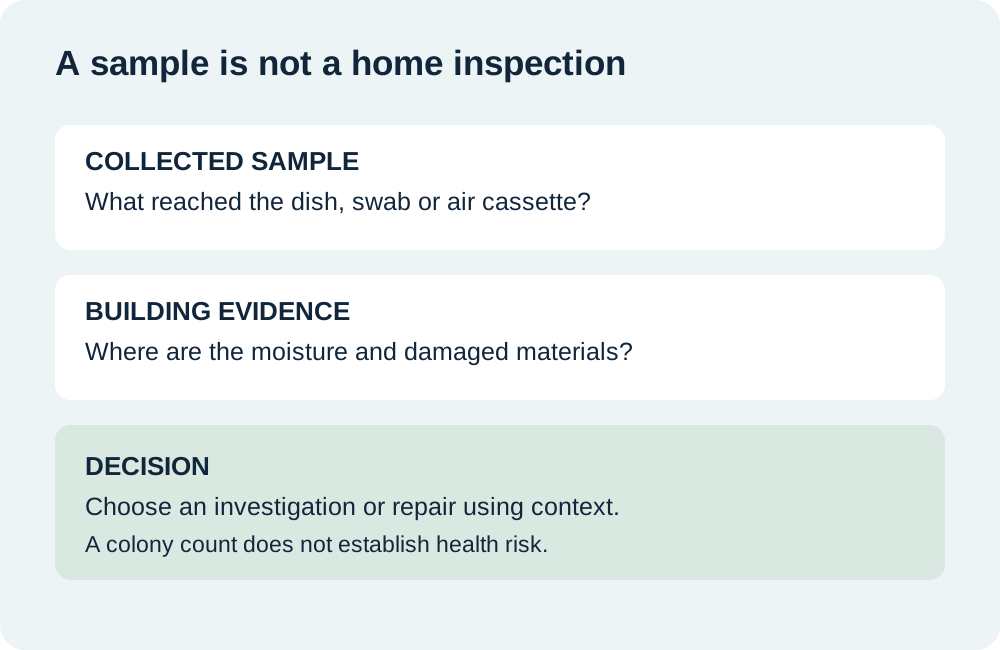
Home mold test kits cannot establish whether an entire home has a mold problem. Laboratory analysis describes the material collected. A sample from a countertop does not represent every wall cavity or room.
Home mold testing is not recommended by CDC's household mold guidance as a way to determine whether occupants will become sick. A positive culture does not diagnose an illness. A negative culture does not certify a healthy home.
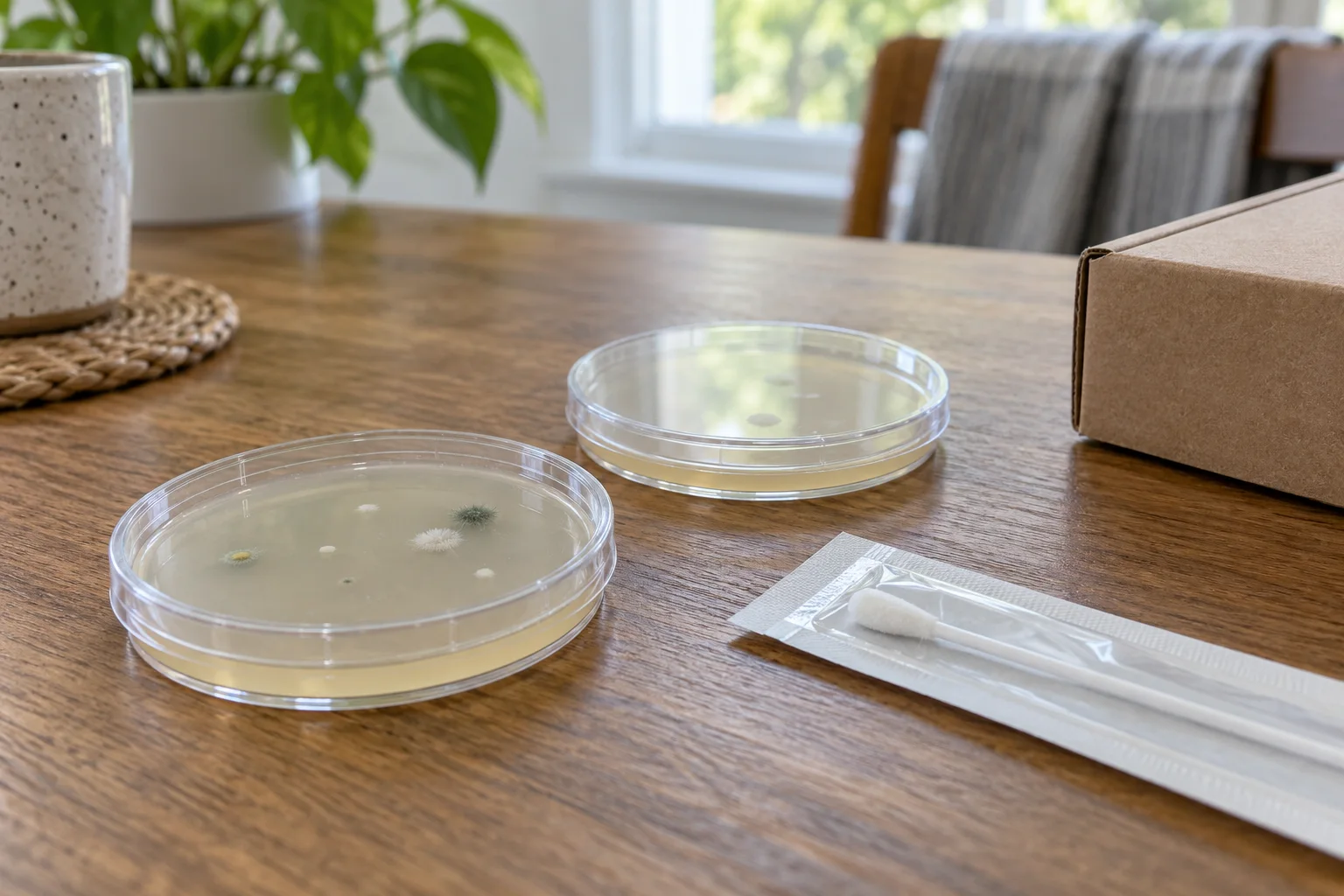
Test accuracy involves separate questions: correct laboratory identification, representative collection and useful interpretation. A laboratory result can be analytically correct while a whole-house conclusion remains unsupported. A single percentage cannot describe those different tasks without a defined method and validation study.
What does each mold testing method measure?
Mold testing methods examine different samples, so their results are not interchangeable. A surface swab addresses a selected spot. A pump-driven air sample addresses airborne material collected during its sampling period.
| Method | Measured evidence | Unsupported conclusion |
|---|---|---|
| Petri dish or settle plate | Colonies growing from collected material under the culture conditions | Whole-home contamination or a safe air concentration |
| Surface swab or tape sample | Material collected from the sampled surface | The condition behind the surface or throughout the room |
| Pump and laboratory analysis | Collected airborne material interpreted with sampling volume and method | A permanent picture of exposure or a medical diagnosis |
| Humidity monitor | Relative humidity near the sensor | The presence or species of mold |
| Material moisture meter | A moisture reading for the material and instrument setting | Proof that discoloration is fungal growth |
Professional sampling needs a defined question before collection. EPA's sampling guidance identifies contamination, inconsistent protocols and omitted outdoor controls as potential problems. Air samples describe conditions at collection time.
Why does a mold test dish grow colonies?
A mold test dish grows colonies when collected organisms grow on its medium. Colony growth is evidence about the culture, not proof of a damaged building.
Settle plates collect material by gravity without measuring the effective volume of sampled air. Colony counts therefore cannot be converted into an airborne concentration using the dish alone. The research chapter Detection of indoor fungi bioaerosols, hosted by CDC, explains that particle settling also biases collection.
A colony-free plate does not exclude hidden growth. A negative result describes the sampled material under the test conditions. A room with a leaking wall still requires attention even when a nearby dish stays clear.
What should replace a test kit when mold is suspected?
A moisture-focused inspection addresses visible damage, persistent musty odor and the suspected water source. A test kit does not locate a roof leak or measure the extent of damaged drywall.
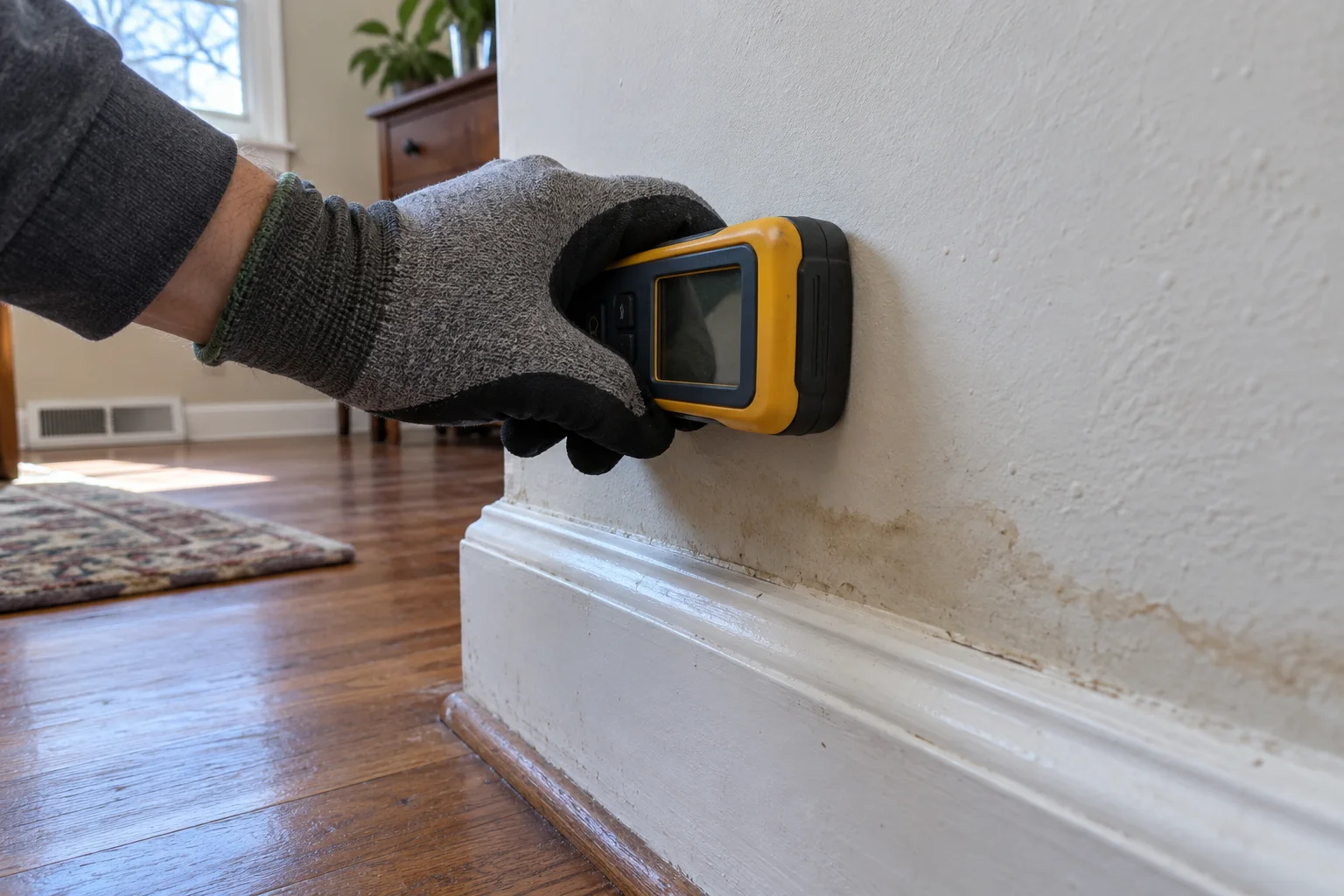
NIOSH considers visual inspection and musty-odor investigation more reliable than routine air sampling for evaluating damp buildings. NIOSH's testing guidance also warns that short-term negative findings may not represent actual exposure.
| Finding | Useful next action | Kit limitation |
|---|---|---|
| Visible growth with a known leak | Address the water source and affected material | A species name does not repair the leak |
| Musty odor without visible growth | Investigate moisture and concealed damage | A clean dish does not rule out hidden growth |
| Colonies but no identified damage | Evaluate building evidence before specifying removal | Plate growth alone does not define a remediation scope |
| Symptoms or health concerns | Discuss symptoms with a healthcare professional | A home culture cannot diagnose the cause |
Property assessments through moisture-focused mold inspection examine the building before a sampling decision. Gettysburg Mold Remediation Help offers a free referral service. Independent companies assess, price and perform the work.
Does sending a kit to a laboratory solve the problem?
Laboratory analysis improves the description of a submitted sample, but it does not correct an unrepresentative collection. Sample location, collection method and handling remain part of the evidence.
EPA states that sampling is unnecessary in most cases with visible growth. EPA's mold testing advice reserves sampling and interpretation for professionals with relevant experience. A laboratory logo does not show that every room or concealed surface was assessed.
Report interpretation in understanding mold sample reports separates laboratory findings from building conclusions. Targeted indoor air sampling and interpretation should answer a defined investigation question.
Can an electronic air monitor detect mold?
A general particle or humidity monitor does not identify mold species. A humidity reading describes moisture in air. A generic particle reading does not establish that the measured particles are fungal.
Low-cost monitors measure only the pollutants or conditions their sensors support. EPA's indoor monitor guidance explains why a device cannot provide a complete account of indoor air quality. A green display does not certify that concealed materials are dry.
Gettysburg Mold Remediation Help connects homeowners seeking mold assessment and removal help in Gettysburg with independent companies. The independent company determines the investigation and any proposed remediation.