
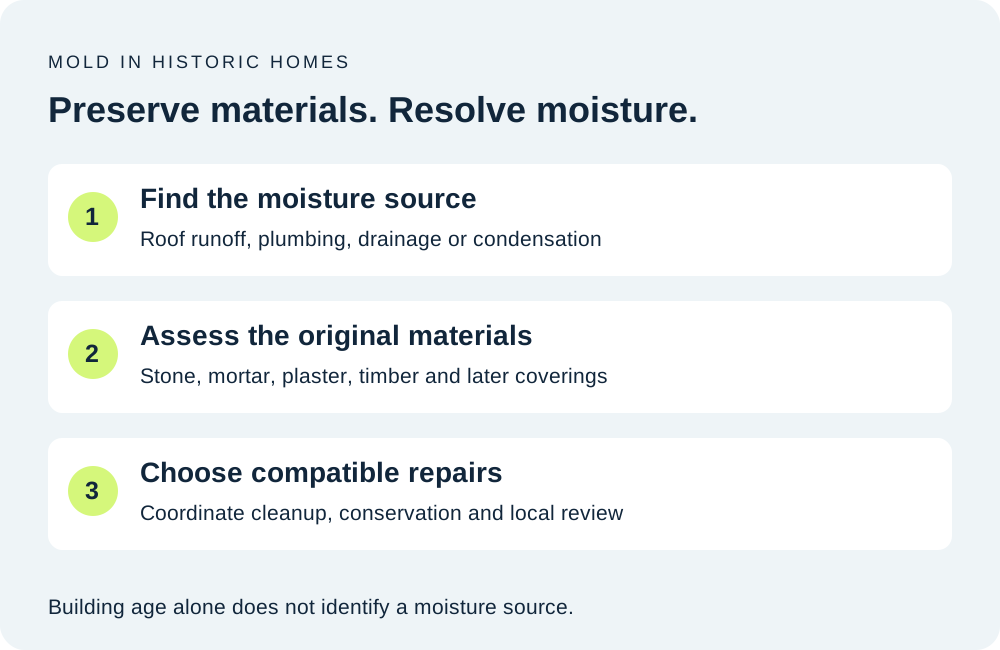
What changes when mold affects a historic home?
Mold in a historic home requires a cleanup plan that accounts for original materials and later alterations. Building age alone does not identify the moisture source. A stone basement, a plaster wall and a modern drywall partition need different material assessments.
A useful inspection record separates the original assembly from later coverings. The record should identify the location of staining, the route of water entry and any concealed layers. A contractor should explain the proposed access before removing historic finishes.
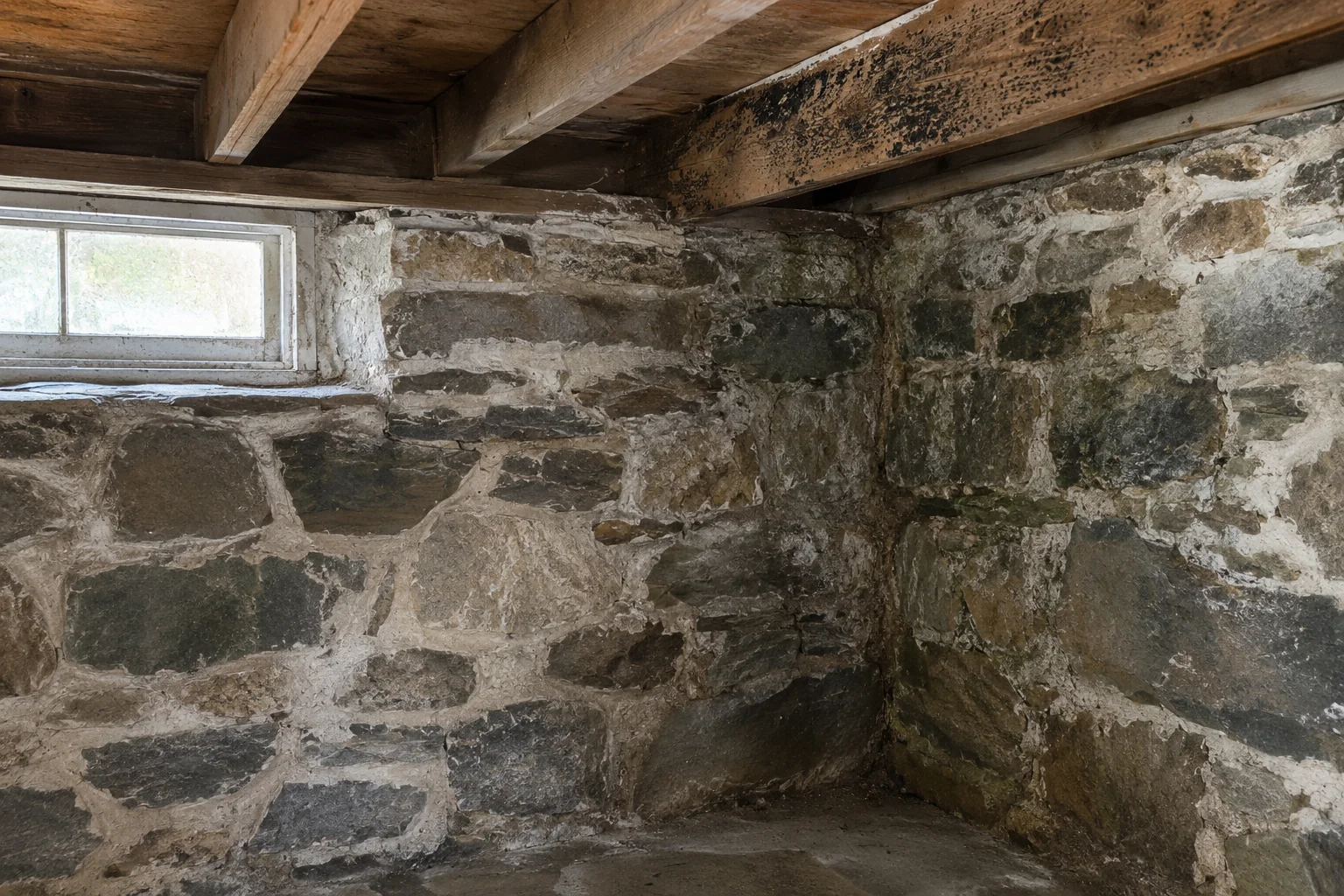
The inspection findings should distinguish mold cleanup from repairs to the building. The distinction between surface mold and timber decay prevents a clean surface from becoming an unsupported claim about structural strength.
How should moisture in a historic stone basement be investigated?
A stone basement moisture investigation should start with water entry and drainage before selecting a wall coating. Roof runoff, downspout discharge, plumbing leaks and condensation deserve separate checks. A moisture mark shows where water affected the surface, not necessarily where water entered.
The National Park Service's historic-building moisture guidance prioritizes correcting manageable drainage problems before extensive excavation. The guidance warns that some waterproof coatings trap moisture. A coating specification therefore needs an understanding of the wall's drying route.
A basement inspection should record whether dampness follows rainfall, plumbing use or changes in indoor conditions. Dated observations help the assessor compare competing explanations. The scope of basement mold cleanup and moisture investigation should reflect those findings before finishes conceal the wall again.
What should the assessment cover for each historic material?
The assessment should identify the material, its condition and the repair consequences before choosing a cleaning method. A stained surface and a failing building component are different findings. The following comparisons organize the assessment without prescribing one treatment for every old house.
| Material | Assessment focus | Decision to avoid |
|---|---|---|
| Stone or brick masonry | Water entry, joints, coatings and adjacent finishes | Covering damp masonry before identifying the water source |
| Historic mortar joints | Existing mortar composition and compatibility of repairs | Selecting the hardest replacement mortar by default |
| Lath-and-plaster walls | Plaster attachment, lath condition and extent of moisture damage | Treating every stain as a reason for wholesale demolition |
| Wood framing and trim | Surface contamination, material loss and structural function | Calling wood structurally sound because growth was cleaned off |
| Later wall coverings | Concealed moisture and the condition of underlying materials | Assuming the visible finish describes the entire assembly |
Historic mortar needs compatibility with the surrounding masonry. NPS explains in its mortar conservation guidance that inappropriate hard, impermeable mortar can shift moisture into adjacent masonry. A qualified masonry specialist should evaluate the existing mortar before specifying repointing.
Does mold mean original plaster must be removed?
Mold or staining does not automatically require removal of every original plaster surface. The repair decision needs the extent of contamination, the plaster's attachment and the condition of supporting lath. Loose or falling ceiling material also needs a safety assessment.
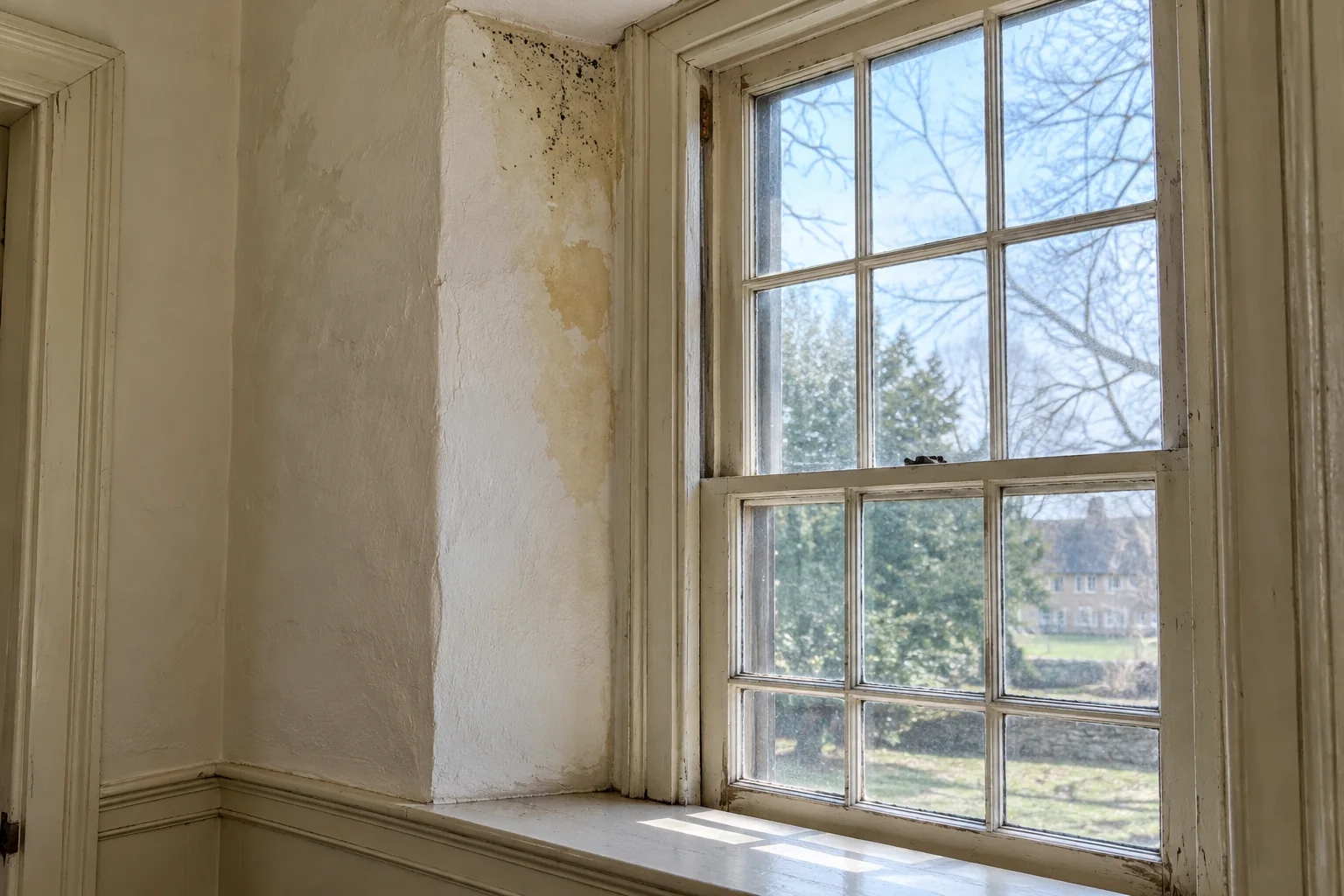
NPS guidance on repairing historic plaster favors retention and repair where feasible. NPS also recognizes circumstances that warrant replacement. A skilled plaster specialist should determine whether localized repair, reattachment or replacement is appropriate.
Decorative finishes and significant historic objects warrant conservation advice before treatment. NPS collections preservation guidance warns that commercial cleaning products can damage historic materials. A household cleaner should not become a universal prescription for painted trim, ornamental plaster and porous masonry.
Does historic mold repair need approval in Gettysburg?
Gettysburg requires historic review for qualifying exterior work within the local HARB district. The Borough's HARB guidance requires review for exterior work visible from a public street or alley within the local district. Borough Council makes the final decision on HARB recommendations.
| Proposed work | Historic-review distinction | Planning implication |
|---|---|---|
| Interior mold cleanup | Borough FAQs exclude interior work from HARB review | Check separate permit requirements for associated repairs |
| Visible exterior alterations in the HARB district | HARB guidance requires approval before work | Confirm the review process before altering exterior materials |
| Historic window replacement | Borough guidance requires a Certificate of Appropriateness in the district | Evaluate repair and retention before specifying replacement |
| Regular maintenance without material replacement or change | Borough FAQs identify a HARB exemption | Confirm whether the actual scope fits the exemption |
The Borough's historic-preservation FAQs distinguish exempt maintenance from alterations. A HARB exemption does not establish an exemption from every permit. The Borough's permit application process addresses additional reviews for the proposed scope.
What humidity and drying targets apply to an older home?
EPA recommends indoor relative humidity below 60%, ideally 30% to 50%. EPA recommends drying wet materials within 24 to 48 hours to help prevent mold growth. The drying window is prevention guidance, not a promised completion time for a thick historic wall.
EPA's household mold guidance emphasizes fixing water problems during cleanup. Room humidity does not document the moisture condition inside a wall. A drying record should distinguish air measurements from measurements of the affected materials.
- Moisture-source repairs address the cause of recurring wetting.
- Material assessments guide cleaning, retention and replacement decisions.
- Follow-up observations should include the conditions that previously produced dampness.
Gettysburg Mold Remediation Help offers a free referral service for mold remediation in Gettysburg properties through independent companies. The independent company assesses, prices and performs the work. Historic-material conservation and structural engineering needs should be identified separately.