
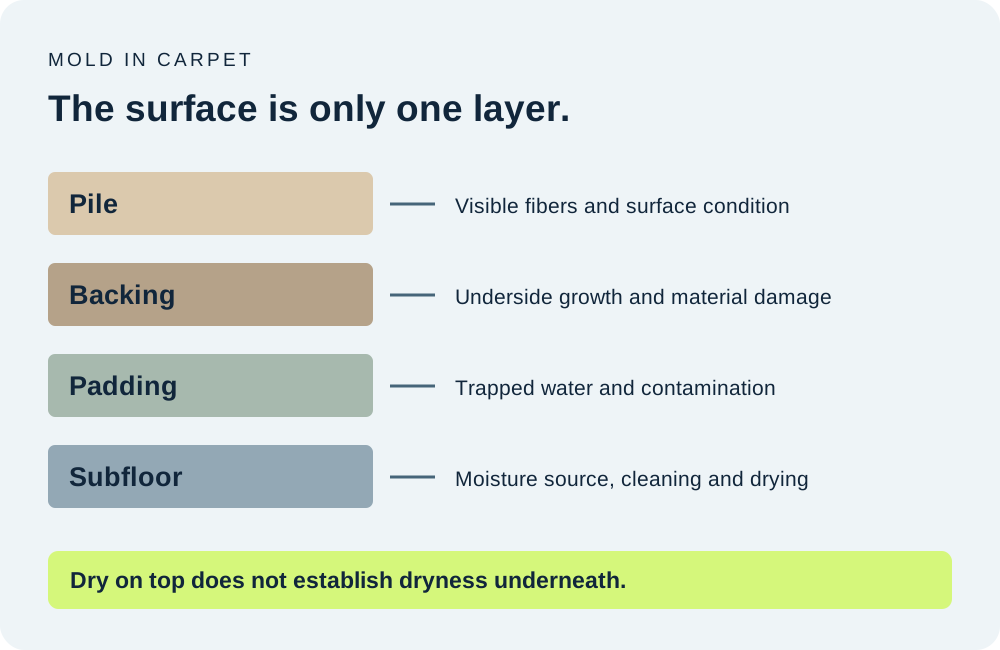
Can moldy carpet and padding be saved?
Moldy carpet may need replacement because growth inside porous layers is difficult to remove completely. EPA's household cleanup guidance identifies carpet as a material that may need disposal. A clean-looking pile does not establish the condition of the backing or pad.
Moldy padding should be discarded under NC State Extension's material guidance. Carpet retention needs an assessment of the affected layers and the water exposure. Valuable rugs warrant specialist advice before treatment.
| Condition | Decision | Reason |
|---|---|---|
| Recent clean-water wetting without apparent growth | Assess prompt extraction and complete drying | Wet carpet is not automatically established mold contamination |
| Moldy or saturated padding | Remove and replace the affected pad | Extension guidance rejects retaining moldy padding |
| Growth in carpet backing or persistent growth after cleaning | Assess disposal rather than repeated surface treatment | Porous layers restrict complete removal |
| Sewage or other contaminated water | Use an experienced contamination-remediation professional | Clean-water drying instructions do not apply |
| High-value area rug | Obtain a specialist material assessment | Fiber, dyes and construction affect treatment options |
What are the signs of mold in carpet?
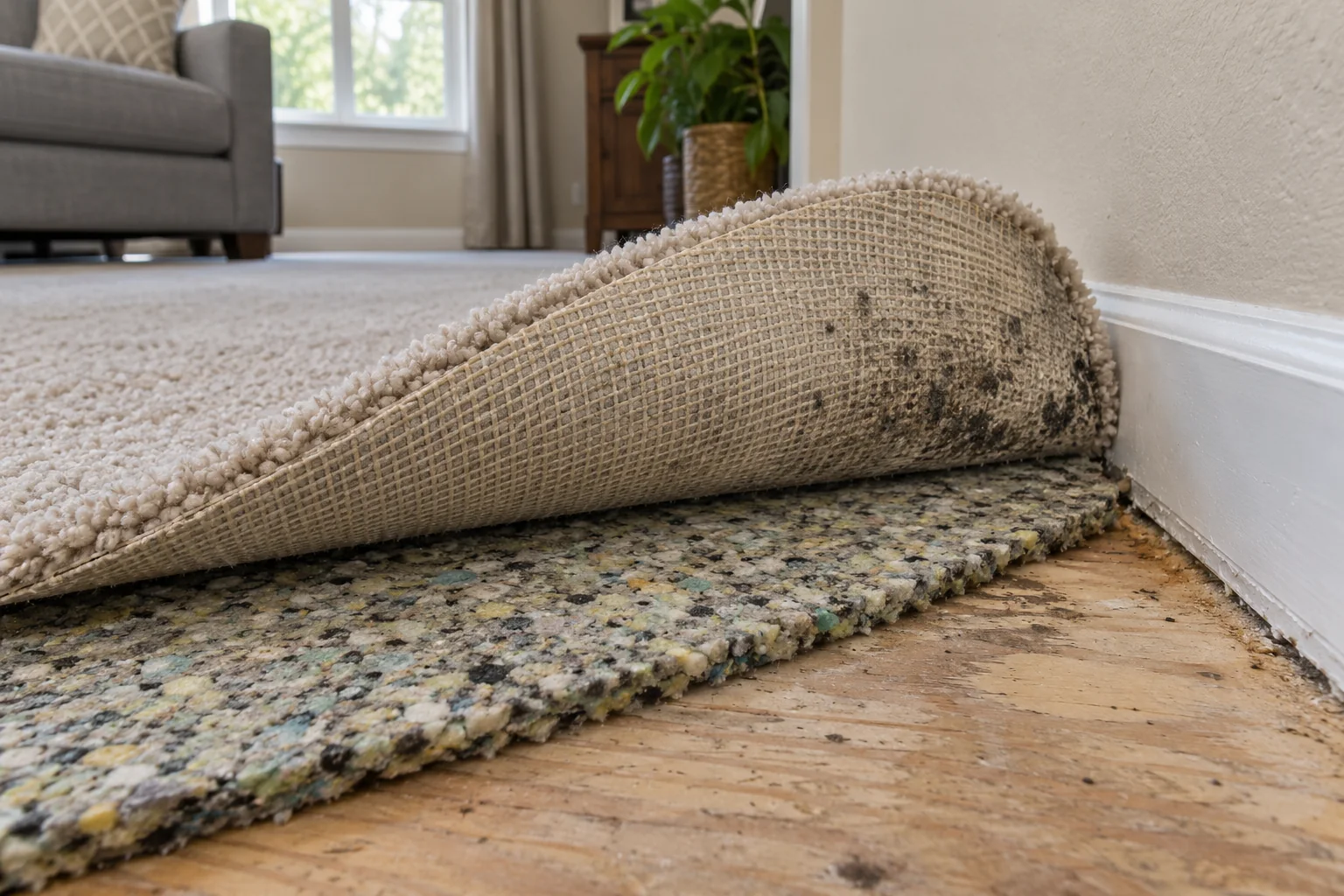
Musty odor, unexplained spotting and a history of persistent dampness justify a carpet moisture investigation. Carpet staining alone does not identify mold. Mold color does not establish a species or the extent beneath the floor covering.
- Carpet-edge discoloration helps locate an area for inspection.
- A recurring smell after cleaning warrants investigation of hidden layers and the moisture source.
- A previous leak identifies an exposure history, even when the pile feels dry.
- Visible backing growth provides different evidence from ordinary surface dirt.
Mold sampling is not a prerequisite for correcting visible growth and moisture. CDC's mold guidance does not recommend routine home mold testing. A laboratory result cannot determine whether a particular occupant will become ill.
What needs checking beneath the carpet?
A carpet assessment should distinguish the pile, backing, pad and subfloor. Each carpet-system layer answers a different question. The following matrix separates observations from decisions instead of treating the entire floor as one washable surface.
| Layer | Record | Decision supported |
|---|---|---|
| Pile | Visible deposits, stains and surface condition | Whether the visible finish needs cleaning or replacement assessment |
| Backing | Underside growth and deterioration | Whether surface-only cleaning misses affected material |
| Pad | Saturation, odor and visible contamination | Removal and replacement of unsalvageable cushioning |
| Subfloor or slab | Moisture, residue and material damage | Cleaning, drying and any separate building repair before refitting |
Carpet removal does not complete a floor restoration. EPA's water-damage table requires cleaning and drying the subfloor too. A restoration record should identify the substrate and the evidence used before covering it again.
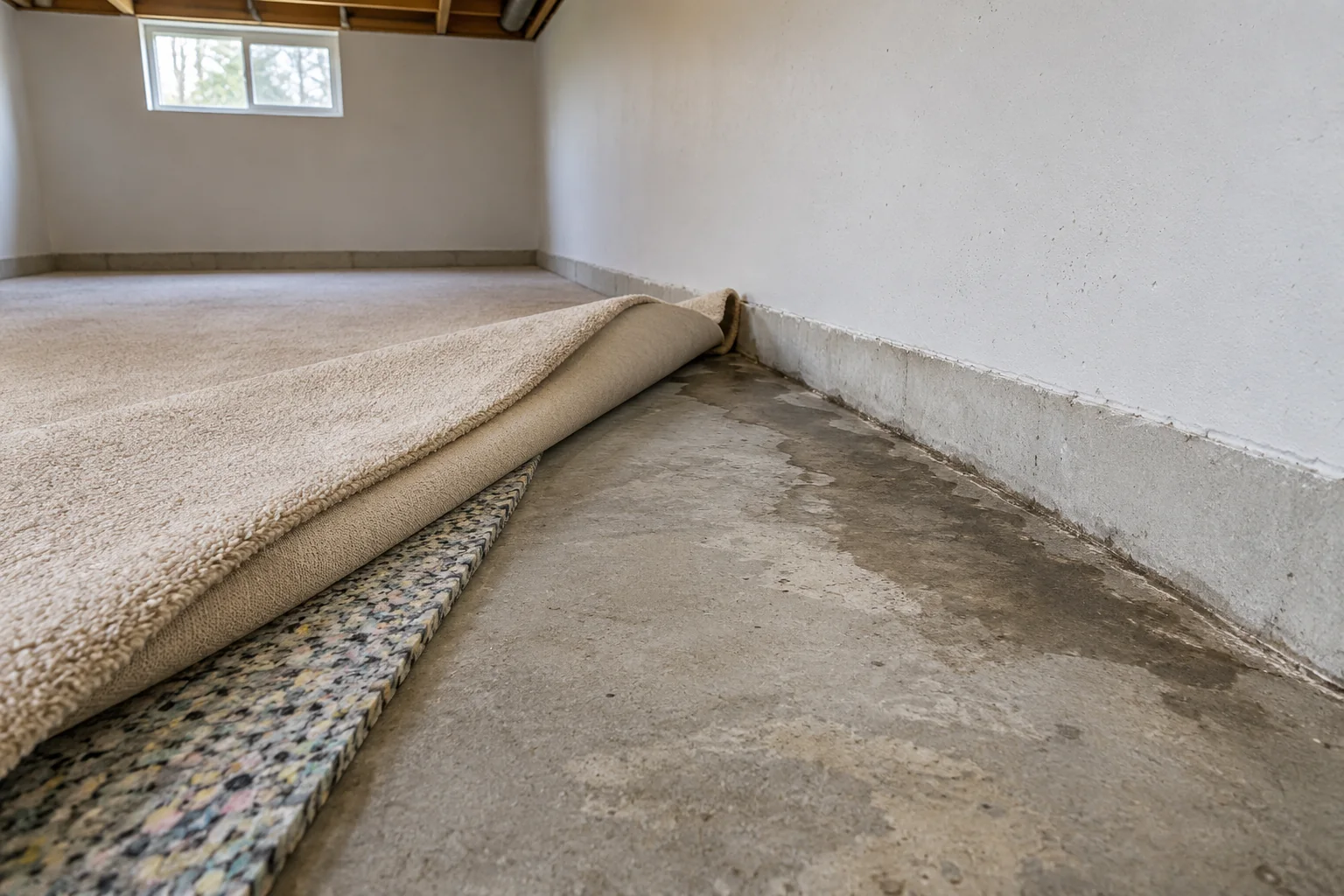
Basement floor moisture belongs in the wider basement mold and water-source assessment before replacement flooring conceals the slab. Damaged wood requires a separate condition assessment.
How quickly should wet carpet be dried?
EPA recommends drying carpet and backing within 24 to 48 hours after clean-water damage. EPA's table describes a prevention window. The table explicitly warns that growth can occur before 48 hours and does not always occur after 48 hours.
Clean-water carpet drying requires attention to hidden layers. EPA's mold course explains that water extraction alone does not dry carpet. Padding also needs drying. A dry surface is therefore insufficient evidence for reinstalling the whole assembly.
Suspected sewage or contaminated water needs professional assessment. EPA warns against using fans before establishing that the water is clean or sanitary. The condition of the water matters more than a generic instruction to run fans over every wet floor.
Will steam cleaning, vinegar or baking soda remove carpet mold?
Steam cleaning or a household treatment does not establish that mold has been removed from every carpet layer. A product's surface-cleaning result does not answer whether the pad or substrate remains affected. A salvage decision must cover the full assembly.
Professional carpet cleaning is one option in Extension's household-material advice. Persistent growth calls for disposal in that guidance. Repeatedly wetting an affected carpet does not replace the decision about retaining contaminated layers.
Carpet and rug salvage assessments fit within mold-affected contents cleaning when the item is suitable for treatment. Carpet cleaning does not substitute for replacing unsalvageable padding.
When does carpet mold need professional help?
Contaminated water, substantial water damage and growth extending into building materials warrant experienced professional help. EPA's roughly 10-square-foot threshold helps distinguish cleanup scope. A small visible patch does not certify that porous carpet is salvageable.
Carpet mold exposure may cause irritation or allergic reactions in some people. CDC also notes that damp or moldy environments cause no effects in some people. Health concerns need a healthcare professional's assessment rather than a diagnosis from a carpet photo.
Gettysburg Mold Remediation Help offers a free referral for Gettysburg home mold assessment and remediation through independent companies. The independent company assesses, prices and performs the work.
How can carpet mold be prevented from returning?
Carpet mold prevention requires resolving the moisture source and keeping the full floor assembly dry. CDC recommends indoor humidity no higher than 50%. CDC advises avoiding carpet in places with substantial moisture, including damp basements.
- Leak repairs stop repeated wetting from plumbing or the building exterior.
- Prompt drying after a spill includes the backing and pad.
- Replacement flooring should not conceal an unresolved wet substrate.
- A recurring odor or stain warrants renewed investigation.
Whole-home moisture control and mold prevention help connect the floor problem with recurring leaks, condensation and ventilation conditions.