
What are the signs of mold in air ducts?
Suspected growth on an HVAC component, persistent dampness and a musty odor are reasons to inspect the system. Dust on a vent alone does not confirm mold, and a smell does not identify where it starts. Inspect the affected surface and the moisture source before deciding how much ductwork needs treatment.
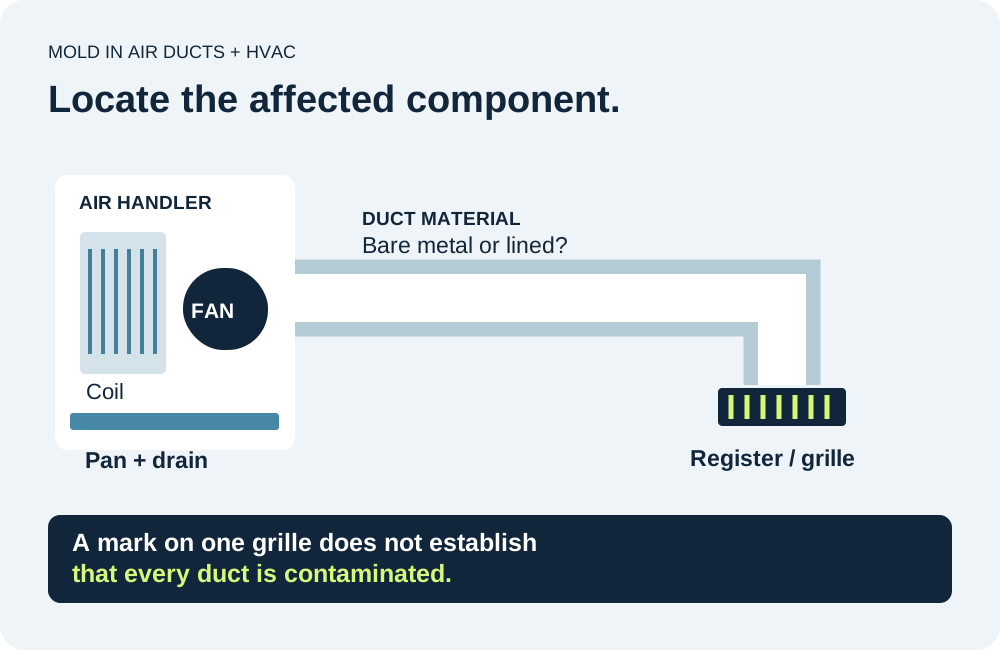
Mold in air ducts may involve a removable register, the inside of a metal duct, porous duct liner or equipment inside the air handler. Those locations have different cleaning and replacement options. A dark patch on the room-facing grille does not establish that every duct is contaminated.
| Observation | Useful next investigation | Limit of the evidence |
|---|---|---|
| Dark dust on a return grille | Inspect the grille, filter fit and nearby surfaces for moisture or actual growth. | Airborne dust collects here; color alone does not establish mold. |
| Musty smell when cooling starts | Check the coil, drain pan, air handler and nearby damp building materials. | The timing helps locate a source but does not prove duct contamination. |
| Recurring spots around one AC vent | Assess condensation, the duct connection and the surrounding ceiling or wall. | A local surface problem does not define the condition of the whole system. |
| Wet or visibly moldy duct insulation | Identify the affected sections and the water source. | A clean outer grille cannot show whether hidden insulation is dry. |
A mold inspection should connect the visible concern to material condition, access and moisture. Photographs should identify the component and location, so a dirty register is not confused with a contaminated coil or duct liner.
Should you turn off an HVAC system with suspected mold?
Yes, if you know or reasonably suspect the HVAC system itself is contaminated. The EPA advises against running a mold-contaminated HVAC system because it could spread mold through the building. Arrange an assessment rather than using the fan to disperse the smell.
This is different from finding ordinary dry dust on a grille. Evidence such as growth inside equipment, damp contaminated liner or a known water problem affecting the system warrants investigation. Do not brush suspect material into a vent or spray cleaner into a running return. If stopping heating or cooling creates unsafe indoor temperatures, arrange a safe alternative while the system is assessed.
Why do mold and moisture develop in ductwork?
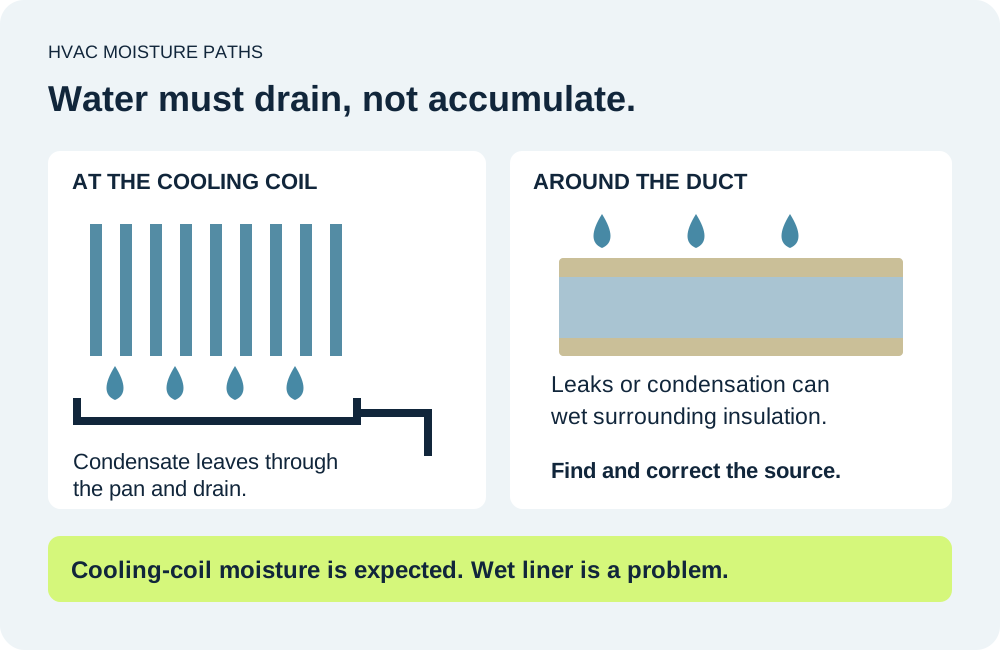
Persistent water allows mold to grow on accumulated debris or susceptible HVAC materials. Cooling creates condensation at the evaporator coil by design; the problem is water that fails to drain or wets components that should stay dry. Cold ducts can also collect condensation when their surfaces are below the surrounding air's dew point.
- Drainage problems: a blocked condensate drain or poorly draining pan can leave standing water near the coil.
- Duct leaks and insulation gaps: ducts passing through an unconditioned attic or crawl space may need sealing and intact insulation to control condensation.
- Leaks from outside the system: roof or plumbing water can wet duct insulation even when the air conditioner operates correctly.
- Humidity and equipment performance: persistent indoor humidity, poor airflow or equipment sizing problems may require an HVAC assessment.
The EPA's air duct guidance identifies cooling coils, drain pans and wet insulation as important inspection points. Cleaning the visible patch without correcting the water source leaves the same growth conditions in place.
Which moldy HVAC components can be cleaned or need replacement?
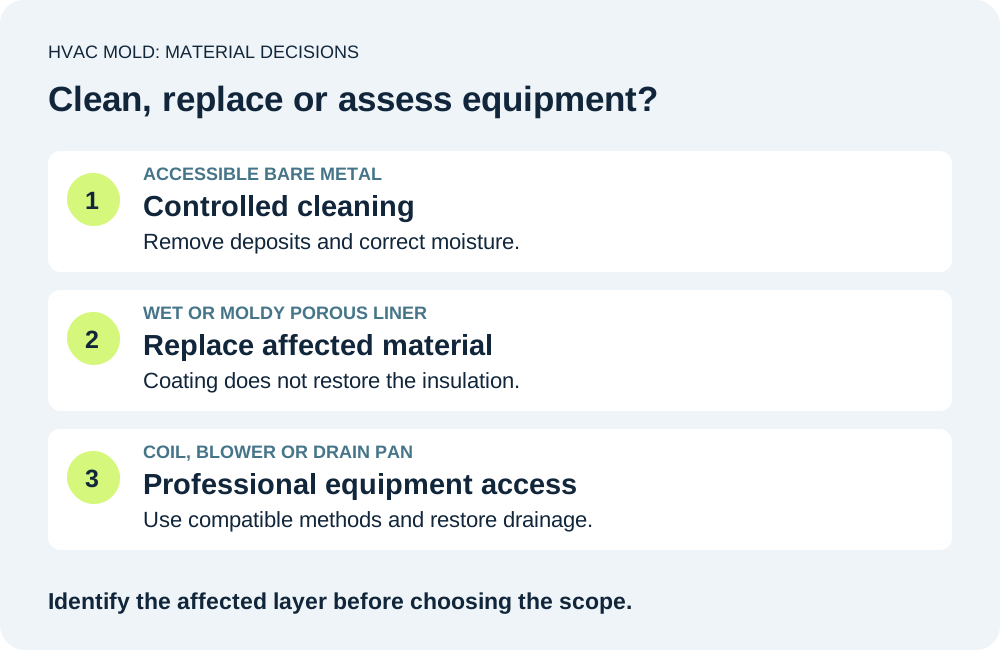
Accessible hard surfaces may be cleanable, but wet or moldy porous duct insulation generally needs replacement. Material, condition and access determine the scope. The EPA specifically states that wet or moldy insulation in insulated air ducts cannot be effectively cleaned and should be removed and replaced.
| Component | Likely work if affected | What also needs attention |
|---|---|---|
| Removable metal register | Clean the accessible hard surface using an appropriate method and dry it. | Inspect the duct connection and surrounding wall or ceiling. |
| Bare sheet-metal duct | Use controlled cleaning with access to affected surfaces and debris capture. | Identify whether hidden portions contain liner and address moisture. |
| Fiberglass liner or duct board | Replace affected material when wet or moldy rather than covering it. | Correct the water source before installing replacement sections. |
| Evaporator coil and blower | Have an HVAC professional assess and clean affected equipment using compatible methods. | Protect delicate parts and verify airflow and drainage. |
| Condensate pan and drain | Remove contamination and restore drainage; repair or replace damaged parts as needed. | Check for retained water, leaks and wet adjacent insulation. |
A flexible duct can include several materials, including an inner liner, insulation and outer jacket. A photograph of its outside is not enough to decide whether its interior is cleanable. The assessment should identify the affected layer and whether it can be accessed without damaging the assembly.
For example, isolated growth on a cleanable grille with dry surrounding components may have a limited scope. Wet, moldy fiberglass behind that grille changes the decision to affected-material replacement and moisture correction. These are conditional examples, not diagnoses of an unseen home.
Do you need a mold test for air ducts?
Not automatically: start with the affected component, visible conditions and moisture. Targeted sampling can sometimes clarify whether a questionable deposit is mold, but a room air sample does not identify which duct section needs work. Testing should answer a defined question that changes the assessment.
NIOSH does not recommend routine air sampling for building mold evaluations and notes that there are no health-based indoor mold standards. A short sample cannot establish that a home is safe or unsafe for a particular person. A low count also does not explain a wet duct liner that remains in the system.
Black marks cannot identify a species or its health risk. Mold exposure may affect sensitive people, but symptoms do not diagnose the HVAC system. Discuss health concerns with a clinician and use air quality testing when an assessor can explain its purpose and limitations.
Will duct cleaning, fogging or a UV light remove the problem?
Cleaning can remove contamination from suitable surfaces; fogging or a UV light does not replace physical removal and moisture repair. A treatment that kills some organisms does not remove deposited material or make wet porous insulation sound again.
For affected cleanable components, controlled agitation and debris collection help prevent loosened material from entering occupied rooms. The cleaning method should suit the surface, with equipment that exhausts outdoors or uses appropriate HEPA filtration when exhausting indoors. All affected system components need attention, not just the most visible vent.
The EPA advises against routine duct cleaning on a fixed schedule and against routine use of internal sealants to cover deposits. Sealing an air leak at a duct joint is a different task from coating the duct interior. Any proposed chemical must be appropriate for that exact surface and registered use. Household spray recipes are not a substitute for evaluating the equipment.
EPA guidance on UV lamps explains that effectiveness depends on the system and organism; typical home units have limitations against fungal spores. UV cannot be treated as a guarantee of a mold-free HVAC system. A lingering odor should prompt source investigation through mold odor removal, rather than fragrance or repeated spraying.
How do you keep mold from returning after HVAC cleanup?
Correct drainage and moisture problems, replace affected porous material and verify that the cleaned components stay dry where they should. A cosmetic improvement at the grille is not enough if water remains in the system.
- Control indoor humidity: the EPA recommends keeping relative humidity below 60%, ideally 30% to 50% where possible. A room reading does not prove concealed insulation is dry.
- Maintain filtration: use a correctly fitting filter with an efficiency the equipment supports, and replace it as needed. Do not assume the most restrictive filter is compatible.
- Verify drainage and insulation: confirm that condensate drains properly and repaired duct sections are sealed and insulated where needed.
- Reinspect the affected location: look for returning growth, odor, leakage or wet material after cleanup and during subsequent cooling operation.
For a Gettysburg home with suspected HVAC involvement, request an assessment through our mold removal in Gettysburg, PA service. The affected component, material and moisture source determine whether the next step is targeted cleaning, HVAC repair, replacement of damaged material or a combination.